EAI launched the Asia Democracy Research Network (ADRN) in November 2013 to conduct research related to democratic governance and human rights promotion in Asia. EAI serves as a representative of domestic think tanks and leads the organization of regional think tanks in Asia. It is responsible for supporting and managing research related to democracy at associated research institutes. ADRN was established to analyze threats to democracy in Asia and to promote discussions and practical research projects that could contribute to the consolidation of democracy in the region. Aimed at presenting policies based on research, ADRN examines threats and challenges to democracy by identifying and studying practical agendas for developing regional democracy in Asia. The network includes 22 major think tanks from 14 Asian countries including Taiwan, Malaysia, Mongolia, Myanmar, Bangladesh, Sri Lanka, India, Indonesia, Japan, Thailand, Pakistan and the Philippines, as well as South Korea’s EAI. 

Working paper
[ADRN Working Paper] Ensuring Horizontal Accountability in India: The Role of Judiciary

1. Introduction   Vertical and horizontal accountability act as countervailing forces to strengthen democracy. Specifically, horizontal accountability operates through the separation of powers among the legislative, executive, and judiciary branches. In a complex federal country like India, it operates via the division of powers at three levels of government: the Union, States, and local bodies (Mitra 2020). Such juxtaposition (division and separation of powers among different democratic institutions) has worked well to maintain the vitality of democracy in a large and diverse country like India. The judiciary, in particular, has played vital roles as the key institution of accountability: acting as the custodian of the constitution and protector of the rights of the most marginalized groups against the state (executive) excesses. By far, the judiciary has made earnest attempts to uphold the rule of law and act as a counter-majoritarian court.   However, with the arrival of a strong executive in 2014, there are increasing tendencies to overrule and control independent institutions, including the judiciary. The judiciary, which earned the distinction of the most powerful branch in previous decades, has been found struggling to safeguard against the violation of fundamental rights in a growing number of cases in recent times. Not only are courts increasingly following executive lines, but they progressively look like mere spectator in the face of growing state excesses, whether on the illegal arrest of democracy defenders, human rights activists, or political opponents, among others. An ineffectual judiciary has emboldened the executive to usurp key constitutional principles of constitutional democracy. Although there are moments of stress in its long-established constitutional principle of ‘separation of powers,’ there have been moments of great courage by individual judges in the recent times (Shah 2020a).   2. Mechanisms of Accountability   The judiciary in India ensures accountability of the executive branch in several ways, ranging from the separation of power, the rule of law, judicial review, writs, and judicial activism, among others.   2.1. Judicial Review   India has adopted the systеm of judicial review primarily from the experiences of the US. The Supreme Court of India has the power to review the enactments of the parliament and state legislatures. Further, state actions must meet the parameters of the rule of law, which makes the higher courts more powerful and grants an instrument of judicial review. The various provisions of the judicial review systеm have been granted by the Constitution in various articles, including Article 13, 32, 131-136, 143, 226, 145, 246, 254, 251 and 372 (Rana and Kamath 2022). The power of judicial review is incorporated in Articles 226 and 227 of the Constitution insofar as the High Courts are concerned. To the extent that the Supreme Court is concerned, Articles 32 and 136 allow the apex court to review key aspects of state actions. However, there are exceptions to the application of judicial review. While judicial review can be conducted on state and central existing laws and the ordinances of constitutional and executive amendments, the same does not apply to the laws incorporated in the Ninth Schedule of the Constitution.   In terms of practice or actual enforcement, the judicial records have been mixed. In the initial decades of constitutional governance, the higher courts, particularly the Supreme Court, adopted a cautionary approach. The Supreme Court mostly took a pro-legislature stance, as is reflected in rulings such as A.K. Gopalan’s judgment (Supreme Court of India 1950). However, it did not take long for the Supreme Court justices to make a U-turn in subsequent cases. Soon, several cases involving the right to property created space for the judiciary to be at loggerheads with the executive and legislature. The struggle between the two wings of government continued on other issues, such as the power of amending the Constitution. During this period, the parliament sought to introduce socialist/welfarist policies, which often came into conflict with fundamental rights. Between 1950 and 1975, the Supreme Court declared hundreds of Union and State laws and executive actions, in whole or in part, to be unconstitutional.   During the national emergency (1975-77), the judiciary faced heavy pressure to toe the executive lines. It was under severe pressure from the executive branch and was coerced to deliver several judgments which were considered violative of the basic human rights of Indian citizens. In a shocking letdown, the Supreme Court even supported the suspension of the right to life by the executive branch. After taking flak, the judiciary soon realized its mistakes and loss of reputation. In the next decade, the 1980s, Indian courts began to make vigorous efforts to restore their images through a series of historic pro-poor judgments.   2.2. Safeguarding the Fundamental Rights   Higher courts act as custodians of Fundamental Rights (a set of basic rights similar to the US Bill of Rights guaranteed to all citizens) by protecting them from executive arbitrariness (Singh 2022). In enforcing this, the Supreme Court acts as a Constitutional Court. On numerous occasions, the higher courts have taken suo motu cognizance of violations of fundamental rights. Article 32 of the Constitution, which is a fundamental right, allows the higher courts to issue writs in cases of executive excesses or infringement of personal liberties. These writs are Habeas Corpus, Mandamus, Prohibition, Certiorari, and Quo Warranto. Although remedies under this are related to violations of fundamental rights only, over the years, the higher courts have consistently tried to expand the scope and application of these rights (protect individuals/groups against state excesses) through an expansive interpretation of the constitution (Sahoo 2022).   2.3. Judicial Activism   As stated above, in the last few decades, particularly after the national emergency in 1975 (which allowed the executive to suspend the right to life and the judiciary condoned the same[1]), the judiciary took a series of proactive steps to reinvent itself to salvage its lost reputation. It did this by gradually expanding its powers vis-à-vis legislative and executive branches by creative interpretation of different provisions of the fundamental rights. With the defeat of Indira Gandhi’s government and the new Janata Government taking power in 1977, the situation became quite favorable for the judiciary to correct past mistakes and regain the ground that it had ceded to a strong executive over the years. The judiciary tried to undo the damage by adopting an activist course by delivering a series of significant judgments that put numerous checks on state excesses.   The most immediate response from the judiciary was to quickly undo the damage it had done in the Habeas Corpus case known as ADM Jabalpur (which had suspended the right to life during the national emergency in 1975-1977). In the Maneka Gandhi vs. Union of India case, the judiciary dramatically expanded the scope of Article 21 by linking it to the grounds of procedural and substantive fairness (Supreme Court of India 1978). Further, the court opened a new dimension of the right to life and personal liberty when it established that Article 21 was both a guarantee against executive action unsupported by law and a restriction on lawmaking. The Supreme Court also struck down the key provisions of the Forty-Second Amendment that had kept judicial review out of the ambit of constitutional amendments in Minerva Mills (Supreme Court of India 1980). However, these judgments were just the beginning of a new era as the judiciary was recovering from the shock of its national emergency policy blunders. Consistently, the judiciary ushered an era of judicial activism in the subsequent decades by creative use of public interest litigation (PIL) which greatly expanded fundamental rights. By actively promoting PIL, the higher judiciary was able to check executive excesses in many areas (Baxi 1985).   2.4. Public Interest Litigation and Restoration of Judicial Supremacy   The judiciary’s PIL journey commenced with the historic S.P. Gupta judgment in 1981 (Supreme Court of India 1981). Justice P.N. Bhagwati, who delivered the landmark judgment, relaxed the locus standi in public interest litigations. This judgment significantly opened spaces for public-spirited citizens – those wanting to take up the causes of the poor and oppressed populations and those wishing to enforce the performance of public duties. The higher judiciary engineered further innovation in public interest matters by granting interim reliefs to the victims of state abuses apart from awarding compensation and supervising their enforcement processes. The higher judiciary’s strong promotion of PILs encouraged scores of public-spirited citizens, human rights lawyers, and civil society organizations to take up the cases of helpless individuals and groups. Thus, PIL allowed the higher courts to imaginatively interpret and expand fundamental rights to include many unarticulated rights, such as the right to live with human dignity, the right to a healthy environment, the right to livelihood, the right to education, etc. Such an interventionist path acted to curb state excesses in many domains while simultaneously accelerating the legitimacy of the judiciary. Of course, the courts overstepped the executive and legislative spheres on multiple occasions. A plethora of literature has documented the benefits or damages that such judicial moves may have brought in (Dave 2020). Overall, such a course helped the judiciary to restore its position in the architecture of separation of powers.   The Collegium Systеm and the Re-assertion of Judicial Supremacy   To further accelerate checks on executive interference, the higher judiciary in India has also put its stamp on the crucial selection of judges. Judicial appointments, which used to be the executive’s domain, had become a major area of contention among judges. In order to gain control over appointments and insulate itself from executive interference, the apex court delivered several verdicts, known as Three Judges Cases, that redefined the appointment process for judges at the higher judiciary. One such judgment was the S.P. Gupta case in 1981, which emerged after the President of India bypassed advice from the Chief Justice of India (CJI) and listened to the Chief Justice of the Delhi High Court instead. This judgment was critiqued because it failed to recognize the independence of the CJI. Then came the Second Judges Case in 1993, based on a public interest litigation about whether the CJI’s opinions on the appointments of judges hold any priority. This landmark judgment held that the CJI’s views would have primacy in appointments. The Third Judges Case, which was about the question of whether the consultation of the president should only be limited to the CJI or should involve other judges, came up in 1998 (Lodha 2015). The Court held that this should lead to the creation of a collegium systеm where other judges are actively consulted regarding the appointments of judges.   The collegium systеm was strongly contested by the National Democratic Alliance (NDA) government headed by Narendra Modi. The NDA government passed legislation in 2015 to set up the National Judicial Appointments Commission (NJAC) to make judicial appointments a collective affair rather than judges appointing themselves. The judiciary took a strong objection to this move by the new government. Soon, a five-member Supreme Court Constitution Bench ruled the new legislation as void (Anand 2015). Thus, the judiciary stubbornly resisted executive interference in the sphere it thought was its exclusive domain. This also helped the courts (notwithstanding the Modi government’s recent vociferous attempts to weaken the collegium systеm) to act as a check on the executive without any major institutional hurdles from the former (Suresh 2023).   3. Understanding the Judiciary’s Weakness as an Institution of Accountability   The judiciary, which reached the peak of its power and authority in the 1990s and 2000s by acting as a major restraint on executive excesses, has taken an opposite turn in the last few years. There is considerable erosion in judicial power and authority, particularly with the emergence of a powerful executive led by the Bharatiya Janata Party (BJP) (Shah 2020b). It may be reiterated that the judicial power flourished under successive coalition governments at the federal level, which was often characterized by an ‘unstable’ and ‘weak’ executive. However, the BJP government broke that continuum when it secured a full political majority in back-to-back general elections in 2014.   3.1. Sliding to Become an ‘Executive Court’   Since the arrival of a powerful government led by Narendra Modi, a populist leader with centralizing tendencies, the executive branch has used all levers of state powers to pressure and control key democratic institutions, including the judiciary (Vaishnav 2021). Although the Supreme Court stood up to executive interference, such as in the case of the National Judicial Appointments Commission brought out by the government to dilute judicial power over the appointments, that was an exception. This is because the central government, particularly the Law Ministry, has deployed admіnistrative actions and other tools to delay or even nullify (using official procedures/delay) certain appointments made by the collegium comprising of senior justices, and the Supreme Court has not shown the needed courage and leadership to stop growing interferences into judicial autonomy (Dhawan and Jain 2019). Aside from this, in many instances in recent times, the executive can be found interfering and using transfer options against individual judges who have spoken out or delivered judgments against the government (Venkatesan 2023).   Beyond the judicial appointments, a powerful executive has been able to get individual judges (using post-retirement incentives or coercive tactics) to support its policies (or look the other way), even when they violate constitutional principles. Recently, an investigative report by Indian Express found that of the ten recent judgments of the Supreme Court on free speech, as many as six cases went in favor of the state (Vishwanath 2020). Furthermore, in the four cases that went in favor of the petitioner, the government either supported the petitioner or had no objection at all. Thus, the once “assertive” judiciary speaks “the language of executive and has become indistinguishable from the executive.” (Bhatia 2020) Through its judgments and orders, the judiciary, far from failing to act as a check on an unbridled executive power, has become a facilitator of it. This trend is getting even worse at the level of lower courts, which handles most cases involving police/state excesses (Sumeda 2022).   3.2. Failure to Act as Constitutional Court   The higher judiciary, which in the previous decades made so many landmark judgments that led to the dramatic expansion of civil liberties and protection of the constitution, is today struggling (in the face of a strong and interventionist executive) to pursue cases that can uphold constitutional rights and values. The courts are largely toeing the executive lines and failing in their constitutional duties, and checking state excesses can be found in its failures to uphold fundamental rights in a staggering number of cases since 2014.   In scores of recent cases involving serious legal and constitutional questions and state excesses, such as the abrogation of Article 370, which axed the statehood and special provisions according to India’s only Muslim majority state (Jammu and Kashmir), the constitutional validity of the discriminatory Citizenship (Amendment) Act (CAA), issues of lack of transparency in new political funding law (electoral bonds) and scores of habeas corpus petitions involving illegal detention of activists, democracy defenders, and political dissidents, the Supreme Court has delayed or sided with the executive branch (Mahajan 2020; Narla and Rajagopalan 2020). A weak and inconsistent higher judiciary has largely helped and emboldened an already powerful executive to relentlessly attack and weaken key constitutional principles and values. Notably, by failing on issues of Article 370 regarding citizenship law, the judiciary is increasingly ceasing as a counter-majoritarian court (Shah 2020a).   3.3. Corruption and Lack of Access to Justice Tarnishing the Judicial Legitimacy   What is accelerating the erosion of judicial legitimacy is the widespread corruption and inaccessibility of justice to common citizens. Once viewed above corruption, the judicial branch is news for corruption and favoritism. According to Transparency International judicial corruption survey, some 77% of Indians believe the judiciary to be corrupt.[2] Nearly INR 3600 crores (US$ 300 million) goes into bribing lawyers and judges to get justice and avoid long dragging of cases and frequent adjournments. Several sensational cases of corruption and misuse of official positions by some judges have grabbed the attention of the press and the public in recent years, thereby sullying the judiciary’s image.   However, a major concern is the issue of access to justice. For the average citizens, especially the vast poor and oppressed populations, access to justice remains a distant dream. Many special schemes, such as Lok Adalat and free legal aid, have remained symbolic in nature (Sahoo 2021). According to many reports and studies, the justice delivery systеm in India remains cumbersome, time and money-consuming for most citizens, let alone the poor (Law Commission of India 1999; Department of Admіnistrative Reforms & Public Grievances 2008).   4. Conclusion   Among the vital institutions that have shaped 75 years of India’s fascinating democratic journey, the judiciary occupies the prime place. For most part of its existence since 1947, it has done very well to safeguard individual liberties and protect fundamental rights. Besides, the courts have done well to address the rights of marginalized and dispossessed populations and have served as an essential check against executive excesses. However, over the last nine years and under a government with an overall political majority, the courts have experienced tremendous pressure to call the executive’s bidding. Of course, this is not to deny the positive contribution of many individual judges standing up to an interventionist executive which is hell-bent on using every possible tool to bring pressure. The Supreme Court, on several important occasions, has shown strong determination and common purpose to restrain the executive branch on matters related to Habeas Corpus/personal liberty (Shah 2020a). Of late, there are signals that the judiciary, particularly the higher courts, is slowly recognizing the slide and damage to its reputation. Lately, several high courts have made steady efforts to help revive public faith in the judicial systеm.   Yet, as mentioned in the previous sections, notwithstanding some valiant efforts by the judiciary, the executive branch has considerably succeeded in harming personal liberties and attacking dissent and freedom of expression. Scores of people arrested under all kinds of trumpeted charges and denied bail for a long time are testimonies to the executive branch having the upper hand over the judiciary. As has been consistently brought out by many international democracy reports and watchdogs, India is witnessing significant erosion of judicial freedom and constitutionalism, impacting core aspects of democracy, the rule of law, and human rights (Freedom House 2023). ■   References   Anand, Utkarsh. 2015. “Supreme Court strikes down NJAC, revives collegium systеm.” The Indian Express. October 17. https://indianexpress.com/article/india/india-news-india/sc-strikes-down-njac-revives-collegium-systеm-of-appointing-judges/   Bhatia, Gautam. 2020. “ICLP Turns 7 || A Constitutionalism Without the Court.” Indian Constitutional Law and Philosophy. August 1. https://indconlawphil.wordpress.com/2020/08/01/iclp-turns-7-a-constitutionalism-without-the-court/   Baxi, Upendra. 1985. “Taking Suffering Seriously: Social Action Litigation in the Supreme Court of India.” Third World Legal Studies 4, 6: 107-132. https://core.ac.uk/download/pdf/144549317.pdf   Dave, Dushyant. 2020. “The Supreme Court’s Greatest Gift Is the PIL and It Is Here to Stay, Whatever Critics May Say.” The Wire. September 15. https://thewire.in/law/supreme-court-pil-constitution-law   Department of Admіnistrative Reforms & Public Grievances. 2008. “Second Admіnistrative Reforms Commission Reports.” https://darpg.gov.in/arc-reports   Dhawan, Pranny, and Anmol Jain. 2019. “Strong Executive, weak courts: Collapsing edifice of judicial independence.” The Leaflet. October 10. https://theleaflet.in/strong-executive-weak-courts-collapsing-edifice-of-judicial-independence-opinion-supreme-court-of-india/   Freedom House. 2023. “Freedom in the World 2023: India.” https://freedomhouse.org/country/india/freedom-world/2023   Government of India. 1976. “The Constitution (Forty-second Amendment) Act.” https://www.india.gov.in/my-government/constitution-india/amendments/constitution-india-forty-second-amendment-act-1976   Law Commission of India. 1999. “170th Report on Reform of the Electoral Laws.” https://lawcommissionofindia.nic.in/cat_electoral_reforms/   Lodha, R. M. 2015. “Constitution’s will upheld.” The Hindu. October 20. https://www.thehindu.com/opinion/lead/NJAC-Constitution%E2%80%99s-will-upheld/article62116607.ece   Mahajan, Shruti. 2020. “Turning the clock back: How the Supreme Court has dealt with cases arising out of last year’s abrogation of Article 370.” Bar and Bench. August 5. https://www.barandbench.com/columns/supreme-court-dealt-with-cases-abrogation-of-article-370-jammu-and-kashmir   Mitra, Subrat. 2000. “For India, Middle Democracy Works.” Global Asia 15, 1. https://www.globalasia.org/v15no1/cover/for-india-middle-democracy-works_subrata-k-mitra   Narla, Shreyas, and Shruti Rajagopalan. 2020. “The Judicial Abrogation of Right and Liberties in Kashmir.” Article 14. September 25. https://www.article-14.com/post/the-judicial-abrogation-of-rights-liberties-in-kashmir   Rana, Abhinav, and Nishka Kamath. 2022. “Judicial review.” iPleaders. July 24. https://blog.ipleaders.in/all-about-judicial-review/   Sahoo, Niranjan. 2021. “Indian Judiciary at a Critical Crossroad: Issues and Challenges.” Asia Democracy Research Network Working Paper Series: Judicial Independence and Democracy in Asia. http://www.adrnresearch.org/publications/list.php?idx=280   Shah, A.P. 2020a. “The Only Institution Capable of Stopping the Death of Democracy Is Aiding it.” The Wire. September 18. https://thewire.in/law/supreme-court-rights-uapa-bjp-nda-master-of-roster   ______. 2020b. “The Supreme Court: Then and Now.” Economic & Political Weekly. October 3. https://www.epw.in/journal/2020/40/perspectives/supreme-court.html   Singh, Amita. 2022. “Judicial Oversight of Executive Actions and Governance.” Impact and Policy Research Institute. January 3. https://www.impriindia.com/insights/judicial-executive-governance/   Sumeda. 2022. “Explained | The clogged state of the Indian judiciary.” The Hindu. May 10. https://www.thehindu.com/news/national/indian-judiciary-pendency-data-courts-statistics-explain-judges-ramana-chief-justiceundertrials/article65378182.ece   Supreme Court of India. 1950. “A.K. Gopalan vs The State of Madras.Union of India on 19 May, 1950.” https://indiankanoon.org/doc/1857950/   ______. 1978. “Maneka Gandhi vs Union of India on 25 January, 1978.” https://indiankanoon.org/doc/1766147/   ______. 1980. “Minerva Mills Ltd. & Ors vs Union of India & Ors on 31 July, 1980.” https://indiankanoon.org/doc/1939993/   ______. “S.P.Gupta vs President of India and Ors. On 30 December, 1981.” https://indiankanoon.org/doc/1294854/   Suresh, V. 2023. “Executive’s Attempt to Discredit and Undermine Independence of the Judiciary.” The India Forum. January 20. https://www.theindiaforum.in/forum/executives-attempt-discredit-and-undermine-independence-judiciary   Vaishnav, Milan. 2021. “The Challenge of India’s Democratic Backsliding.” Journal of Democracy No. 62. https://democracyjournal.org/magazine/62-special-issue/the-challenge-of-indias-democratic-backsliding/   Venkatesan, V. 2023. “As SC Collegium Recalls Pending Recommendation, Chances of Justice Muralidhar;s SC Elevation Are Slim.” The Wire. April 20. https://thewire.in/law/government-sc-collegium-justice-muralidhar   Vishwanath, Apurva. 2020. “10 free speech cases this year: In most, no relief from Supreme Court — except when Centre did not object.” The Indian Express. August 22. https://indianexpress.com/article/india/10-free-speech-cases-this-year-in-supreme-court-6564796/       [1] The National Emergency in 1975 and the supersession of judges which led to rapid politicization judiciary, actively contributed to judicial surrender to the executive in the controversial ADM Jabalpur vs. Shivkant Shukla that backed government’s act of suspending right to life under Article 21 of the Fundamental Rights. The SC overturned the decisions of several High Courts that had declared suspension of habeas corpus illegal and took a stand that supported government’s claims. [2] See the press report here: https://www.hindustantimes.com/india/77-per-cent-believe-indian-judiciary-is-corrupt-survey/story-uAiGMs9kWfP9iqFnUsFqpL.html (accessed July 23, 2013)     ■ Niranjan Sahoo, PhD, is a Senior Fellow with Observer Research Foundation (ORF)’s Governance and Politics Initiative. With years of expertise in governance and public policy, he now anchors studies and programmes on democracy, human rights, federalism, electoral reforms (particularly issues related to political funding), and cross-cutting issues of exclusion, insurgencies, affirmative action and inclusion. A recipient of the Asia Fellowship (2009) and a former Sir Ratan Tata Fellow, he currently serves as the South Asia member for the Carnegie Rising Democracies Network, where he debates and writes on democracy, foreign policy, human rights and other related issues.     ■ Typeset by Hansu Park, Research Associate     For inquiries: 02 2277 1683 (ext. 204) | [email protected]  

Niranjan Sahoo 2023-05-24Views : 13507
Working paper
[ADRN Working Paper] Horizontal Accountability in Sri Lanka: The Commission to Investigate Allegations of Bribery or Corruption

1. Introduction   Democracy in Sri Lanka has a deep history, with regular elections being held since its independence in 1948 (Parliament of Sri Lanka 2020). In a robust democracy, suitable checks and balances within the branches of government ensure that the executive is held accountable (Landry Signé 2018; Schmitter and Karl 1991). Three sub-types of accountability advance good governance in a democracy; these are vertical, horizontal, and diagonal accountability. Vertical accountability is concerned with the ability of the citizens of a country to hold their government accountable, while diagonal accountability is concerned with oversight of the government by civil society organizations and the media. Horizontal accountability is the capacity of state institutions to hold the other branches of government accountable (Lührmann, Marquardt, and Mechkova, 2017).   Sri Lanka has gone through a political and economic crisis. The International Monetary Fund (IMF) mission team, discussing IMF support for Sri Lanka in 2022, highlighted reducing corruption vulnerabilities as a macro-critical challenge needing to be addressed (IMF 2022). The Aragalaya (Sinhalese word for ‘struggle’) in Sri Lanka, which began in March 2022, was a rallying call for systеmic change in government and the resignation of former President Gotabaya Rajapakse. The protest movement demanded a more accountable government, specifically holding corrupt politicians accountable. In this regard, protestors have called for allegedly stolen public funds to be returned by public officials and for more public scrutiny of elected representatives (Economy Next 2022).   In the 2022 Corruption Perceptions Index, Sri Lanka scored 36/100 on a scale of 0 (highly corrupt) to 100 (very clean) (Transparency International 2022). The Commission to Investigate Allegations of Bribery or Corruption (CIABOC) is a constitutional and legal horizontal accountability mechanism that checks the executive. CIABOC was established with the enactment of the 17th Amendment to the Constitution by the Commission to Investigate Allegations of Bribery and Corruption Act, No. 19 of 1994. CIABOC has two overarching mandates: (ⅰ) to investigate allegations of bribery and corruption; and (ⅱ) to direct the institution of prosecutions for offenses under the Bribery Act and the Declaration of Assets and Liabilities Law No. 1 of 1975.   This working paper seeks to assess whether CIABOC’s mandate and performance as an anti-corruption agency are consistent with international conventions and standards. This paper is presented in three sections. The first section identifies the gaps in the legal framework of CIABOC compared to the key conventions Sri Lanka has ratified, international standards, and the salient provisions therein. This section also analyzes critical drivers of the success of Hong Kong’s anti-corruption agency and uses this as a benchmark for comparison with CIABOC. The second section discusses the legal and procedural limitations undermining CIABOC’s ability to fulfill its expected functions. The final section draws conclusions from the preceding analysis and provides recommendations to address these limitations.   2. Comparative Analysis   2.1. Legal Gap Analysis with International Instruments   Sri Lanka ratified the UN Convention Against Corruption (“the UNCAC”) on March 31, 2004. As part of a country’s obligations under the UNCAC, the Jakarta Principles for Anti-Corruption Agencies (“the Jakarta Principles”) were developed, providing a benchmark for the independence and effectiveness of anti-corruption agencies (ACAs). At the invitation of the Corruption Eradication Commission (KPK) of Indonesia, the United Nations Development Programme (UNDP), and the United Nations Office on Drugs and Crime (UNODC), experts around the world developed the 16 Jakarta Principles. The Jakarta Principles are synonymous with an accreditation systеm, unlike a Convention such as the UNCAC to which member states are bound. Therefore, this working paper will use the UNCAC and the Jakarta principles as benchmarks for its analysis. Table 1 below identifies the salient provisions of the Convention and the Jakarta Principles.   Table 1. Legal Gap Analysis with International Instruments   International convention Salient provisions UN Convention Against Corruption Article 6 – Preventive anti-corruption body or bodies  1. Each State Party Shall... ensure the existence of a body… that prevents corruption by such means as:  (a) implementing the policies referred to in Article 5 and, where appropriate, overseeing and coordinating the implementation of these policies; (b) increasing and disseminating knowledge about the prevention of corruption.    2. Each body should be independent and carry out its function effectively and free from undue influence.   Article 8 – Codes of conduct for public officials  4. Establish measures and systеms to facilitate the reporting by public officials of acts of corruption to appropriate authorities, when such acts come to their notice in the performance of their functions. Jakarta Statement on Principles for Anti-Corruption Agencies Principle 1  ACAs shall have a clear mandate to tackle corruption through prevention, education, awareness-raising, investigation and prosecution, either through one agency or multiple coordinated agencies.    Principle 2  ACAs shall not operate in isolation and shall foster good working relations with State agencies, civil society, the private sector and other stakeholders, including international cooperation.    Principle 3  ACAs shall, be established by a proper and stable legal framework, such as the Constitution or a special law to ensure continuity.    Principle 4  ACA heads shall be appointed through a process that ensures their apolitical stance, impartiality, neutrality, integrity and competence.    Principle 5  In the event of suspension, dismissal, resignation, retirement or end of tenure, all powers of the ACA head shall be delegated by law to an appropriate official in the ACA within a reasonable period of time until the appointment of the new ACA head.    Principle 6  ACA heads shall have security of tenure and shall be removed only through a legally established procedure equivalent to the procedure for the removal of a key independent authority specially protected by law (such as the Chief Justice).    Principle 7  ACAs shall adopt codes of conduct requiring the highest standards of ethical conduct from their staff and a strong compliance regime.    Principle 8  ACA heads and employees shall have immunity from civil and criminal proceedings for acts committed within the performance of their mandate. ACA heads and employees shall be protected from malicious civil and criminal proceedings.    Principle 9  ACA employees shall be remunerated at a level that would allow for the employment of a sufficient number of qualified staff.    Principle 10  ACAs shall have the power to recruit and dismiss their own staff according to clear and transparent internal procedures.    Principle 11  ACAs shall have sufficient financial resources to carry out their tasks, taking into account the country’s budgetary resources, population size and land area. ACAs shall be entitled to timely, planned, reliable and adequate resources for the gradual capacity development and improvement of the ACA’s operations and fulfilment of the mandate.    Principle 12  ACAs shall receive a budgetary allocation over which ACAs have full management and control without prejudice to the appropriate accounting standards and auditing requirements.    Principle 13  ACAs shall develop and establish clear rules and standard operating procedures, including monitoring and disciplinary mechanisms, to minimize any misconduct and abuse of power by ACAs.    Principle 14  ACAs shall strictly adhere to the rule of law and be accountable to mechanisms established to prevent any abuse of power.    Principle 15  ACAs shall formally report at least annually on their activities to the public.    Principle 16  ACAs shall communicate and engage with the public regularly in order to ensure public confidence in their independence, fairness and effectiveness.   When considering how effective CIABOC has been as an anti-corruption agency against these international standards, there are two critical shortcomings in CIABOC’s legal framework. The first of these shortcomings is that the opaque process of appointing commissioners is in contravention of Principle 4 of the Jakarta Principles, which requires that the appointment of commissioners occurs through a process that ensures their apolitical stance and impartiality.   In line with Principle 15 of the Jakarta Principles, CIABOC has consistently published progress and annual reports on its website from 2018 onwards. However, CIABOC has not successfully ensured public confidence in its independence, fairness, and effectiveness in line with Principle 16. There is low public confidence in CIABOC’s effectiveness, evidenced by a survey conducted by Verité Research in 2019 which found that the most common reason for not reporting corruption was because respondents thought no action would be taken (Verité Research 2019). Therefore, the second shortcoming concerns low prosecution and conviction rates, which have resulted in low public confidence in CIABOC.   2.2. Comparative Analysis with Hong Kong’s Independent Commission Against Corruption (ICAC)   Hong Kong’s ICAC is widely known for its three-pronged approach to battling corruption – deterrence, prevention, and education (Hsieh 2017, p. 5). In Asia, Hong Kong represents one of the most successful models for controlling corruption (Quah 2021). The ICAC’s 2022 annual survey found that 90.1% of the 1,761 respondents were of the opinion that the ICAC deserved their support (ICAC 2022). In the 2022 Corruption Perceptions Index, Hong Kong scored 76/100 on a scale of 0 (highly corrupt) to 100 (very clean) (Transparency International 2022).   There are several elements of success notable from the ICAC. First, in setting up the ICAC, there was a clear call for the Commission to be separate from the police, who were notoriously corrupt, and from any other government department. Second, the ICAC’s high conviction rate and investigation of high-profile cases demonstrated that the ICAC is effective in its anti-corruption work (Wong 2019). These elements have enabled the ICAC to succeed in holding the executive accountable.   2.2.1. CIABOC   The first limb of CIABOC’s mandate is that CIABOC can launch an investigation once an allegation of bribery or corruption is communicated to the Commission if it believes that the complaint is genuine and that the complaint discloses material upon which an investigation should be conducted (CIABOC Act, Section 4). The second limb of the CIABOC’s mandate is that once an offense is disclosed to the Commission, it can direct proceedings against such affiliated people (CIABOC Act, Section 3).   The powers of the Commission include, among others, the following: (a) to procure and receive all such evidence, written or oral, and to examine all such persons as the Commission may think necessary or desirable; (b) to require any person to attend before the Commission for the purposes of being examined by the Commission and to answer, orally on oath or affirmation, any question put to him by the Commission relevant, in the opinion of the Commission, to the matters under investigation; and (c) to summon any person to produce any document or other thing in his possession or control.   Compared to Hong Kong’s ICAC, two shortcomings can be observed: 1) CIABOC is connected with the police and the Attorney General’s Department, which affects its independence because the police are perceived by the public as corrupt, and the Attorney General acts as the chief legal advisor to the state and therefore cannot be expected to also prosecute the state for corruption/bribery without a conflict of interest arising and 2) CIABOC’s low conviction rate and its failure to investigate complaints have prevented it from demonstrating that it acts effectively to curb corruption.   3. Limitations of CIABOC as a Horizontal Accountability Mechanism   The comparative analyses above reveal several limitations that undermine CIABOC’s ability to succeed as an effective horizontal accountability mechanism. These limitations are categorized under three distinct challenges: ⅰ) gaps in the legal framework, ⅱ) the appearance of bias, and ⅲ) low public confidence.   3.1. Gaps in the Legal Framework   3.1.1. Lack of Transparency in the Process of Appointing Commissioners   On the recommendation of the Constitutional Council, the President appoints the members of the Commission. Under the 21st Amendment to the Constitution, issues of independence arise in the composition of the Constitutional Council itself. The Bar Association of Sri Lanka has stated that under the 21st Amendment, there is a danger that a majority of the members of the Constitutional Council may be controlled by the government of the day, which impacts the overall independence of the Constitutional Council in appointing members to CIABOC (The Island 2022).   The Anti-Corruption Agency Assessment Report for Sri Lanka, conducted by Transparency International Sri Lanka in 2016, reported that CIABOC’s ability to emerge as an independent body was high. However, the report highlighted that CIABOC’s independence was impaired by the fact that the Constitutional Council’s procedure in recommending the appointment of Commissioners, was not clearly provided for under the 19th Amendment. The lack of a transparent procedure for appointment, gave the Council the freedom to take any steps it deems fit to make recommendations, which made the appointment process less transparent (Transparency International 2017a). This shortcoming is still present in the Constitutional Council under the 21st Amendment, which does not specify how the Constitutional Council selects candidates to be recommended to the President.   The lack of transparency in the process for the appointment of commissioners in Sri Lanka means that the scope for executive influence is higher and is contrary to Principle 4 of the Jakarta Principles, which requires heads of ACAs to be appointed by a process that ensures their impartiality (Gloppen 2014). Therefore, CIABOC is unable to emerge as an independent horizontal accountability mechanism that acts as an effective check on the government due to the gap in the law on the process for the appointment of commissioners.   3.1.2. Lack of Impartial Process for the Appointment and Removal of the Director General   The process for the appointment of the Director General to CIABOC also contributes to the appearance of bias. Principle 4 of the Jakarta Principles requires heads of ACAs to be appointed through a process that ensures their impartiality. Principle 6 of the Jakarta Principles requires heads of ACAs to be given security of tenure and a legally established procedure for removal. In Sri Lanka, the President may appoint a Director General in consultation with the members of the Commission. The power to appoint the Chief Financial and Admіnistrative Officer for CIABOC is vested solely to the President, contrary to Principle 4 since an appointment exclusively by the President is not a process that ensures impartiality. The removal of the Director General is also vested in the President. The disciplinary procedure applicable to the Director General is unclear as disciplinary matters are generally handled by the appointing authority, in this case, the President. The appointment, removal, and disciplinary procedure being controlled solely by the President has restricted the ability of successive commissions to be free from undue influence (UNODC 2018).   3.2. Appearance of Bias and Lack of Sufficient Resources   3.2.1. Investigation and Prosecution of Cases by the Police and Attorney General   Because CIABOC’s investigators are seconded from the police department and its admіnistrative staff are sourced from the Public Services Commission, the appearance of bias increases as it effectively “brings government regulation through the back door” (Transparency International 2017a). A survey conducted by Verité Research in 2019 revealed that 40% of participants incorrectly believed that CIABOC was a department under the Sri Lankan police and that 47% of the sample did not know whether CIABOC was a department under the police or not (Verité Research 2019). In the same survey, when asked to list out three of the most corrupt sectors in the country, respondents listed the police as the most corrupt sector. This perception of the police cannot contribute positively to CIABOC’s reputation since the cultural proclivity of distrust towards the police may extend to CIABOC due to its connection with the police. Therefore, CIABOC being inextricably linked with the police affects CIABOC’s ability to appear as an independent horizontal accountability mechanism. Further, the involvement of the police in CIABOC’s investigations creates a conflict of interest in cases where police officers are being investigated for corruption or bribery. This is contrary to Article 6 and Article 36 of the UNCAC, which requires anti-corruption agencies to be granted independence to carry out their functions effectively and without undue influence.   While CIABOC has an independent legal division to advise on prosecuting cases and to institute prosecutions, CIABOC depends on the Attorney General’s Department to handle prosecutions and hires staff from the Department as consultants (Transparency International Sri Lanka 2017a). The Attorney General’s Department, in effect, plays a dual role as the chief legal advisor to the State while also prosecuting the State in bribery and corruption cases. The role of the Attorney General as the chief legal advisor to the State indicates that the Attorney General represents the State and therefore acts in the best interests of the State (OHCHR 2017). This impedes the Attorney General’s Department’s ability to emerge as an independent prosecutor in cases against the State (Centre for Policy Alternatives 2020). Therefore, CIABOC’s dependence on the Department is contrary to Article 6 of the UNCAC, as it prevents CIABOC from maintaining its independence when it prosecutes cases.   3.3. Low Public Confidence   The Global Corruption Barometer 2019 for Sri Lanka by Transparency International revealed that 46% of citizens were of the opinion that CIABOC was ‘doing very badly or fairly badly’ in relation to fighting corruption in the country (Transparency International Sri Lanka 2019). Also noted was that one of the key restraints to tackling corruption in the public sector was the low degree of certainty that action would be taken on reports of corruption, indicating that the public need to be convinced of effective action being taken (Transparency International Sri Lanka 2019). The survey conducted by Verité Research in 2019 revealed similar findings. Although 80% of respondents confirmed their awareness that the public could make complaints of bribery and corruption to CIABOC, the most cited reason for not reporting corruption was that respondents felt that nothing would be done about it (Verité Research 2019). public perception of CIABOC’s inaction reveals that Principle 16 of the Jakarta Principles has not been successfully implemented since the public does not believe CIABOC to be an effective anti-corruption agency.   3.3.1 Low Prosecution and Conviction Rates   In the survey conducted by Verité Research, 62% of participants were of the opinion that the most effective way of combatting corruption was prosecution (Verité Research 2019). Table 2 below contains a breakdown of proposals for action forwarded to CIABOC’s Legal Division after the investigation of complaints. The information displayed in Table 2 reveals that only 2.5% of the complaints investigated in 2022 and 4.1% of the complaints investigated in 2021 were prosecuted. While low prosecution rates may be emblematic of systеmic issues in the justice systеm, such as delays in prosecution, diminished rates of prosecution of corruption/bribery are concerning.   Table 2. Breakdown of proposals forwarded to the Legal Division after investigation in 2021 and 2022   Decision No. of Files 2021 2022 No. of files proposed for filing cases 103 86 No. of files proposed to be closed 1,370 858 For comparison/ legal advice/ amalgamated/ confidential 929 12 Ordered to record statements 62 2,465 Total 2,464 3,421   Source: CIABOC 2021a; CIABOC 2022b   Regarding conviction rates, 94 cases were concluded in court from January to November 2022. Among those prosecutions, offenders were convicted in 20 cases, resulting in a case-based conviction rate of 21.2% in 2022. In 2021, 69 cases were concluded in court, and offenders were convicted in 11 cases. Accordingly, the case-based conviction rate for 2021 was 15.9%.   Contained in Table 3 below is a breakdown of cases concluded in the Magistrates and High Courts. The information in Table 3 reveals that in 2022, 48% of the cases prosecuted were withdrawn, which suggests that of the 2.5% of complaints that were proposed for prosecution, almost half of the cases were withdrawn. In 2021, 60% of cases prosecuted were withdrawn, so of the 4.1% of complaints that were proposed for prosecution, a majority were withdrawn.   Table 3. Breakdown of cases concluded in court from 2019-2022     2019 2020 2021 2022   Magistrates Court High Court Magistrates Court High Court Magistrates Court High Court Magistrates Court High Court Convictions 05 40 04 21 02 09 03 17 Acquittals 13 32 05 22 01 15 04 25 Other/Withdrawn 01 03 00 03 23 19 25 21 Total 19 75 09 46 26 43 32 63*   * In a case involving two accused parties, one accused pleaded guilty and the case against the other accused is pending which is why there’s a total of 95 cases.   Source: CIABOC 2020; CIABOC 2021b; CIABOC 2022a; CIABOC 2022b   These figures indicate that there may be some truth in the public’s perception that CIABOC would not take sufficient action if complaints were made.   4. Conclusion and Recommendations   For CIABOC to improve performance as a horizontal accountability mechanism, there needs to be an improvement on several grounds, which can be categorized as follows:   4.1. Amendments to the Legal Framework within which CIABOC Operates:   ⅰ) It is important that the procedure by which the Constitutional Council selects candidates to recommend as Commissioners is clearly set out. In the Maldives, commissioners are appointed following a weighted assessment against set criteria (Transparency International, 2017b). If Sri Lanka were to adopt a similar process, it is likely that technocrats with a background in anti-corruption, instead of political appointees, would be appointed. The presentation of the process must be clear to ensure transparency, but it can involve calling for nominations from the public and an interview process. A transparent process will likely create public trust in the appointment process, resulting in public support for CIABOC and confidence in its leadership (Schütte, 2015). Published eligibility criteria would assist in this regard. If the criteria for selection are publicly available, the process would be subject to public scrutiny, thus allowing these criteria to be reviewed and amended as needed.   ⅱ) The Commissioners appointed to CIABOC should not only be independent, but they should appear independent as well. They must exhibit an apolitical stance. In the selection process, the allocation of resources is needed to evaluate the character and affiliations of candidates before they are appointed. Including candidates who are not civil servants or members of the police force may also impact “the actual and perceived impartiality, competence and responsiveness” of CIABOC’s leadership (Schütte 2015).   ⅲ) Section 10 of the CIABOC Act should be amended, so that the Director General is appointed by and placed under the purview of an independent committee in terms of disciplinary matters. The procedure for selection and appointment must be clearly set out. The Director General must also be given security of tenure, and only Parliament should be able to remove the Director General on the grounds of misconduct or incapacity. Granting security of tenure and establishing a procedure for removal is in line with Principle 6 of the Jakarta Principles and will strengthen the Director General’s independence.   4.2. Limit the Appearance of Bias and Allocate Sufficient Resources to CIABOC   CIABOC would require a substantial investigations unit with trained investigators to reduce dependence on the police. In its previous study, Verité Research recommended that CIABOC takes steps to differentiate its investigative officers from the police, for example, by providing CIABOC’s investigative officers with a different colored uniform (Verité Research 2019). In terms of prosecution, either a change to the function of the Attorney General is required – separate prosecutorial and advisory bodies – or CIABOC’s legal division should be trained to undertake complex prosecutions independently of the Attorney General’s department.   4.3. Improve Public Confidence   ⅰ) Internal and external review bodies should be established to ensure the routine and thorough investigation of complaints by the Investigations Division. These review bodies will play a significant role in ensuring that cases are not withdrawn unnecessarily.   ⅱ) Table 3 revealed that a large proportion of CIABOC’s cases fall into the “other/withdrawn” category. CIABOC should be required to specify what “other” encompasses and disclose reasons for the withdrawal of cases. A reform of the rules of proactive disclosure that apply to CIABOC under the Right to Information Act No. 12 of 2016 or a reform of the CIABOC Act can impose this requirement. ■   References   Centre for Policy Alternatives. 2020. “Rethinking the Attorney-General’s Department in Sri Lanka: Ideas for Reform.” Accessed January 9, 2023. https://www.cpalanka.org/wp-content/uploads/2020/11/Ags-Dept-Final.pdf   Commission to Investigate Allegations of Bribery or Corruption: CIABOC. 2020. “Progress Report of the Commission to Investigate Allegations of Bribery or Corruption (CIABOC) From 01st January 2019 to 31st December 2019.” https://ciaboc.gov.lk/media/attachments/2020/06/29/report-part---1-english.pdf   ______. 2021a. “Annual Performance Report.” https://ciaboc.gov.lk/images/pdf/2022/4_ANNUAL_PERFORMANCE_REPORT_English.pdf   ______. 2021b. “Progress Report of the Commission to Investigate Allegations of Bribery or Corruption From 01st January to 30th November 2020.” https://ciaboc.gov.lk/images/Reports/2021/progress__Report_English_-_2020.pdf   ______. 2022a. “Progress Report of the Commission to Investigate Allegations of Bribery or Corruption From 01st January to 31st December 2021.” https://ciaboc.gov.lk/images/pdf/2022/Report_December_2021_-_English.pdf   ______. 2022b. “Progress Report of the Commission to Investigate Allegations of Bribery or Corruption From 01st January to 30th November 2022.” https://ciaboc.gov.lk/images/pdf/2022/Monthly_progress__January_-_November_English.pdf   Commission to Investigate Allegations of Bribery or Corruption Act, No. 19 of 1994. https://www.ciaboc.gov.lk/images/Publications/Commission_Act_english.pdf   Economy Next. 2022. “Sri Lanka protestors occupy near president’s office to continue agitation.” April 11. Accessed 09 January 2023. https://economynext.com/sri-lanka-protesters-occupy-near-presidents-office-to-continue-agitation-92880/   Gloppen, S. 2014. “Courts, Corruption and Judicial Independence.” In Corruption, Grabbing and Development: Real World Challenges, edited by T. Søreide and A. Williams, 68–79. Cheltenham, UK: Edward Elgar.   Hsieh, Ming-Li. 2017. “A Case Study: Lessons from the Hong Kong Independent Commission Against Corruption.” In International Journal of Criminology and Sociology. p.5.   Independent Commission Against Corruption: ICAC. 2022. “ICAC Annual Survey 2022: Executive Summary.” https://www.icac.org.hk/en/survey/finding/index.html   International Monetary Fund: IMF. 2022. “IMF Staff Concludes Visit to Sri Lanka.” Press Release No. 22/242. June 30. https://www.imf.org/en/News/Articles/2022/06/30/pr22242-imf-staff-concludes-visit-to-sri-lanka   Kwok Man-wai, Tony. 2017. “Effective Measures to Combat Corruption in Hong Kong.” Accessed 08 January 2023. 19th UNAFEI UNCAC Training Programme Visiting Experts Paper. Tokyo: United Nations Asia and Far East Institute for the Prevention of Crime and the Treatment of Offenders. Accessed 08 January 2023. https://www.unafei.or.jp/publications/pdf/RS_No101/No101_23_VE_Kwok_1.pdf   Landry Signé. 2018. “Accountability and demand for democracy drive leadership changes in Africa.” The Hill. Accessed January 8, 2023. https://thehill.com/opinion/international/391671-accountability-demand-for-democracy-drive-leadership-changes-in-africa/   Lührmann, Anna, Kyle L. Marquard, Valeriya Mechkova. 2017. “Constraining Governments: New Indices of Vertical, Horizontal and Diagonal Accountability.” V-Dem Institute Working Paper 2017: 46. https://www.v-dem.net/media/publications/v-dem_working_paper_2017_46.pdf   Nineteenth Amendment to the Constitution. https://www.parliament.lk/files/pdf/constitution/constitution-upto-19th.pdf   Parliament of Sri Lanka. 2020. “Dates of Elections.” https://www.parliament.lk/dates-of-elections   Quah, J. S. T. 2021. “Best practices for combatting corruption: learning from Singapore and Hong Kong.” In Tummala, K.K. (Ed.), Corruption in the Public Sector: An International Perspective, Chapter 2. Bingley: Emerald Publishing. 7-22.   Schmitter, Philippe C., and Terry Lynn Karl. 1991. “What democracy is… and is not." Journal of Democracy 2, 3: 75-88.   Schütte, Sofie Arjon. 2015. “The fish’s head: Appointment and removal procedures for anti-corruption agency leadership.” In U4 Anti-Corruption Resource Centre, U4 Issue May 2015 No 12, p. 22. https://www.u4.no/publications/the-fish-s-head-appointment-and-removal-procedures-for-anti-corruption-agency-leadership.pdf   Seventeenth Amendment to the Constitution. https://www.parliament.lk/files/pdf/constitution/constitution-upto-17th.pdf   The Island. 2022. “BASL: If 21A fails, that will adversely affect future law reform initiatives.” October 28. Accessed January 24, 2023. https://island.lk/basl-if-21a-fails-that-will-adversely-affect-future-law-reform-initiatives/   Transparency International Sri Lanka. 2017a. “Anti-Corruption Agency Strengthening Initiative Assessment of the Commission to Investigate Allegations of Bribery or Corruption, Sri Lanka, 2016.” Accessed January 9, 2023. https://www.tisrilanka.org/pub/reports/ACA_SL_FINAL.pdf   ______. 2017b. “Strengthening Anti-Corruption Agencies in Asia Pacific.” Accessed 09 January 2023. https://images.transparencycdn.org/images/2017_ACA_RegionalReport_EN.pdf   ______. 2019. “Global Corruption Barometer 2019 Sri Lanka.” Accessed 19 September 2022. https://www.tisrilanka.org/wp-content/uploads/2019/12/GCB2019.pdf   ______. 2022. “Corruption Perceptions Index.” https://images.transparencycdn.org/images/Report_CPI2022_English.pdf   Twenty-First Amendment to the Constitution. https://www.parliament.lk/files/pdf/constitution/constitution-upto-21st.pdf   United Nations Office of the High Commissioner for Human Rights. 2017. “Report of the Special Rapporteur on the Independence of Judges and Lawyers, Mission to Sri Lanka.” Accessed January 9, 2023. https://documentsddsny.un.org/doc/UNDOC/GEN/G17/074/80/PDF/G1707480.pdf?OpenElement   United Nations Office on Drugs and Crime. 2018. “Country Review Report of Sri Lanka.” Accessed January 7, 2023. https://www.unodc.org/documents/treaties/UNCAC/CountryVisitFinalReports/2018_09_03_Sri_Lanka_Final_Country_Report.pdf   Verité Research. 2019. “Insights for Mitigating Corruption: Summary Findings.” Accessed January 9, 2023. https://ewmi.org/sites/ewmi.org/files/files/programpdfs/Bribery%20and%20Corruption%20in%20Sri%20Lanka%20Conference%20Report.pdf   Wong, Corinna. 2019. “Anti-Corruption Measures of the Independent Commission Against Corruption, Hong Kong, Special Admіnistration Region, China and Strategies and Experience of its Community Relations Department.” In United Nations Asia and Far East Institute for the Prevention of Crime and the Treatment of Offenders. Resource Material Series No. 7 p. 152 at https://www.unafei.or.jp/publications/pdf/RS_No107/No107_1_ALL.pdf     ■ Shannon Talayaratne is a Junior Research Analyst at Verité Research.   ■ Nishana Weerasooriya is a lawyer specializing in criminal law and public international law. Prior to joining Verité, Nishana was an Assistant District Attorney in New York, where she investigated and prosecuted hundreds of cases for violent and non-violent felony crimes including attempted murder, firearm possession, burglary, robbery, and assault. She received her Bachelor of Arts focused on Government and International Relations with honors from Clark University, her Master of Public Admіnistration with honors from Clark University, and her Juris Doctorate from Temple University Beasley School of Law. Nishana is licensed to practice law in the State of New York.     ■ Typeset by Hansu Park, Research Associate     For inquiries: 02 2277 1683 (ext. 204) | [email protected]  

Shannon Talayaratne 2023-05-24Views : 16978
Working paper
[ADRN Working Paper] Horizontal Accountability at Risk: Executive Aggrandizement in the Philippines

1. Introduction   Authoritarian rule from 1972 to 1986 was the pinnacle of executive aggrandizement in post-independence politics in the Philippines, as, during this period, the President exercised executive, legislative, and judicial functions. The return of democracy following the 1986 People Power Revolution shaped the 1987 Constitution that promotes horizontal accountability by strengthening the legislative and judicial roles in a democratic systеm of checks and balances. Oversight agencies that conduct audits, corruption, and human rights investigations on the irregular use of executive authority also set up further institutional limits. However, even with the democratic safeguards offered by the Constitution, horizontal accountability seems to be at risk with the rise of authoritarian populism over the past decade. It is important to assess the capacity of state institutions, including the legislative and judicial branches of government and other oversight agencies, to check the rebirth of executive aggrandizement, albeit under a systеm of formal democracy.   This research seeks to assess the three major sectors of government to evaluate the current state of horizontal accountability in the Philippines and its associated risks; first, the efficacy of the Congress of the Philippines in exercising legislative oversight over the executive branch in the implementation and governance of public policies and programs; second, the independence of the Supreme Court in using judicial power to sanction unlawful decisions by the executive; third, the capability of the oversight agencies, such as the Office of the Ombudsman, Commission on Audit (COA), Civil Service Commission (CSC), and Commission on Human Rights (CHR), and its responsibility to hold the executive accountable for its actions. This research hopes to draw policy recommendations for strengthening horizontal accountability mechanisms and checking executive aggrandizement in the Philippines from these assessments.   This research utilizes a qualitative research methodology. First, it will examine the relevant literature by doing a desk review of books, journal articles, policy reports, and conference proceedings. Then it will then conduct key informant interviews and focus group discussions with relevant stakeholders, government officials, civil society representatives, and thought leaders to get their perspectives on the issues, problems, and challenges surrounding horizontal accountability in the Philippines.   2. Philippine Executive Aggrandizement Post-1987   Executive aggrandizement is the use of political power by nominally democratically elected incumbents, almost exclusively national executives, to concentrate power and weaken all forms of opposition against them (Bermeo 2016, 10-11; Croissant 2020). Four main objectives define executive aggrandizement: 1) the recompense of political allies; 2) the punishment of political enemies, critics, and dissidents; 3) the curtailment of the independent news media and civil and political liberties; and (4) the degradation of constitutional checks and balances and the rule of law (Croissant 2020). It is usually undertaken through institutional changes achieved through legal and constitutional avenues such as parliaments, referenda, and existing judiciaries, giving these consolidating undertakings a veneer of democratic mandate and legitimacy (Bermeo 2016, 10-11). Deep-seated institutional malfunctions and attacks on institutional capacity could lead to significant executive aggrandizement and, perhaps, even new authoritarianism (Froomkin and Shapiro 2021), with weak party systеms a prominent example of such institutional malfunction (Ufen 2022). Further support for executive aggrandizement is popular support, especially from individuals and groups that belong to either social sectors that have greatly benefited from the systеm or those from predominant social groups (Schafer 2021).   This flies in the face of democracy, particularly in its continued requirement for checks and balances and overall accountability in the government. Horizontal and vertical accountability are both needed to maintain genuine democracy, which is, by design and definition, always polarizing and contentious, be it on traditional issues such as socioeconomic divides and ideological differences or modern concerns and perspectives on the use, misuse, and abuse of the powers of elected officials (Slater and Arugay 2018). Horizontal accountability is defined as the relational network among co-equal sectors of government, usually between the supposed co-equal branches of government, which contrasts with the principal-agent relationship in vertical accountability, such as between the government and the citizenry (Lührmann, Marquardt, and Mechkova 2020; Bovens 2021, 196-200). Horizontal accountability is operationalized through formal rules and institutions through which oversight over government actions can be carried out, especially legislative and judicial oversight (Slater and Arugay 2018, 93). As such, much attention is given to the executive branch since it is the one branch empowered with and responsible for executing laws and agendas (Lührmann, Marquardt and Mechkova 2020, 812; see also O’Donnell 1998 and Bovens 2021). In democracies functioning appropriately, some democratic erosion can occur, but not to the point of breakage if the accountability mechanisms work together to keep incumbents in check and pressure them out of any moves toward further erosion (Laebens and Lührmann 2021).   Arguably, this issue in the Philippines has never considered novel, and the associated risks persist despite the return to democracy in 1987. For example, Slater and Arugay (2018) argued that the EDSA People Power Revolution of 1986 never curbed the control of the national oligarchy, nor did it result in reduced socioeconomic inequality (98). Meanwhile, Lorch (2021) noted that despite the progress made since 1987, civil society in the Philippines remained easily captureable by the political elite, which has similarly happened in Bangladesh and Thailand. The Duterte presidency is the epitome of the recurrent populist and executive-aggrandizing governance in the Philippines since his populist rhetoric, supported by long-standing democratic deficiencies, enabled him to assume the Philippine presidency and enact the erosion of independent institutions and the marginalization of political critics and opponents. It does not help that, as Dulay et al. (2022) would note, that historical memory of the Martial Law era has been positive, especially to those who lived through it, giving a sense of nostalgia that further justifies the current backsliding in the Philippines. Aside from the Martial Law nostalgia, there has been a concerted apologia and historical revisionism for authoritarian rule, bolstered by the apparent lack of consequences for all the perpetrators involved, ruining the chances not only for full transitional justice but also for further democratization as the lessons from the past experiences have been distorted and subverted (Tugade 2020).   Political party institutionalization remains weak in the Philippines; thus, personalism, clientelism, and idiosyncratic executive policies remain mainstream, just as in Indonesia and Thailand (Ufen 2022). Other governance issues also remain in the country, such as personalistic and patronage politics, political violence, electoral manipulation, and corruption, all of which contribute to the further erosion of the country’s democracy and its institutions, so much that the conservative hope for the 2022 General Elections was for the incoming admіnistration to initiate the process of reform to be carried over by the succeeding admіnistrations (Buendia 2022). Teehankee and Calimbahin (2020) summarize these various concerns as the confluence of state, societal and economic institutions and forces conspiring, whether willingly or inadvertently, to further a defective democracy.   Duterte’s presidency is considered a watershed moment for Filipino democracy because it has pulled the country further from democracy. Within the first few months of the Duterte presidency, Timberman (2016) noted that despite Duterte’s promises to tackle criminality, constitutional change, and poverty, he was worryingly disrespectful of democratic politics and governance. Thompson (2016) also reported on Duterte’s determination to launch an all-out violent war on drugs. It is not surprising then that Dressel and Bonoan (2019) were able to chronicle how the first half of the Duterte admіnistration alone was filled with episodes and machinations aimed at dismantling the liberal democratic order in the country, from attacks on the Commission on Human Rights and the ombudsman to attacks aimed at journalists and media networks critical of his admіnistration, and generally to the notion of the rule of law itself. Pernia (2019) further relates Duterte’s populism and his indifference towards and violation of human rights as a candid reflection of Filipino “authoritarian culture and illiberal values” (56).   This is not to say that the Philippines has not seen some progress in terms of its democratization, but hindsight indicates that these efforts were insufficient to prevent such a backslide. The Benigno Aquino Ⅲ admіnistration leaned toward democratization; however, its failure to fully address the profound and persistent democratic challenges, including poor levels of political participation, institutionalization and governance, and recurrent abuses of power, has led to Duterte utilizing these challenges for his populist rhetoric of grievances (Bautista Fernandez 2021, 186-194). Indeed, there were hopes that the younger Aquino’s admіnistration would usher in an era of true democracy in the Philippines, but even then, the threats posed by oligarchic structures and dysfunctional institutions were already apparent (Dressel 2011). Furthermore, there has been pushback against Duterte and his executive aggrandizement, especially in light of his human rights abuses and silencing of critics. However, Duterte’s high opinion ratings, his domination of the Filipino social media landscape, and his allies’ sweep of the midterm legislative elections in 2019 gave much legitimacy to the admіnistration, making arguments by the democratic opposition of Duterte appear undemocratic; and therefore marking the opposition as relatively weak, per se (Thompson 2021).   Another thing to consider is the constellation of political institutions within the Philippine political systеm, supposedly responsible for preventing executive aggrandizement and overreach, though earlier assessments consider these institutions ineffective. Rose-Ackerman, Disierto, and Volosin (2011) highlight the presence of hyper-presidentialism, the argumentation and policy action of national executives to expand their powers and freedom to act through their distortion and subversion of constitutional checks and balances on the executive, in the Philippines, as well as Argentina. Likewise, Medina-Guce and Galindes (2018) point out that executive aggrandizement was the result of undue hyper-presidentialism, the political symbiosis between the presidency and the Philippine Congress, the general inability of the constitutionally mandated institutions to credibly mitigate executive power, and the executive’s complicated relationship with traditional and social media.   The constellation of institutions in the Philippines includes Congress, the Supreme Court, the Constitutional Commissions, and the other agencies legally and constitutionally bound to investigate and prosecute abuses of power such as corruption (e.g., COA and the ombudsman) and human rights violations (e.g., CHR). Congress, as noted earlier, is in a close symbiotic relationship with the presidency, making it critically ineffective in curbing executive expansion, perhaps even consenting to it (Medina-Guce and Galindes 2018). Symbiosis and hyper-presidentialism result from a political power structure that positions the president as the key distributor of national patronage and influence for members of Congress (Relacion and Magalzo 2014, Medina-Guce and Galindes 2018; Thompson 2018). The most obvious indicators of this symbiosis are the transience of Filipino political parties and the movement of most members of Congress toward the president's political party, which leads to low levels of accountability (Case 2011; Thompson 2018).   Meanwhile, the Supreme Court could have been a crucial actor in the constraint of executive aggrandizement but is instead “embroiled with and is constrained by the broader political struggle among elites and other social forces,” making the function and efficacy of the Court closely contingent on the levels of democratization and public support to the judiciary (Deinla 2014, 151). A closer examination of the Supreme Court’s judicial behavior, however, suggests a more positive picture, noting that despite the general disposition of the Court towards deference to the admіnistration in office and some presence of political allegiances among individual justices, a substantial portion of the votes on politically salient cases has been against the sitting admіnistration (Escresa and Garoupa 2012; Pellegrina, Escresa, and Garoupa 2014). The Supreme Court plays a crucial role in safeguarding democracy through the judicialization of politics, ensuring basic human rights against any arbitrary action from the government, such as extrajudicial killings (Orosa 2012).   As for the oversight bodies, results are described, charitably, as mixed and inconsistent. Batalla (2015 and 2020) noted the poor performance of anti-corruption agencies, such as the ombudsman and COA, due to the legal, regulatory, and operational overlaps and deficiencies in these agencies resulting in inconsistent application of anti-corruption legislation and significant episodes of grand corruption involving the presidency. However, these agencies may still show signs of efficacy, as Magtulis and Poquiz (2016) reported a surprisingly positive correlation between increased government expenditure and better public perception of corruption in the government. As for the CHR, Netipatalachoochote, Colombi Ciacchi, and Holzhacker (2020) found that it has adequate protection capacity and stable mandates but is hampered considerably by Duterte’s violative rhetoric on human rights and the resulting limitations in operational support to CHR.   The COVID-19 pandemic became an opportunity for further executive aggrandizement, specifically through its use as an excuse to further expand executive power. Archegas (2021) notes that Duterte had sought every legal and constitutional avenue to concentrate power further, aided by the Constitution and pre-existing legislation on national emergencies and crises. Dulay, Hicken, and Holmes (2022) also noted that Duterte maintained strong support throughout his presidency despite his handling of the pandemic, partly through ethno-populist support from the non-Tagalog majority of the Filipino population. This did not come as a surprise, as Magno and Teehankee (2022) would additionally note that the pandemic opened further opportunities for executive aggrandizement despite the struggles the government faced in responding to the pandemic, such as its woes in the economy as the result of the lockdowns it instituted as its first response and its laggard roll-out of vaccines. Indeed, as Atienza (2020) pointed out, the speedy approval of the Republic Act No. 11469, also known as the Bayanihan to Heal as One Act of 2020, gave the President additional emergency powers ostensibly to respond to the pandemic, and the lack of deliberate oversight measures by Congress indicates a further breakdown of the separation of powers and the expansion of executive ones in the face of emergencies (4).   3. Executive Aggrandizement and Democratic Backsliding   Executive aggrandizement is just one of the facets of democratic backsliding in the Philippines. Medina-Guce and Galindes (2018) point out that aside from executive aggrandizement and over-assertion through hyper-presidentialism, these facets include the further weakening of the political party systеm, the fragmentation of civil society, hyperpolarization, and institutionalized impunity and arbitrariness (6 & 19-43).   Global trends are pointing to an emerging pattern of democratic regression. Bermeo (2016) already noticed that the emerging patterns of de-democratization were trending towards more gradual methods such as executive aggrandizement and strategic electoral manipulation. Chu et al. (2020) observed a more worrying trend, as the “retreat of the third wave of democratization” between 2005 and 2016 was more severe when looking at popular surveys than what expert surveys suggested. Diamond (2020) further supported this stance, where democratic backsliding has been seen more widely across the world, even in the supposed mature democracies among the G20 countries. Albertus and Grossman (2021) found variations of the same patterns of executive aggrandizement and democratic erosion in Argentina, Brazil, Mexico, and even the United States, which coincides with the worldwide rise of populism across the world since 2016, characterized by the purported ideological division between the supposedly pure people of the country and its corrupt elites (Guriev and Papaioannou 2022).   It does not mean, however, that the de-democratization would be unstoppable; as Croissant and Kim (2020) noted, South Korea and Taiwan have variously curtailed attempts towards de-democratization and executive aggrandizement despite the persisting authoritarian tendencies through their struggles for democracy. Such patterns also do not indicate presidentialism as an inherently perilous systеm to adopt, as Bünte and Thompson (2018) would emphasize in their analysis of Southeast Asian presidential systеms, but rather in the challenges to these systеms by opportunistic and transgressive politicians trying to maximize pressure.   Arguably, the prognosis and prospects of the current state of horizontal accountability and executive aggrandizement in the Philippines are complicated at best. Teehankee and Calimbahin (2020) already presented two possible scenarios given the Duterte presidency in their writing: Duterte’s full-on restoration of Marcosian authoritarianism or the exploitation of the current electoral systеm to ensure the victory of his proxy candidate (122). The plausibility of these scenarios is not at all surprising given that the 1986 People Power Revolution was more a confluence of actors going against the Marcos dictatorship and not a genuine attempt to create a liberal constitutional order based on widely shared goals and values, resulting into an inherently flawed systеm that is ripe to be exploited by unrestrained populist aspirations as embodied by Duterte (Davis 2017, 151). But the following questions remain: How are the institutions of horizontal accountability currently faring? Has executive aggrandizement become more entrenched in the Philippine political systеm? And has the Philippines slipped further away from democracy? The assessments would surely tell. ■   References   Abinales, Patricio N. 2010. “The Philippines in 2009: The Blustery Days of August.” Asian Survey 50, 1: 218-227.   Albertus, Michael, and Guy Grossman. 2021. “The Americas: When Do Voters Support Power Grabs?” Journal of Democracy 32, 2: 116-131.   Archegas, João Victor. 2021. “Comparative Emergency Powers: Brazil and the Philippines under COVID-19.” Católica Law Review 5, 1: 43-74.   Atienza, Maria Ela. 2020. Emergency Powers and COVID-19: The Philippines as a case study. Paper presented at the Melbourne Forum on Constitution Building by the International Institute for Democracy and Electoral Assistance (International IDEA) and Constitution Transformation Network, 3, 10, 17 and 24 September 2020, Virtual.   Batalla, Eric Vincent C. 2015. “Treading the Straight and Righteous Path: Curbing Corruption in the Philippines.” Asian Education and Development Studies 4, 1: 51-75.   ______. 2020. “Grand Corruption Scandals in the Philippines.” Public admіnistration and Policy 23, 1: 73-86.   Batalla, Eric Vincent C., Ador R. Torneo, and Francisco A. Magno. 2018. “A Survey of Political Interference Patterns and Modalities in National Roadworks in the Philippines.” Asia-Pacific Social Science Review 18, 2: 267-281.   Bautista Fernandez, Gemmo. 2021. “Rise of Illiberal Democracy, Weakening of the Rule of Law, & Implementation of Human Rights in the Philippines.” American University International Law Review 36, 2: 181-230.   Bermeo, Nancy. 2016. “On democratic backsliding.” Journal of Democracy 27, 1: 5-19.   Bovens, Mark. 2005. “Public Accountability.” In The Oxford Handbook of Public Management, edited by Ewan Ferlie, Laurence E. Lynn Jr., and Christopher Pollitt, 182-208. Oxford: Oxford University Press.   Buendia, Rizal G. 2022. “Lessons and Prospects in Philippine Political Governance: Cutting Across Regimes from Marcos to Duterte.” In Beyond the Crisis: A Strategic Agenda for the Next President, edited by Victor Andres C. Manhit, 323-356. Quezon City: Albert Del Rosario Institute for Strategic and International Studies.   Bünte, Marco, and Mark R. Thompson. 2018. “Perilous Presidentialism in Southeast Asia?” Contemporary Politics 24, 3: 251-265.   Case, William. 2011. Executive Accountability in Southeast Asia: The Role of Legislatures in New Democracies and under Electoral Authoritarianism. East-West Center Policies Studies 57.   Chu, Yun-han, Kai-Ping Huang, Marta Lagos, and Robert Mattes. 2020. “A Lost Decade for Third-Wave Democracies?” Journal of Democracy 31, 2: 166-181.   Croissant, Aurel. 2020. The Struggle for Democracy in Asia–Regression, Resilience, Revival. Bertelsmann Stiftung Asia Policy Brief 11.   Croissant, Aurel, and Jung-eun Kim. 2020. “Keeping Autocrats at Bay: Lessons from South Korea and Taiwan.” Global Asia 15, 1: 28-34.   Davis, Michael C. 2017. “Strengthening Constitutionalism in Asia.” Journal of Democracy 28, 4: 147-161.   Deinla, Imelda. 2014. “Public Support and Judicial Empowerment of the Philippine Supreme Court.” Contemporary Southeast Asia 36, 1: 128-158.   Diamond, Larry. 2021. “Democratic Regression in Comparative Perspective: Scope, Methods, and Causes.” Democratization 28, 1: 22-42.   Dressel, Björn. 2011. “The Philippines: How Much Real Democracy?” International Political Science Review 32, 5: 529-545.   Dressel, Björn, and Cristina Regina Bonoan. 2019. “Southeast Asia's Troubling Elections: Duterte Versus the Rule of Law.” Journal of Democracy 30, 4: 134-148.   Dulay, Dean, Allen Hicken, Anil Menon, and Ronald Holmes. 2022. “How do Filipinos Remember Their History? A Descriptive Account of Filipino Historical Memory.” Contemporary Southeast Asia: A Journal of International and Strategic Affairs 44, 3: 482-514.   Dulay, Dean, Allen Hicken, and Ronald Holmes. 2022. “The Persistence of Ethnopopulist Support: The Case of Rodrigo Duterte's Philippines.” Journal of East Asian Studies 22, 3: 525-553.   Escresa, Laarni, and Nuno Garoupa. 2012. “Judicial Politics in Unstable Democracies: The Case of the Philippine Supreme Court, An Empirical Analysis 1986-2010.” Asian Journal of Law and Economics 3, 1, Art. 2.   Froomkin, David, and Ian Shapiro. 2021. “The New Authoritarianism in Public Choice.” Political Studies. https://doi.org/10.1177/00323217211041893.   Guriev, Sergei, and Elias Papaioannou. 2022. “The Political Economy of Populism.” Journal of Economic Literature 60, 3: 753-832.   Laebens, Melis G., and Anna Lührmann. 2021. “What Halts Democratic Erosion? The Changing Role of Accountability.” Democratization 28, 5: 908-928.   Lorch, Jasmin. 2021. “Elite Capture, Civil Society and Democratic Backsliding in Bangladesh, Thailand and the Philippines.” Democratization 28, 1: 81-102.   Lührmann, Anna, Kyle L. Marquardt, and Valeriya Mechkova. 2020. “Constraining Governments: New Indices of Vertical, Horizontal, and Diagonal Accountability.” American Political Science Review 114, 3: 811-820.   Magno, Francisco A. 2021. “Contemporary Populism and Democratic Challenges in the Philippines.” In Populism in Asian Democracies: Features, Structures, and Impacts, edited by Sook Jong Lee, Chin-en Wu and Kaustuv Kanti Bandyopadhyay, 61-79.   Magno, Francisco A., and Julio C. Teehankee. 2022. “Pandemic Politics in the Philippines: An Introduction from the Special Issue Editors.” Philippine Political Science Journal 43, 2: 107-122.   Magtulis, Prinz Parungao, and John Lourenze Poquiz. 2017. “Big Government, Big Corruption? Examining the Relationship Between Government Size and Public Corruption in the Philippines.” International Journal of Public admіnistration 40, 11: 954-967.   O’Donnell, Guillermo A. 1998. “Horizontal accountability in new democracies.” Journal of Democracy 9, 3: 112-126.   Orosa, Theoben Jerdan C. 2012. “Reinterpreting the Role of Judiciaries in Promoting Human Rights: The Philippine Supreme Court’s Writ of Amparo and Writ of Habeas Data against Extrajudicial Killings and Enforced Disappearance.” Thammasat Review 15, 1: 93-112.   Pellegrina, Lucia Dalla, Laarni Escresa, and Nuno Garoupa. 2014. “Measuring Judicial Ideal Points in New Democracies: The Case of the Philippines.” Asian Journal of Law and Society 1, 1: 125-164.   Pernia, Ronald A. 2019. “Human Rights in a Time of Populism: Philippines under Rodrigo Duterte.” Asia-Pacific Social Science Review 19, 3: 56–71.   Relacion, April Farell M., and Grace C. Magalzo. 2014. “systеm of Checks and Balances in the Philippine Presidential Form of Government.” Journal of Multidisciplinary Studies 3, 2: 39-65.   Rose-Ackerman, Susan, Diane A. Desierto, and Natalia Volosin. 2011. “Hyper-Presidentialism: Separation of Powers Without Checks and Balances in Argentina and Philippines.” Berkeley Journal of International Law 29: 246-333.   Schafer, Dean. 2021. “A Popular Mandate for Strongmen: What Public Opinion Data Reveals About Support for Executive Aggrandizement in Turkey, 1996-2018.” South European Society and Politics 26, 3: 355-382.   Slater, Dan, and Aries A. Arugay. 2018. “Polarizing Figures: Executive Power and Institutional Conflict in Asian Democracies.” American Behavioral Scientist 62, 1: 92-106.   Teehankee, Julio C., and Cleo Anne A. Calimbahin. 2020. “Mapping the Philippines’ Defective Democracy.” Asian Affairs: An American Review 47, 2: 97-125.   Thompson, Mark R. 2016. “Bloodied Democracy: Duterte and the Death of Liberal Reformism in the Philippines.” Journal of Current Southeast Asian Affairs 35, 3: 39-68.   ______. 2018. “The Philippine presidency in Southeast Asian Perspective: Imperiled and Imperious Presidents but Not Perilous Presidentialism.” Contemporary Politics 24, 3: 325-345.   ______. 2021. “Pushback after Backsliding? Unconstrained Executive Aggrandizement in the Philippines versus Contested Military-Monarchical Rule in Thailand.” Democratization 28, 1: 124-141.   Timberman, David G. 2016. “The Vote in the Philippines: Elite Democracy Disrupted?” Journal of Democracy 27, 4: 135-144.   Tugade, Ruby Rosselle L. 2020. “Beyond Legal Transformation: Assessing the Impact of Transitional Justice Mechanisms in the Philippines.” Philippine Law Journal 93: 77.   Ufen, Anfeas. 2022. “Weak Party systеms and Idiosyncratic Policies in Southeast Asia.” Policy Forum 8: 31-36.       ■ Francisco A. Magno is a Senior Fellow and Founding Director of La Salle Institute of Governance (LSIG). He is a Professor of Political Science and Development Studies at De La Salle University. He was a civil society representative in the National Steering Committee of the Open Government Partnership-Philippines in 2014-2019. He also served as President of the Philippine Political Science Association in 2015-2017, President of the Local Governance Training and Research Institutes-Philippine Network in 2016-2018, and Member of the National Leadership Council of the Sustainable Development Solutions Network-Philippines in 2015-2018. He finished his PhD in Political Science from the University of Hawaii.   ■ Martin Josef E. Vivo received his Bachelor of Arts (Honors) and Master of Arts (Honors) in Political Science from the University of the Philippines Diliman. He was previously the Project Coordinator for Growth at BuildZoom, a US-based company that helps homeowners build and remodel their homes. He maintains academic research interests in Philippine politics and governance, constitutional politics, contentious politics, electoral politics, and international relations and governance through freelance research assistance.     ■ Typeset by Hansu Park, Research Associate     For inquiries: 02 2277 1683 (ext. 204) | [email protected]  

Francisco A. Magno 2023-05-11Views : 26184
Working paper
[ADRN Working Paper] Horizontal Accountability and Democratic Resilience: The Case of South Korea in Comparative Perspective

1. Introduction   This study describes de jure horizontal accountability mechanisms and examines the de facto horizontal accountability performance of South Korea for the last two decades since 2000, putting the country in the comparative context of the third-wave democratizers.   It shows that South Korea optimally designed its inter-branch checks-and-balances mechanisms on parchment by setting legislative and judicial constraints on the executive in an unbiased manner. It also reveals the perilous discrepancies between de jure horizontal accountability mechanisms and de facto horizontal accountability performance by detecting earlier deterioration of and later reversal of inter-branch accountability outcomes in the country. Finally, it confirms that the oscillation of horizontal accountability between corrosion and restoration correlates with the fluctuation of democracy between erosion and resilience in South Korea.   In the next section, this study introduces a variety of empirical indicators to measure executive, legislative, and judicial powers in order to describe South Korea’s de jure horizontal accountability mechanisms and compare them with other third-wave democratizers. The penultimate section utilizes several empirical measures to estimate South Korea’s de facto horizontal accountability performance and the impact on the quality of democracy. In conclusion, it summarizes the main findings and suggests research agendas for the subsequent study.   2. De jure Horizontal Accountability: South Korea in Comparative Context   In this section, I introduce empirical indicators for the de jure horizontal accountability mechanisms of South Korea. As a template to evaluate the parchment configuration of horizontal accountability mechanisms, I use the following data sources to measure the strength of the constitutional inter-branch checks and balances provisions. For executive power or constitutional endowments of executive actions, I employ the ‘executive power index’ from Constitute, which ranges from 0 to 1 and captures the presence or absence of seven significant aspects of executive lawmaking: (1) the power to initiate legislation; (2) the power to issue decrees; (3) the power to initiate constitutional amendments; (4) the power to declare states of emergency; (5) veto power; (6) the power to challenge the constitutionality of legislation; and (7) the power to dissolve the legislature. The index score is the mean of the seven binary elements, with higher numbers indicating more executive power and lower numbers indicating less executive power (Elkins, Ginsburg, and Melton, 2023).   South Korea’s executive power index score is 0.43, which reflects its constitutional provisions of (1) the power to initiate legislation,[1] (2) the power to issue decrees,[2] (3) the power to initiate constitutional amendments,[3] (4) the power to declare a state of emergency[4] and (5) veto power,[5] but no constitutional provisions of (6) the power to challenge the constitutionality of legislation and (7) the power to dissolve the legislature.   For legislative power or constitutional endowments of legislative constraints on executive actions, I employ the ‘legislative power index’ from the Handbook of National Legislature, which ranges from 0 to 1 and captures the presence or absence of thirty-two important aspects of legislative constraints on the executive actions. The index score is simply the mean of the following thirty-two binary elements, with higher numbers indicating more legislative power and lower numbers indicating less legislative power (Fish and Kroenig, 2009):   (a) the legislature’s influence over the executive, which includes (1) whether the legislature alone, without the involvement of any other agencies, can impeach the president or replace the prime minister; (2) whether ministers may serve simultaneously as members of the legislature; (3) whether the legislature has powers of summons over executive branch officials and hearings with executive branch officials testifying before the legislature or its committees are regularly held; (4) whether the legislature can conduct independent investigation of the chief executive and the agencies of the executive; (5) whether the legislature has effective powers of oversight over the agencies of coercion; (6) whether the legislature appoints the prime minister; (7) whether the legislature’s approval is required to confirm the appointment of ministers or the legislature itself appoints ministers; (8) whether the country lacks a presidency entirely or there is a presidency, but the president is elected by the legislature; (9) whether the legislature can vote no confidence in the government;   (b) the legislature’s institutional autonomy, which includes (10) whether the legislature is immune from dissolution by the executive; (11) whether any executive initiative on legislation requires ratification or approval by the legislature before it takes effect; (12) whether laws passed by the legislature are veto-proof or essentially veto-proof; (13) whether the legislature’s laws are supreme and not subject to judicial review; (14) whether the legislature has the right to initiate bills in all policy jurisdictions; (15) whether the expenditure of funds appropriated by the legislature is mandatory; (16) whether the legislature controls the resources that finance its internal operation and provide for the perquisites of its members; (17) whether members of the legislature are immune from arrest and/or criminal prosecution; and (18) whether all members of the legislature are elected;   (c) the legislature’s specified powers, which include (19) whether the legislature alone, without the involvement of any other agencies, can change the Constitution; (20) whether the legislature’s approval is necessary for the declaration of war; (21) whether the legislature’s approval is necessary to ratify treaties with foreign countries; (22) whether the legislature has the power to grant amnesty; (23) whether the legislature has the power of pardon; (24) whether the legislature reviews and has the right to reject appointments to the judiciary or the legislature itself appoints members of the judiciary; (25) whether the chairman of the central bank is appointed by the legislature; (26) whether the legislature has a substantial voice in the operation of the state-owned media;   (d) the legislature’s institutional capacity, which includes (27) whether the legislature is regularly in session; (28) whether each legislator has a personal secretary; (29) whether each legislator has at least one non-secretarial staff member with policy expertise; (30) whether legislators are eligible for re-election without any restriction; (31) whether a seat in the legislature is an attractive enough position that legislators are generally interested in and seek re-election; and (32) whether the re-election of an incumbent legislator is common enough that at any given time the legislature contains a significant number of highly experienced members.   South Korea’s legislative power index score is 0.59, which reflects its constitutional provisions for:   (a) the legislature’s influence over the executive about (2) whether ministers may serve simultaneously as members of the legislature,[6] (3) whether the legislature has powers of summons over executive branch officials and hearings with executive branch officials testifying before the legislature or its committees are regularly held,[7] (4) whether the legislature can conduct an independent investigation of the chief executive and the agencies of the executive,[8] and (5) whether the legislature has effective powers of oversight over the agencies of coercion;   (b) the legislature’s institutional autonomy about (10) whether the legislature is immune from dissolution by the executive, (11) whether any executive initiative on legislation requires ratification or approval by the legislature before it takes effect,[9] (14) whether the legislature has the right to initiate bills in all policy jurisdictions, (15) whether the expenditure of funds appropriated by the legislature is mandatory, (16) whether the legislature controls the resources that finance its internal operation and provide for the perquisites of its members, and (18) whether all members of the legislature are elected;[10]   (c) the legislature’s specified powers about (20) whether the legislature’s approval is necessary for the declaration of war,[11] (21) whether the legislature’s approval is necessary to ratify treaties with foreign countries,[12] and (24) whether the legislature reviews and has the right to reject appointments to the judiciary or the legislature itself appoints members of the judiciary;[13]   (d) the legislature’s institutional capacity about (27) whether the legislature is regularly in session,[14] (28) whether each legislator has a personal secretary, (29) whether each legislator has at least one non-secretarial staff member with policy expertise, (30) whether legislators are eligible for re-election without any restriction; (31) whether a seat in the legislature is an attractive enough position that legislators are generally interested in and seek re-election; and (32) whether the re-election of an incumbent legislator is common enough that at any given time the legislature contains a significant number of highly experienced members.   For judicial power or constitutional endowments of judicial constraints on executive actions, I employ the ‘judicial power index’ from Constitute, which ranges from 0 to 1 and captures the presence or absence of twelve important aspects of judicial constraints on executive actions. The index score is simply the mean of the twelve binary elements, with higher numbers indicating more judicial power and lower numbers indicating less judicial power (Elkins, Ginsburg, and Melton, 2023):   (a) the judicial independence, which includes (1) whether the Constitution contains an explicit statement of judicial independence; (2) whether the Constitution provides that judges have lifetime appointments; (3) whether appointments to the highest court involve either a judicial council or two (or more) actors; (4) whether removal is prohibited or limited so that it requires the proposal of a supermajority vote in the legislature, or if only the public or judicial council can propose removal and another political actor is required to approve such a proposal; (5) whether removal is explicitly limited to crimes and other issues of misconduct, treason, or violations of the Constitution; and (6) whether judicial salaries are protected from reduction.   (b) the judicial capacity, which includes (7) whether the Constitution provides for judicial review; (8) whether courts have the power to supervise elections; (9) whether any court has the power to declare political parties unconstitutional; (10) whether judges play a role in removing the executive, for example in impeachment; (11) whether any court has any ability to review declarations of emergency; and (12) whether any court has the power to review treaties.   South Korea’s judicial power index score is 0.58, which reflects its constitutional provisions for:   (a) the judicial independence, which includes (1) whether the Constitution contains an explicit statement of judicial independence,[15] (3) whether appointments to the highest court involve either a judicial council or two (or more) actors,[16] (5) whether removal is explicitly limited to crimes and other issues of misconduct, treason, or violations of the Constitution, and (6) whether judicial salaries are protected from reduction.[17]   (b) the judicial capacity, which includes (7) whether the Constitution provides for judicial review,[18] (9) whether any court has the power to declare political parties unconstitutional,[19] (10) whether judges play a role in removing the executive;[20] but no constitutional provisions about (8) whether courts have the power to supervise elections, (11) whether any court has any ability to review declarations of emergency, and, (12) whether any court has the power to review treaties.   To put South Korea’s executive, legislative, and judicial power index score in a comparative context, I construct a sample of eighteen fellow third-wave democratizers from (1) East and Southeast Asia: Indonesia (1999), Mongolia (1991), Philippines (1988), South Korea (1988), Taiwan (1996), and Thailand (1998); (2) Central and Eastern Europe: Bulgaria (1991), Czech Republic (1990), Hungary (1990), Poland (1990); Romania (1991), and Slovak Republic (1994); and (3) Central and South America: Argentina (1984), Brazil (1987), Chile (1990), Colombia (1991), Mexico (1996), and Peru (1981).[21]   Figure 1 illustrates a scatterplot in which the horizontal axis shows the executive power index scores of the eighteen third-wave democratizers, and the vertical axis shows the legislative power index scores of the eighteen third-wave democratizers. Each dotted line indicates the mean value of each power index score. In the upper-right corner, where the imperial president meets the recalcitrant assembly, Mongolia, Bulgaria, Poland, Hungary, and Romania are located. Taiwan, Argentina, and Mexico are in the lower-left corner, where the non-dominant executive meets the subservient legislature. While Chile adopts a constitutional design that combines the imperial president with the subservient legislature, the Czech Republic employs a constitutional design that blends the non-dominant executive with the recalcitrant assembly. Regarding de jure accountability, South Korea seems to have one of the most workable executive-legislative inter-branch checks and balances mechanisms among the eighteen third-wave democratizers.   Figure 1. Executive and Legislative Power Index Scores in 18 Third-wave Democratizers     Source: Elkins, Ginsburg, and Melton 2023; Fish and Kroenig 2009   Figure 2 shows a scatterplot in which the horizontal axis represents the executive power index scores of the eighteen third-wave democratizers and the vertical axis indicates the judicial power index scores of the eighteen third-wave democratizers. Each dotted line indicates the mean value of each power index score. Bulgaria is in the upper-right corner, where the imperial president meets the recalcitrant court. Indonesia and Mexico are in the lower-left corner, where the non-dominant executive meets the subservient tribunal. While Romania, Hungary, and Thailand employ the constitutional design that combines the imperial president with the subservient tribunal, Taiwan adopts a constitutional design that blends the non-dominant executive with the recalcitrant court. Regarding de jure accountability, South Korea seems to have one of the most workable executive-judicial inter-branch checks and balances mechanisms among the eighteen third-wave democratizers.   Figure 2. Executive and Judicial Power Index Scores in 18 Third-wave Democratizers     Source: Elkins, Ginsburg, and Melton 2023   3. De facto Horizontal Accountability: South Korea in Comparative Context   In this section, I present empirical indicators for de facto horizontal accountability performance and its impact on the quality of democracy in South Korea. As a template to assess the actual outcomes of horizontal accountability mechanisms and the quality of democracy, I use the following data sources for measurement. For de facto horizontal accountability performance, I employ the ‘horizontal accountability index’ from Varieties of Democracy (V-Dem), which ranges from 0 to 1 and captures to what extent the ideal of horizontal government accountability is achieved by aggregating the following indicators: (1) the V-Dem judicial constraints the executive index; (2) the V-Dem legislative constraints on the executive index, and (3) V-Dem other state bodies (comptroller general, general prosecutor, or ombudsman) constraints on the executive index. The higher numbers indicate more de facto horizontal accountability and lower numbers denote less de facto horizontal accountability (Luhrmann, Marquardt, and Mechkova 2020).   For the quality of democracy, I employ the ‘liberal democracy index’ from V-Dem, which ranges from 0 to 1 and captures to what extent the ideal of liberal democracy is achieved. The higher numbers indicate higher quality of democracy, and lower numbers indicate lower quality of democracy (Coppedge et al., 2020).   For the convenience of presentation, I calculate the mean values of five-year intervals since 2000 for each index score of the eighteen third-wave democratizers. South Korea’s horizontal accountability index scores are as follows: (1) 2000-2004: 0.925; (2) 2005-2009: 0.902; (3) 2010-2014: 0.865; and (4) 2015-2019: 0.933. South Korea’s liberal democracy index scores are as follows: (1) 2000-2004: 0.772; (2) 2005-2009: 0.738; (3) 2010-2014: 0.649; and (4) 2015-2019: 0.722.   Figure 3. Horizontal Accountability Index Scores of 18 Third-wave Democratizers, 2000-2004 versus 2005-2009     Source: V-Dem (https://www.v-dem.net/data/)   Figure 3 illustrates a scatterplot in which the horizontal axis shows the 2000-2004 mean values of the horizontal accountability index scores of the eighteen third-wave democratizers, and the vertical axis represents the 2005-2009 mean values of horizontal accountability index scores of the eighteen third-wave democratizers. If a country is on the left side of the 45-degree line, its de facto horizontal accountability is improved. If a country is on the right side of the 45-degree line, its de facto horizontal accountability deteriorates. Chile, Peru, and Romania represent the former, whereas South Korea, Taiwan, Argentina, and Thailand typify the latter. Regarding de facto accountability, South Korea seems to be one of the modest horizontal accountability erosion cases among the eighteen third-wave democratizers during the period.   Figure 4. Liberal Democracy Index Scores of 18 Third-wave Democratizers, 2000-2004 versus 2005-2009     Source: V-Dem (https://www.v-dem.net/data/) Note: Colombia, Mexico, Philippines, Romania, and Thailand are excluded due to their lower scores.   Figure 4 shows a scatterplot in which the horizontal axis represents the 2000-2004 mean values of liberal democracy index scores of the eighteen third-wave democratizers, and the vertical axis indicates the 2005-2009 mean values of liberal democracy index scores of the eighteen third-wave democratizers. If a country is on the left side of the 45-degree line, its quality of democracy is improved. If a country is on the right side of the 45-degree line, its quality of democracy deteriorates. Among the higher horizontal accountability performers, Chile and Peru improve their quality of democracy. Among the lower horizontal accountability performers, South Korea and Argentina worsen their quality of democracy. In terms of democracy, South Korea seems to be one of the horizontal-accountability-triggered democratic backsliding cases among the eighteen third-wave democratizers during the period (Sato et al. 2022).   Figure 5. Horizontal Accountability Index Scores of 18 Third-wave Democratizers, 2005-2009 versus 2010-2014     Source: V-Dem (https://www.v-dem.net/data/)   Figure 5 illustrates a scatterplot in which the horizontal axis shows the 2005-2009 mean values of the horizontal accountability index scores of the eighteen third-wave democratizers, and the vertical axis represents the 2010-2014 mean values of the horizontal accountability index scores of the eighteen third-wave democratizers. If a country is on the left side of the 45-degree line, its de facto horizontal accountability is improved. If a country is on the right side of the 45-degree line, its de facto horizontal accountability deteriorates. Brazil, Romania, and Thailand represent the former, whereas South Korea, Taiwan, Argentina, Hungary, and Mexico typify the latter. Regarding de facto accountability, South Korea seems to be one of the continuous horizontal accountability erosion cases among the eighteen third-wave democratizers during the period.   Figure 6. Liberal Democracy Index Scores of 18 Third-wave Democratizers, 2005-2009 versus 2010-2014     Source: V-Dem (https://www.v-dem.net/data/) Note: Colombia, Mexico, Philippines, Romania, and Thailand are excluded due to their lower scores.   Figure 6 shows a scatterplot in which the horizontal axis represents the 2005-2009 mean values of liberal democracy index scores of the eighteen third-wave democratizers, and the vertical axis indicates the 2010-2014 mean values of liberal democracy index scores of the eighteen third-wave democratizers. If a country is on the left side of the 45-degree line, its quality of democracy is improved. If a country is on the right side of the 45-degree line, its quality of democracy deteriorates. Among the lower horizontal accountability performers, South Korea, the Czech Republic, Hungary, Argentina, and Bulgaria worsen their quality of democracy. In terms of democracy, South Korea seems to be one of the horizontal accountability-accelerated democratic backsliding cases among the eighteen third-wave democratizers during the period (Shin 2021).   Figure 7. Horizontal Accountability Index Scores of 18 Third-wave Democratizers, 2010-2014 versus 2015-2019     Source: V-Dem (https://www.v-dem.net/data/)   Figure 7 illustrates a scatterplot in which the horizontal axis shows the 2010-2014 mean values of the horizontal accountability index scores of the eighteen third-wave democratizers, and the vertical axis represents the 2015-2019 mean values of horizontal accountability index scores of the eighteen third-wave democratizers. If a country is on the left side of the 45-degree line, its de facto horizontal accountability is improved. If a country is located on the right side of the 45-degree line, its de facto horizontal accountability deteriorates. South Korea, Peru, and Argentina represent the former, whereas Poland, Brazil, Indonesia, Hungary, and the Philippines typify the latter. Regarding de facto accountability, South Korea seems to be one of the horizontal accountability-erosion-reversal cases among the eighteen third-wave democratizers during the period.   Figure 8. Liberal Democracy Index Scores of 18 Third-wave Democratizers, 2010-2014 versus 2015-2019     Source: V-Dem (https://www.v-dem.net/data/) Note: Mexico, the Philippines, and Thailand are excluded due to their lower scores.   Figure 8 shows a scatterplot in which the horizontal axis represents the 2010-2014 mean values of liberal democracy index scores of the eighteen third-wave democratizers, and the vertical axis indicates the 2015-2019 mean values of liberal democracy index scores of the eighteen third-wave democratizers. Countries located on the left side of the 45-degree line indicate an improved quality of democracy, while countries on the right side of the 45-degree line indicate a deteriorated quality of democracy. Among the higher horizontal accountability performers, South Korea has an improved quality of democracy. Among the lower horizontal accountability performers, Poland and Brazil have a decreased quality of democracy. In terms of democracy overall, South Korea seems to be one of the horizontal accountability-recovered democratic resilience cases among the eighteen third-wave democratizers during the period (Laebens and Luhrmann 2021).   4. Conclusion   This study shows that workable de jure horizontal accountability mechanisms are entrenched in South Korea’s constitutional design in which inter-branch checks and balances provisions distribute relatively equal powers among the executive, legislature, and judiciary. On parchment, South Korea’s polity appears to escape the institutional trap in which the imperial president meets a recalcitrant assembly that imperils horizontal accountability and democracy.   Concerning de facto horizontal accountability, performance seems to betray the institutional optimality of de jure horizontal accountability mechanisms in South Korea. As South Korea’s de facto accountability performance has oscillated between deterioration and restoration, so has the democratic quality of the country. The finding of a significant hiatus between de jure accountability and de facto accountability and de facto accountability performance correlates with the quality of democracy necessitates further research on why there is a gap between formal accountability institutions and actual accountability outcomes and how it affects democracy in South Korea. ■   References   Coppedge, Michael, John Gerring, Adam Glynn, Carl Henrik Knutsen, Staffan I. Lindberg, Daniel Pemstein, Brigitte Seim, Svend-Erik Skaaning, and Jan Teorell. 2020. Varieties of Democracy: Measuring Two Centuries of Political Change. New York: Cambridge University Press.   Elkins, Zachary, Tom Ginsburg, James Melton. 2023. “Constitute: The World’s Constitutions to Read, Search, and Compare.” https://www.constituteproject.org/content/indices_data?lang=en   Fish, M. Steven and Matthew Kroenig. 2009. The Handbook of National Legislature: A Global Survey. New York: Cambridge University Press.   Laebens, Melis G. and Anna Luhrmann. 2021. “What Halts Democratic Erosion? The Changing Role of Accountability.” Democratization 28, 5: 908-928.   Luhrmann, Anna, Kyle L. Marquardt, and Valeriya Mechkova. 2020. “Constraining Governments: New Indices of Vertical, Horizontal, and Diagonal Accountability.” American Political Science Review 114, 3: 811-820.   Sato, Yuko, Martin Lundstedt, Kelly Morrison, Vanessa A. Boese, Staffan I. Lindberg. 2022. “Institutional Order in Episodes of Autocratization.” V-Dem Working Paper.   Shin, Doh Chull. 2021. “Democratic Deconsolidation in East Asia: Exploring Systеm Realignments in Japan, South Korea, and Taiwan.” Democratization 28, 1: 142-160.     [1] Article 52: Bills may be introduced by members of the National Assembly or by the Executive. [2] Article 75: The President may issue presidential decrees concerning matters delegated to him by law with the scope specifically defined and also matters necessary to enforce laws. [3] Article 128: A proposal to amend the Constitution shall be introduced either by a majority of the total members of the National Assembly or by the President. [4] Article 76: (1) In time of internal turmoil, external menace, natural calamity or a grave financial or economic crisis, the President may take in respect to them the minimum necessary financial and economic actions or issue orders having the effect of law, only when it is required to take urgent measures for the maintenance of national security or public peace and order, and there is no time to await the convocation of the National Assembly; (2) In case of major hostilities affecting national security, the President may issue orders having the effect of law, only when it is required to preserve the integrity of the nation, and it is impossible to convene the National Assembly. [5] Article 53: (1) Each bill passed by the National Assembly shall be sent to the Executive, and the President shall promulgate it within fifteen days; (2) In case of objection to the bill, the President may, within the period referred to in Paragraph (1), return it to the National Assembly with written explanation of his objection, and request it be reconsidered. The President may do the same during adjournment of the National Assembly. [6] Article 43: Members of the National Assembly shall not concurrently hold any other office prescribed by law; National Assembly Act Article 29: (1) No National Assembly member shall concurrently hold office, except the office of Prime Minister or a member of the State Council. [7] Article 62: (2) When requested by the National Assembly or its committees, the Prime Minister, members of the State Council or government delegates shall attend any meeting of the National Assembly and answer questions. [8] Article 61: (1) The National Assembly may inspect affairs of state or investigate specific matters of state affairs, and may demand the production of documents directly related thereto, the appearance of a witness in person and the furnishing of testimony or statements of opinion. [9] Article 76: (3) In case actions are taken or orders are issued under Paragraphs (1) and (2), the President shall promptly notify the National Assembly and obtain its approval. [10] Article 41: (1) The National Assembly shall be composed of members elected by universal, equal, direct and secret ballot by the citizens. [11] Article 60: (2) The National Assembly shall also have the right to consent to the declaration of war, the dispatch of armed forces to foreign states, or the stationing of alien forces in the territory of the Republic of Korea. [12] Article 60: (1) The National Assembly shall have the right to consent to the conclusion and ratification of treaties pertaining to mutual assistance or mutual security; treaties concerning important international organizations; treaties of friendship, trade and navigation; treaties pertaining to any restriction in sovereignty; peace treaties; treaties which will burden the State or people with an important financial obligation; or treaties related to legislative matters. [13] Article 104: (1) The Chief Justice of the Supreme Court shall be appointed by the President with the consent of the National Assembly; (2) The Supreme Court Justices shall be appointed by the President on the recommendation of the Chief Justice and with the consent of the National Assembly. [14] Article 47: (1) A regular session of the National Assembly shall be convened once every year as prescribed by law, and extraordinary sessions of the National Assembly shall be convened upon the request of the President or one fourth or more of the total members. [15] Article 103: Judges shall rule independently according to their conscience and in conformity with the Constitution and law. [16] Article 104: (1) The Chief Justice of the Supreme Court shall be appointed by the President with the consent of the National Assembly; (2) The Supreme Court Justices shall be appointed by the President on the recommendation of the Chief Justice and with the consent of the National Assembly. [17] Article 106: (1) No judge shall be removed from office except by impeachment or a sentence of imprisonment or heavier punishment, nor shall he be suspended from office, have his salary reduced or suffer any other unfavorable treatment except by disciplinary action. [18] Article 111: (1) The Constitution Court shall adjudicate the following matters: 1. The constitutionality of a law upon the request of the courts. [19] Article 111: (1) The Constitution Court shall adjudicate the following matters: 3. Dissolution of a political party. [20] Article 111: (1) The Constitution Court shall adjudicate the following matters: 2. Impeachment. [21] Parentheses indicate the year in which the country makes the democratic transition from closed or electoral autocracy to electoral or liberal democracy pursuant to Regimes of the World dataset of Varieties of Democracy project (https://v-dem.net/data/). In each region, the six largest third-wave democratizers in terms of population in 1990 were selected.     ■ Jung Kim is an associate professor of political science and dean of academic affairs at University of North Korean Studies (UNKS). Currently, he is a visiting professor at Graduate School of International Studies and Underwood International College of Yonsei University, a regional coordinator of Asia Democracy Research Network, an editorial committee member of Asian Perspective and Tamkang Journal of International Affairs, a columnist for Seoul Shinmun, and a policy advisory committee member of Republic of Korea’s Defense Intelligence Agency. He earned his undergraduate degree in political science from Korea University and graduated from Yale University with his doctoral degree in political science.     ■ Typeset by Hansu Park, Research Associate     For inquiries: 02 2277 1683 (ext. 204) | [email protected]  

Jung Kim 2023-05-11Views : 21688
Working paper
[ADRN Working Paper] Making Horizontal Accountability: A Case Study of Thailand

1. Introduction   Thailand transitioned from junta-authoritarian rule to a democratic government before 1997, a significant continuation of the “Black May 1992” event. As a result, the 1997 Constitution was considered a democratic constitution based on the principle of constitutionalism. According to the 1997 Constitution, sovereignty is exercised by following the principle of separation of powers. The general public elects the government and parliament and serves as the impetus for forming several important state power inspection organizations known as constitutional organizations. These organizations, consisting of the National Anti-Corruption Commission, the Election Commission, the ombudsman, the National Human Rights Commission, and the State Audit Commission, are viewed as independent and are therefore not subject to cabinet control. After their inception in 1997 and subsequent 25 years of continuation, the structures and authorities of these organizations have undergone numerous changes, and the use of power has had significant impacts on people and democracy. However, Thai democracy was interrupted by the military coups d’état in 2006 and 2014.   This work investigates the overall structure of Thailand’s horizontal accountability by analyzing the roles and evolution of these organizations since their inception. Also studies are the effectiveness of Thailand’s current horizontal accountability on the development and strengthening of liberal democratic governance. Finally included in the investigation are the operation of checks and balances by the relevant organizations, the success and failure of the oversight procedures, and factors affecting the effectiveness of accountability.   This study uses documentary research by literature review on related issues and the relevant laws from articles, books, journals, and, official documents. Also explored are the case studies both in Thailand and in other countries. Moreover, representatives from academia, civil society, and other related organizations were interviewed. The research questions are: 1) Is the existing checking systеm by the executive and legislative branches sufficient and effective for democratic governance? 2) Is the judiciary branch independent or politically neutral enough to check and punish executive wrongdoings? and 3) Are oversight bodies performing well?   2. Literature Review on the Concept of Horizontal Accountability   In the social sciences, the idea of accountability remains highly debated. Dahl (1971) and Wilson (2015) explain that it is beneficial if competition among elites develops before participation increases. However, Mechkova, Luhrmann, and Linberg (2017) hypothesize that in differentiating between institutions of diagonal accountability (media and civil society), vertical accountability (connected to elections and political parties), and horizontal accountability (checks and balances across institutions), pressure for horizontal accountability grows as vertical and diagonal accountability advances. Moreover, most de facto vertical accountability forms come before the other types of accountabilities (Mechkova, Luhrmann, and Linberg 2017, 3). Effective horizontal accountability structures, such as vigorous parliaments and independent high courts, Effective horizontal accountability structures, such as vigorous parliaments and independent high courts, emerge quite late in the process and build on advancements made in other areas. Following Figure 1, the desire for more horizontal accountability is anticipated to rise as vertical accountability levels rise. Two pathways illustrate how vertical accountability can enhance the demand for horizontal accountability (Mechkova, Luhrmann, and Linberg 2017, 13).   Figure 1. Two Pathways Illustrating How Vertical Accountability Can Enhance the Demand for Horizontal Accountability Source: Mechkova, Luhrmann and Linberg 2017, 13   This paper investigates Thailand's horizontal accountability mechanisms, beginning with structural or legal considerations. Conducting a comparative study of the 1997, 2007, and 2017 Thai Constitutions to analyze the changing trend of Thailand's horizontal accountability mechanisms and to study the situation of horizontal accountability in Thailand using case examples demonstrates the effectiveness of this form of accountability as defined by the Constitution or law as law in action or de facto horizontal accountability that is not limited to law in book or de jure. In addition, the horizontal accountability in this study focus on the ability to check the government by the parliament, the courts, and the independent constitutional organizations.   3. Structure of Horizontal Accountability Mechanisms in Thailand   In Thailand, the 1997 Constitution is said to be one of the most democratic constitutions (Aphornsuvan 2001) and was the prototype of the principles of constitutionalism that appeared in subsequent constitutions until now.   We may classify the structure of horizontal accountability mechanisms in the provisions of the 1997, 2007, and 2017 Thai Constitutions the same way as we do actors, divided into three groups: legislature, judiciary and oversight institutions.   3.1. The role of the Legislature in Checks and Balances on the Government   The parliament is one of the three major political institutions that exercise sovereignty, as the legislative branch has important roles in legislation and the checks and balances of the administration. Since the change from absolute monarchy to constitutional monarchy in 1932, until now, there have been 20 constitutions (with 13 coup d’états). Although it started with unicameralism, Thailand currently utilizes a bicameral systеm. However, the provisions of the 1997, 2007, and 2017 Constitutions require Thai lawmakers to adopt a form of bicameralism, dividing the lower house into the House of Representatives and the upper house into the Senate. The origin of the legislation, comparing between 1997, 2007, and 2017, are as follows.   Table 1. Comparing the Origins of Oversights Institutions According to the 1997, 2007, and 2017 Constitutions The origin of the legislature The 1997 Constitution The 2007 Constitution The 2017 Constitution members The origin members The origin members The origin House of representatives 500 - 100 from party-list  - 400 from the general election 480 - 80 from party-list  - 400 from the general election 500 - 100 from party-list  - 400 from the general election[1] Senate 200 from the general election 150 - 77 from the general election  - 73 from appointment 200 from a selection   Powers and functions of the House of Representatives   The House of Representatives is responsible for providing checks and balances on the work of the government in several ways. Its primary role is to consider bills, but there are also roles to evaluate the annual expenditure budget; make the approval on an emergency decree; control the Administration of State Affairs; constitute a standing committee order to perform any act; inquire into facts or study any matter and report its findings to the House; and the approve of the appointment of a person as Prime Minister.   Powers and functions of the Senate   The three constitutions do not give the Senate the authority to propose bills; however, once the House of Representatives approves the bills, they are forwarded to the Senate for further consideration.   Together with the House of Representatives, the senators have the authority to review proposed legislation, authorize emergency decrees, and oversee state administration. Moreover, they can set up a standing committee, have the right to interpellate, and may submit a motion for a general debate without a resolution.   The Senate also has some powers that the House of Representatives does not have, including the ability to remove the prime minister, ministers, and other positions held in the legislative, judicial, and constitutional bodies. Anyone possessing unusually wealthy behavior, implied in the course of malpractice or indication exercising powers and duties, is contrary to the provisions of the law and Constitution.   The two houses of the National Assembly also have the responsibility to check the activity of constitutional organizations by approving the tasks of the commissions and reviewing their annual reports. The two houses established standing committees to exercise oversight of these organizations and the government.   3.2. Judiciary and Government Inspection Mechanisms   We can distinguish three judicial institutions responsible for monitoring the work of the Thai government, each with different jurisdictions in adjudicating disputes: the Constitutional Court, the Administrative Court, and The Supreme Court's Criminal Division for Holders of Political Positions.   Table 2. Comparing the Origins of the Judiciary Position According to the 1997, 2007, and 2017 Constitutions The origin of the judiciary position The 1997 Constitution The 2007 Constitution The 2017 Constitution The Constitutional Court Number of judges 11 Number of judges 8 Number of judges 9 The Administrative Court A judge must be approved from the Judicial Commission of the Administrative Courts and the Senate. The Supreme Court's criminal division for holders of political positions Nine judges of the Supreme Court who are elected by a secret ballot at a general meeting of the Supreme Court and selected on a case-by-case basis Adjusted the number of quorums to not less than 5 but not more than 9.  However, the quorum of the Supreme Court's Criminal Division for politicians on appeal under the latest Constitution stipulates that there are nine people.   Powers and functions of the Constitutional Court   The 1997, 2007, and 2017 Constitutions require the Constitutional Court to determine whether the bill or any organic law bill contains contents contrary to or inconsistent with the Constitution.   The Constitutional Court is also responsible for considering issues regarding the powers and duties of various organizations according to the Constitution. The decision of the Constitutional Court on the parliament, cabinet, courts, and other government bodies is final and binding.   In addition, the Constitutional Court has the role of adjudicating matters submitted by other courts, including the Courts of Justice, the Administrative Court, and the Military Court, if the Court considers that applying the provisions of the law to any case would be contrary to or inconsistent with the Constitution. The Constitution does not affect the Court's final judgment, including having the power to consider conflicts of authority between the parliament, the cabinet, or constitutional bodies that are not courts and can determine which emergency decree is an unavoidable emergency.   Powers and functions of the Administrative Court   The 1997, 2007, and 2017 Constitutions all stipulated that The Administrative Court has the power to try and adjudicate administrative cases arising from exercising legal administrative power or due to the conduct of administrative activities. Not included is the arbitration of an independent body, which is a direct exercise of their constitutional authority.   Powers and functions of the Supreme Court's Criminal Division for Holders of Political Positions   The 1997, 2007, and 2017 Constitutions stipulate that the Supreme Court's Criminal Division for Politicians should decide when the National Anti-Corruption Commission (NACC) finds a person holding a political position (such as a prime minister, minister, MP, senator, or other political officials' executives and members of local councils), as having an unusual increase in assets, the president of the NACC will submit a report on the investigation to the attorney general to prosecute the Supreme Court's Criminal Division for Politicians to ensure that the unusually increased assets belong to the state.   3.3. The Institutions According to the Thai Constitution   Institutions are responsible for monitoring the work of the government; and, according to the Constitution, may be called "independent constitutional bodies," namely the Election Commission, the National Anti-Corruption Commission, the State Audit Commission, the Ombudsman, and the National Human Rights Commission, as shown in Table 3.   Table 3. Comparing the Oversights Institutions According to the 1997, 2007, and 2017 Constitutions The organizations The 1997 Constitution The 2007 Constitution The 2017 Constitution Note: the current set The Election Commission 5 commissioners  A chairperson and four other members, appointed by the King upon the advice of the Senate 7 persons appointed by the King upon the recommendation of the Senate. All seven were approved by the junta legislature. The National Anti-Corruption Commission 9 commissioners appointed by the King upon the advice of the Senate from persons selected by the Selection Committee. Two persons was approved before the 2014 coup, five persons were approved by the junta legislature in 2015, The rest have been endorsed by the current Senate, which originated from the NCPO. The State Audit Commission A Chairperson and nine other members appointed by the King upon the recommendation of the Senate. Seven members appointed by the King upon the advice of the Senate. All seven were approved by the junta legislature. The Ombudsman There are at most 3 people, set according to the advice of the Senate. The junta legislature approved one; two were from the current Senate, sourced from the NCPO. The National Human Rights Commission A Chairperson and ten members appointed by The King upon the recommendation of the Senate. A Chairman and six other members appointed by the King upon the recommendation of the Senate. The junta legislature approved two, and five were from the current Senate, sourced from the NCPO.   Powers and functions of the Election Commission   The 1997 Constitution stipulates that the Election Commission is responsible for organizing or holding elections for members of the House of Representatives, senators, local councilors, and local admіnistrators, including the referendum, to be honest, and fair.   Powers and functions of the National Anti-Corruption Commission   The 1997 and 2007 Constitutions stipulate that the National Anti-Corruption Commission is responsible for auditing the assets and liabilities of persons holding political positions, including their spouses and minor children, every time they accept or leave their appointment and in the case of offenses against government positions. The later 2017 Constitution was similar but included the added role of investigating serious violations or non-compliance with ethical standards.   Powers and functions of the State Audit Commission   The 1997, 2007, and 2017 Constitutions similarly define the powers and duties of the State Audit Commission, the State Auditor, and the Office of the Auditor General of Thailand. The State Audit Office is responsible for auditing state finances, preparing reports, and following up on the performance of government spending and is an administrative agency. The Auditor General must supervise the organization. The State Audit Commission selects the Auditor General and oversees the work of the State Audit Office.   Powers and functions of the Ombudsman   The 1997, 2007, and 2017 Constitutions all stipulate that the ombudsman has the powers and duties to consider the investigation to find out the facts of the complaint. In case of non-compliance with the law, acting beyond legal authority, certain acts, or neglecting to perform duties of the administration, government officials, and relevant officials, they must also prepare a report and submit opinions and recommendations to the National Assembly. Further, they have the power to refer cases to the Constitutional Court or the Administrative Court when it is perceived that there are problems with constitutionality with the provisions of the law, rules, regulations, or actions of any government official.   Powers and functions of the National Human Rights Commission   The 1997, 2007, and 2017 Constitutions stipulate that the National Human Rights Commission is responsible for investigating and reporting acts or omissions that violate human rights and proposing appropriate remedial measures to the person or agency carrying out such actions or violations. If the proposed actions are not taken, the Commission must report to parliament for further action and recommend policies and proposals to improve laws, rules, or regulations to the National Assembly and the Cabinet to promote and protect human rights, including other related duties.   There are also audit mechanisms within the administration that do not have the status of a constitutional organizations and are organizations under the control of the administration itself, including the Department of Special Investigation (DSI) and the Office of the National Anti-Corruption Commission (NACC), and the Anti-Corruption Commission (PACC).   3.4. Structure of Horizontal Accountability Mechanisms in Thailand   Figure 2. Structure of Horizontal Accountability Mechanisms in Thailand     Source: Illustrated by the authors   The design of horizontal accountability mechanisms to monitor the work of the government in Thailand has gradually matured in the dimensions of the number of organizations, organizational structure powers, and duties of the organizations, influenced by the organizations operating checks and balances and constitutionalism principles following the liberal democratic state since the 1997 Constitution. However, the origin of the entering source of the said organizations changed after the coup in 2006 through the design of the 2007 Constitution. Furthermore, the same action appeared again during the 2014 coup, in which the positioning of horizontal accountability actors shifted subtly and complexly, as distinguished by three interconnected factors.   Firstly, there has been a change in the origin of the Senate by progressively reducing its connection with the people. Initially, the 1997 Constitution required that general elections elect all senators. The 2007 Constitution later stipulated that almost half of the senators were not appointed through general elections. Ultimately, the 2017 Constitution requires that all senators not receive appointments through general elections. The manner of this designation is to ensure that senators do not have a source directly connected to the people.   Secondly, the change in the origin of the Senate has directly affected the senators’ roles in monitoring the government's work. It has also had a complex impact on the horizontal accountability systеm. Due to the origin of oversight institutions, the 1997, 2007 and 2017 Constitutions require those entering oversight institutions to obtain approval from the Senate. In addition, those appointed to the role of a judge in the Constitutional Court or the Supreme Administrative Court must also be approved by senators.   Thirdly, according to the interim provisions of the 2017 Constitution, the current senators originated from the National Council for Peace and Order (NCPO). The current government also results from the approval of the House of Representatives and the Senate mentioned above due to the election to elect the Prime Minister of Thailand in 2019. This batch of 250 senators voted for General Prayuth Chan-o-cha as prime minister with 249 votes and one abstention. According to the current Constitution, the current government and oversight institutions also derive from the senators. Therefore, designing a mechanism to oversee institutions with such origins to monitor government work could be more effective due to the need for more independence between the organizations to deal with invisible relationships and powers between the incumbent.   Thirdly, according to the interim provisions of the 2017 Constitution, the current senators originated from the National Council for Peace and Order (NCPO). The current government also results from the approval of the House of Representatives and the Senate mentioned above due to the election to elect the Prime Minister of Thailand in 2019. This batch of 250 senators voted for General Prayuth Chan-o-cha as prime minister with 249 votes and one abstention. According to the current Constitution, the current government and oversight institutions also derive from the senators. Therefore, designing a mechanism to oversee institutions with such origins to monitor government work could be more effective due to the need for more independence between the organizations to deal with invisible relationships and powers between the incumbent.   4. The Effectiveness and Trust in the Oversight Bodies   4.1. The Situation from the Perception of People   King Prajadhipok’s Institute conducts research on ‘Assessing Thai Parliament Using Inter-Parliamentary Union Indicators’. There are five components.[2]   Figure 3. The Assessment of Thai Parliament on Accountability Source: King Prajadhipok’s Institute 2019, 2020, 2022   According to this study, the Institute found that the overall accountability assessment level results were moderate, with averages of 2.25, 2.41, 2.65, 2.60 and 2.55, respectively. The element regarding accountability with a higher mean ratio than others were the oversight of Subsidizing to Political Parties by the Election Commission (A3) and the Potential Development of Members of Parliament (A5). The Accountability of Members of Parliament to Citizens Nationwide (A1) was the only element with a high score level in 2019 (an average of 3.01 out of 5, the maximum score).   Furthermore, King Prajadhipok’s Institute has also studied institutional trust, especially in courts and independent constitutional organizations. According to survey results, even though most Thai people trusted the courts, referring to the fact that the answers ‘somewhat trust’ and ‘strongly trust’ resulted in more than 70 percent of the vote, they gradually decreased in 2022, especially trust in the Constitutional Court and the Administration Court. Moreover, Thai people trusted the work of independent organizations at a moderate level. The highest level of trust was in the ombudsman, and the lowest was in the National Human Rights Commission (NHRC). However, the level of trust has decreased in every organization overall (King Prajadhipok’s Institute 2022).   Figure 4. The Percentage of Trust in the Courts, and the Independent Constitutional Organizations       Source: King Prajadhipok’s Institute 2022   4.2. Case studies   The Election Commission (EC)   This case is about the malfunction in checking election transparency by the EC.   One candidate from Pheu Thai Party, Mr. Suraphon Kietchaiyakorn, led within Chiang Mai’s Constituency before he was disqualified and received an orange card, which meant he could not contest the election in the future because he donated 2000 baht to a monk. The Election Division in The Supreme Court denied this poll-fraud case, to which he lodged the EC in contempt. The case was dismissed, but the EC was required to pay 70 million baht by the Chiang Mai court (Bangkok Post 2022). Thus, the discretion of The Election Commission needs to be more careful and concise than before because otherwise, it may be countersued, causing the state to use the public's money for compensation.   The National Human Rights Commission of Thailand (NHRCT)   This case is about the limited function and power of NHRCT for other agencies to agree to resolve human rights abuses following the recommendation of NHRCT.   According to the responsibilities of NHRCT[3], they must give suggestions to the relevant agencies in order to prevent human rights violations. However, they lack the empowerment to force the authorities and may make them work without independence. Therefore, NHRCT requests that the executive and legislative branches revise the relevant laws and give them more power (Office of the National Human Rights Commission of Thailand 2021).   5. Recommendations   5.1. Policy Recommendations   The separation of power systеms should be strengthened, by firmly establishing the rule of law, and enforcement of the mandate of the Constitution.   Increased strength and support should be provided to those with a role in balancing the power of parliamentarians through various mechanisms, starting with educating these people about their roles and responsibilities and the performance of parliamentarians. Moreover, the relevant agencies should provide information and a public space for people to express their opinions.   Parliament should establish participation processes to allow members of civil society to play roles and give voices on behalf of the people, especially vulnerable groups such as the disabled, ethnic groups, or LGBTQ+ groups.   The state or the relevant agencies should provide accurate and accessible information, in order to be the mechanism to investigate the exercise of state power. Moreover, create networks of various sectors, including the public, private, and local government organizations, to assist in the investigation of complaints and to monitor the resolution based on the results.   5.2. Legal Recommendations   The provisions of the Constitution on the entry should be amended into a position within a constitutional oversight institution for the true independence of such organizations by stipulating that the generally elected senators approve entry into the said position. ■   References   Aphornsuvan, Thanet. 2001. The Search for Order: Constitutions and Human Rights in Thai Political History. https://openresearch-repository.anu.edu.au/handle/1885/42075   Bangkok Post. 2022. “EC Silent on Surapol’s Election Case.” April 22. https://www.bangkokpost.com/thailand/politics/2298442/ec-silent-on-surapols-election-case   Dahl, Robert Alan. 1971. Polyarchy: Participation and Opposition. New Haven: Yale University Press.   King Prajadhipok’s Institute. 2019. Assessment of Thai Parliament Based on Inter - Parliamentary Union. Bangkok: King Prajadhipok’s Institute.   ______. 2020. Assessment of Thai Parliament Based on Inter - Parliamentary Union. Bangkok: King Prajadhipok’s Institute.   ______. 2022. Assessment of Thai Parliament Based on Inter - Parliamentary Union. Bangkok: King Prajadhipok’s Institute.   ______. 2023. Assessing Public Trust in Various Institutions and Satisfaction with Public Services. Bangkok: King Prajadhipok’s Institute.   Mechkova, Valeriya, Anna Lührmann, and Staffan I. Lindberg. 2017. The Accountability Sequence: From De-Jure to De-Facto Constraints on Governments. The Varieties of Democracy Institute Working Paper Series 2017:58. https://gupea.ub.gu.se/handle/2077/54331   Office of the National Human Rights Commission of Thailand. 2021. Executive Summary: National Human Rights Commission Performance Report Fiscal Year 2021. https://www.nhrc.or.th/getattachment/eb42fc89-4435-46ef-a9b6-1c300a1bdde5/Executive-Summary-NHRCT-Annual-Report-for-Fiscal-Y.aspx   Wilson, Matthew Charles. 2015. Castling The King: Institutional Sequencing and Regime Change. Electronic Theses and Dissertations for Graduate, Pennsylvania State University.     [1] The 2017 Constitution of Thailand (Revised 2022) [2] There are 5 components, consisting of the accountability of the parliament (A) consists of 5 components, 1) Accountability of Members of Parliament to Citizens Nationwide (A1), 2) Oversight and Punishment of Members of Parliament with Immoral Behavior are Related to Conflicts of Interests (A2), 3) Oversight of Subsidizing to Political Parties by the Election Commission (A3), 4) Oversight on Public Faith in Parliament (A4), and 5) Potential Development of Members of Parliament (A5). There are five levels: score 0.00 – 1.00 = very low, scores 1.01 – 2.00 = low, scores 2.01 – 3.00 = medium, scores 3.01 – 4.00 = high and scores 4.01 – 5.00 = very high. [3] Section 45 of the Organic Act on the National Human Rights Commission of 2017     ■ Thawilwadee Bureekul is the Deputy Secretary General of King Prajadhipok’s Institute (KPI) where she is involved in the planning, management, implementation, and coordination of the Institute’s research projects. In addition to her role at KPI, Dr. Bureekul is a professor at several universities in Thailand, including the Asian Institute of Technology, Thammasat University, Burapha University, Mahidol University, and Silpakorn University. She succeeded in proposing “Gender Responsive Budgeting” in the Thai Constitution, and she was granted the “Woman of the Year 2018” award and received the outstanding award on “Rights Projection and Strengthening Gender Equality” in the Year 2022 as a result.   ■ Ratchawadee Sangmahamad is a senior academic of the Research and Development Office at King Prajadhipok’s Institute. Her research focuses on gender, citizenship, election studies, and conducting the quantitative research. She has published books as a co-author, such as Value Culture and Thermometer of Democracy, Thai Citizens: Democratic Civic Education, Thai Women and Elections: Opportunities for Equality, and many articles.   ■ Arithat Bunthueng is a law school Lecturer at Payap University. He had previously worked as an academic in the Research and Development Office at King Prajadhipok’s Institute. He graduated in public law with interest in and worked on projects related to the rule of law, the liberal democratic state, law and society, decentralization of local government, Indigenous people’s rights, and human rights.     ■ Typeset by Hansu Park, Research Associate     For inquiries: 02 2277 1683 (ext. 204) | [email protected]  

Thawilwadee Bureekul 2023-05-03Views : 13783
Working paper
[ADRN Working Paper] Advancing Democracy: A Demand for Institutionalized Horizontal Accountability in Indonesia

1. Introduction   Since the early days of transitioning toward democratic regimes, shrewd scholars and pundits in democracy have been concerned about the subsequent quality of democratic governance in Indonesia. Despite being commendable for successfully holding regular elections at both the national and local levels, the progress of democratic transition in Indonesia appears less promising due to the lack of political accountability. Thus, Hamid (2012) valued Indonesia’s democratic progress as a flawed democracy (Hamid 2012). Compared to other newly democratic countries, many democracies in Latin America have faced similar challenges, marked by the absence of accountability. This perception is especially the case horizontally, as the elections are considered a form of vertical accountability (O’Donnell 1998).   Meanwhile, failure to sustain horizontal accountability may lead to democratic setbacks where state institutions could become corrupt and violate democratic principles. Consequently, the absence of horizontal accountability would leave unmeaningful elections as the only remaining institution representing democratic countries. Considering Indonesia's democratic practices, the efforts to apply horizontal accountability and achieve the principle of checks and balances among state branches remain problematic due to the unequal power to hold the president accountable. This condition needs to be critically examined, specifically to assess the ability of the new democratic government to perform its checks and balances amongst state institutions. The research about the checks and balances to manifest horizontal accountability is particularly relevant nowadays, as Indonesia is experiencing democratic stagnation and the weak function of its checks and balances mechanism. Democratic scholars have argued that the state of democracy should institutionalize the checks and balances principles to push back against backsliding into authoritarian regimes in order to preserve democratic consolidation. Otherwise, democratization could remain stagnant, distinguished by the domination of the elite shadowing the democratic process within Indonesia's political stage. In this regard, this research is urgently needed to prevent a more destructive impact on Indonesia's democracy due to the absence of strong horizontal accountability.   Based on this condition, this research aims to examine the ability of the Indonesian state institutions at the national level, including the legislative and judicial branches, to hold the president accountable. The Research is divided into three sections, breaking down the topic of horizontal accountability in advancing democracy in Indonesia. The first section will explain the concept of horizontal accountability in democratic countries. The second section will elaborate on horizontal accountability practices in Indonesia. The third and final section will conclude with finding a solution to establish horizontal accountability in Indonesia's national government.   2. Horizontal Accountability Revisited   In new democracies, horizontal accountability tends to be more fragile than its vertical counterpart since authoritarian institutional legacies are more challenging to transform than organizing free and fair elections (De Almeida Lopes Fernandes et al. 2020). In some states, the lack of horizontal accountability is still a problem to be solved. In this regard, O’Donnel (1998) accused many democratic countries of failing to achieve horizontal accountability (O’Donnell 1998). Other studies have also revealed that horizontal accountability mechanisms have affected the quality of democracy.   Ziegenhain (2014) explained that horizontal accountability refers to the operation of “checks and balances” between different state institutions (Ziegenhain 2015). This systеm particularly applies to the accountability of the elected government vis-à-vis the other branches of government. The dimension of horizontal accountability specifically rests under executive-legislative relations, followed by executive-judiciary relations and independent watchdog organizations such as counter-corruption commissions, audit agencies, and election commissions, which have the capacity to exert control over governmental actions (Rodan and Hughes 2014). In this regard, agencies responsible for horizontal accountability are ‘state actors and agencies willing and able to sanction other state actors and agencies for their acts and omissions, in accordance with the law and the constitution’ (Kenney 2003: 67; see also Goetz and Jenkins 2005: 11–12). If a democratic transition is understood to be the process of institutional redesign following the creation of a democratic elite pact, then horizontal accountability should play a significant role in promoting democracy. After all, horizontal accountability enshrines the systеm of checks and balances, ensuring institutions behave as intended. However, horizontal accountability is premised on a formal separation of powers within the state that, in post-authoritarian contexts, can be difficult to realize where power remains in the hands of a dominant elite.   Slater (2004) believed that O’Donnel draws on horizontal and vertical accountability, which fits in the context of Indonesia (Slater 2004). However, Slater further explained that the problem of horizontal accountability in the Indonesian political context faces challenges by the scourge of the “accountability trap.” Slater dubbed this condition by considering the clash between the formal and informal politics established in Indonesia by exerting cartels to stifle the competition of electoral contestation (Slater 2004). The formation of coalitional parties in Indonesia has generated drawbacks that are responsible for attenuating horizontal accountability due to their ability to be performed by the legislature to check the power of executives. However, there is room for hope to make horizontal accountability present in Indonesian politics. Nieves Zúñiga (2018) claimed that there is a pre-condition to achieving accountability: the provision of transparency (Zúñiga et al. 2018). In general, there is an assumption that the existence of transparency would result in better governance, additional accountability, and less corruption (Bovens 2006: Koppell 2005: Mulgan 2012). The response to the demand for accountability is often increasing transparency levels based on the assumption that better and more information would allow citizens, governments, or markets to hold institutions accountable for their policies and performance (Bellver and Kaufmann 2005). Although the link between transparency and accountability could seem obvious in theory, it is not always straightforward in practice.   3. The Practice of Checks and Balances as Horizontal Accountability in Indonesia   O’Donnel (1998) clearly mentioned that the primary responsibility of the legislature, the judiciary, and the public administration is to keep the executive in check in order to establish horizontal accountability. Therefore, this section will focus on the relationships between DPR and the president and between the Judiciary and the president at the national level to convey how horizontal accountability works in Indonesian governance.   3.1. The Scarcity of Permanent Opposition in Indonesia Politics   During the reform era, democracy was re-established; however, despite its recognition as a democratic country, the life of the opposition has not been present at an encouraging level in Indonesia. The legacy of the past political systеm, characterized by weak opposition, has remained significant. During the Presidential Administrations of Abdurrahman Wahid (Gus Dur) (1999-2001) and Megawati Soekarnoputri (2001–2004), the opposition was less regarded, considering that the government fully absorbed the potential of national political power. During Gus Dur's reign, all large and medium-sized parties — PDIP (Partai Demokrasi Indonesia Perjuangan-Indonesian Democratic Prty of Struggle), Golkar Party (Party of Functional Groups), PAN (National Mandate Party), PKB (National Awakening Party), PPP (United Development Party), PBB (Crescent Star Party), PKS (Prosperous Justice Party), and PKP Justice Unity Party) — obtained appointments in the cabinet that were led together with PDIP General Chair Megawati Soekarnoputri, making PDIP the party with the majority of positions held in the government.   In the contemporary situation, the admission of several parties supporting the Red and White Coalition (KMP) into the ranks of the government proves that the opposition remains substantially weak. Parties that initially declared themselves in opposition to the government and even became competitors to the government coalition at the time of the presidential election, including PAN, PPP, and Golkar, easily changed direction by declaring themselves government loyalists. Uniquely, during the Susilo Bambang Yudhoyono (SBY) Administration (2004–2014), cartel politics emerged when the opposition had little meaning and when the government absorbed groups that had the potential to play an opposition role (Ambardi 2009). The reality revealed that the opposition was not working effectively. There has been a slight improvement in the quality of the opposition, especially at the beginning of Jokowi’s administration, when parties such as Gerindra and PKS firmly declared themselves in opposition to the government. The current opposition phenomenon, in its development, tends to exhibit a continuation of the old pattern of relations between the government and the opposition. The function of the opposition, most fully performed by KMP, characterizes the phenomenon as limited and ineffective.   Until almost two decades into the reformation, non-party and extra-parliamentary circles performed the role of the opposition, which was sporadic and unusable as a barometer of control over an effective government. As a result, instead of becoming a sphere for a healthy democratic life, Indonesia is currently trapped in an oligarchic practice due to its positioning of the interests of a few above those of the masses. The interests of a group of people close to power often manipulate government policies meant for the people. The interests of a group of people close to power often manipulate government politics meant for the people. Democracy tends to be artificial, thus allowing the government to reap the results without effective opposition. The failure of the institutionalization of the opposition indicates that the president is not being subject to checks and balances by the parliament. The opposition only exists before the election in the context of electoral contestation marked by the union of all ranks of the leaders of the opposition parties to the elected president. The existing opposition is not based on program conflicts, differences in political views, or ideologies, hence indicating no practice of checks and balances to balance the president’s executive power.   3.2. The Trend of “Gemuk” Coalitions in Indonesia   The political phenomena that occurred in Indonesia, especially considering the implementation of the direct presidential election, sent a message that coalitions are always built by the incumbent President, both at the beginning of the election and during the administration of a government, to maintain power and political stability. However, the formation of a coalition including almost all political parties in the parliament became known as the fat (gemuk) coalition.   The trend of forming a gemuk coalition manifested after elections in the Reformation era. It was obviously seen after the 2004 elections, as at first, the Presidential Administration of SBY-JK, which was in office from 2004-2009, had a minority coalition in parliament where the vote obtained was only 7.45%, which meant that there were only 56 seats or 10.26% in the DPR (Fitra Arsil, 2017: 215). This minority condition in parliament certainly made the SBY-JK Administration feel insecure; therefore, a gemuk was formed in the DPR where almost all parties joined together to form a coalition, except the Indonesian Democratic Party of Struggle (PDI-Perjuangan), which played the role of opposition. The 2009 presidential election resulted in the SBY-Boediono Administration, which held office from 2009-2014 and again led to a fat coalition forming in the DPR. The coalition that succeeded in securing SBY's government for two terms resulted in the next presidential leadership preserving the culture of fat coalitions as a step towards the success of governance. Jokowi, in his first and second terms following the election of 2014 and 2019, also built a coalition following the fat frame in the government, namely during the Jokowi-JK Administration from 2014-2019. Even for the second 2019-2024 term, the Jokowi-Ma’ruf Advanced Indonesian Cabinet brought in figures who were leaders of the opposition party as ministers.   The explanation of how the President formed the above coalition indicates that there currently exists no opposition strong enough to hold the President responsible for horizontal accountability. The formation of these coalitions is based on cartel politics and has led to the accountability trap. This condition reflects what Slater has mentioned about the accountability trap that hinders democratization in governing the state at the national level.   4. Horizontal Accountability of the Judiciary to Examine the President   Indonesia’s judicial institution, the Constitutional Court, has the authority to hold the president responsible for horizontal accountability and is specifically responsible for handling the impeachment process against the president and/or vice president. Regarding the impeachment process, there is a requirement that the Constitutional Court must render a decision based on the opinion of the DPR that the president and/or vice president is suspected of having violated the law in the form of treason against the state, corruption, bribery, crime, disgraceful behavior, and/or no longer fulfills the requirements for president and/or vice president. The procedure for impeaching the president and/or vice president is essentially a series of long processes and requires the involvement of several high state institutions, including the People's Representative Council (DPR), the People’s Consultative Assembly (MPR), and the Constitutional Court. Each high state institution has different duties and authorities in the impeachment process. The initiation of the impeachment process can be submitted only by the DPR, which must submit it to the People's Consultative Assembly. Accordingly, not all high state institutions can propose the impeachment of the president and/or vice president. The DPR represents the political power of political parties winning general elections in the country, which consists of factions and commissions.   The DPR’s opinion that the president and/or vice president has violated the law or no longer fulfills the requirements as president and/or vice president is in the context of carrying out the DPR’s oversight function. The hope of the oversight function is that the president and/or vice president will remain on the “straight path” corridor in carrying out their duties and obligations. The DPR can only submit a request to the Constitutional Court with the support of at least 2/3 of the total number of DPR members present at a plenary meeting attended by at least 2/3 of the total number of DPR members. This requirement is difficult to fulfill because the majority of DPR members come from the election-winning party and its coalition partners. Therefore, the DPR cannot arbitrarily submit a request for the impeachment of the president and/or vice president without the support of at least 2/3 of its members.   If the Constitutional Court decides that the president and/or vice president has violated the law, the People's Representative Council holds a plenary meeting to submit the proposal to dismiss the president and/or vice president to the People's Consultative Assembly. The MPR Plenary Session should be attended by at least 3/4 of the members and approved by at least 2/3 of the members present, after which the president and/or vice president has the opportunity to present their explanations at the MPR plenary session. Thus, the MPR's decision ultimately determines whether or not impeachment can proceed.   In this regard, the issue regarding the conducting of impeachment proceedings against President Susilo Bambang Yudhoyono (SBY) was once widely heard, especially concerning developments in the investigation into the Bank Century case. The results of the temporary conclusions of the DPR special committee regarding Bank Century show that the government received support from two factions, namely the Democratic Party and the National Awakening Party (PKB). Seven other political parties, PKS, Golkar Party, PDIP, Gerindra, Hanura, PPP and PAN, conversely stated that granting Bank Century bailout funds violated the law. In the beginning, false accusations were aimed only at monetary authorities and assistants to the President. But, as development progressed, political parties began to emerge, although not in a “vulgar” direction towards the President, because they too were considered partly responsible for how the government was running, especially regarding the bailout process for Bank Century.   Based on the explanation above, in Indonesia’s current constellation, it seems that the conditions for impeaching the president are not easy to fulfil; based on the results of the presidential election, the Democratic Party, which supports SBY and Boediono, has received genuine support from more than 60% of its constituents. So the requirement of support by 2/3 of the number of DPR members is also not easy to achieve because the majority of DPR members come from the Democratic Party with the support of their coalition partner political parties. Of course, the Democratic Party and its coalition will try their best to thwart the impeachment efforts of their political opponents. Measures taken towards impeachment are currently difficult to attain because DPR is mostly part of the fat coalition and is allied with the president.   The impeachment process is long, not easy, and involves several state institutions, including the DPR, the Constitutional Court, and the MPR. Moreover, quantitatively, members of the DPR are dominated by the election-winning political parties (Democratic Party) and their coalitions, so the requirements for the impeachment of the president and/or vice president must receive support from at least two third of the total number of members of the DPR present at a plenary session where at least two third of the total members of the DPR are present. This task seems challenging to fulfil because the Democratic Party and its coalition would likely make every effort to thwart the impeachment efforts of their political opponents. So, efforts leading to presidential impeachment are not easy to accomplish because the mechanism required to enact it is quite long, with conditions that are also not easy to satisfy. The challenge to examine presidential accountability leads to the paradox of horizontal accountability because accountability is almost non-existent since the Constitutional Court reviews the president based on a parliamentary decision.   5. Conclusion   The root of political science is power; however, this power is characterized by opacity. Considering the opaqueness of power, the concept of accountability arises to control and prevent the abuse of power. Existent is the paradox of horizontal accountability resulting from the unequal power and resources between actors. To resolve this paradox, ideally, both parties form relatively autonomous agencies that do not stand in a relation of formal subordination or superiority to one another. In other words, horizontal accountability presupposes a prior division of powers and a particular internal functional differentiation of the state. In the case of Indonesian politics, the unequal power between the executive, legislative, and judiciary branches is the result of formal and informal institutions. The legislative has unequal authority to check the president’s accountability because it has been weakened by cartel politics seen as necessary to form a coalition with the government before and after the election. Meanwhile, the judiciary has a similar dilemma where presidential impeachment requires the provision and convention of parliamentarians co-opted by the government coalition. This condition even further leads to an accountability trap.   Moreover, the absence of opposition as the last resort to institutionalize horizontal accountability from the legislative branch toward the president has also contributed to the degradation of the quality of democratic governance in Indonesia. The design of a representative institution that places a second chamber with limited functions solely in terms of legislation has exacerbated this condition. As a result, under this condition, it is obvious that the implementation of horizontal accountability is almost non-existent. In addition, there is an imbalance of function and authority between the first and second chambers of the Parliament, leading to the absence of internal checks and balances within parliament. This condition evidences the paradox of horizontal accountability by resulting in unequal power between state actors. ■   References   Adserà, A, Boix, C. and Payne, M. 2003. “Are You Being Served? Political Accountability and Quality of Government.” Journal of Law, Economics, and Organization 19, 2: 445-490.   Ambardi, K. 2009. Mengungkap Politik Kartel: Studi Tentang Sistem Kepartaian di Indonesia Era Reformasi. (Uncover Political Cartel, a study of Political Party in Indonesia in the Reformasi era) Jakarta: Kepustakaan Populer Gramedia.   Arndt, Christiane and Oman, Charles. 2006. Uses and Abuses of Governance Indicators, Development Center Studies. Paris: OECD Publishing.   Buehler, M. 2010. “Decentralisation and Local Democracy in Indonesia: The Marginalisation of the Public Sphere in Aspinall.” in E., & Mietzner, M.(Eds.) 2010. Problems of Democratisation in Indonesia: Elections, Institutions and Society. Institute of Southeast Asian Studies.   Choi, E., & Woo, J. 2010. “Political Corruption, Economic Performance, and Electoral Outcomes: A Cross-National Analysis.” Contemporary Politics 16, 3: 249-262.   Coppedge M, Gerring J, Lindberg SI, Skaaning S, Teorell J, Altman D, Andersson F, Bernhard M, Fish SM, Glynn A, Hicken A, Knutsen CH, Marquardt KL, McMann K, Mechkova V, Miri F, Paxton P, Pernes J, Pemstein D, Staton J, Stepanova N, Tzelgov E, Wang Y, Zimmerman B. 2016. 2016 V-Dem Dataset Version 6.2. Varieties of Democracy V-Dem Project.   De Almeida Lopes Fernandes, Gustavo Andrey, Marco Antonio Carvalho Teixeira, Ivan Filipe de Almeida Lopes Fernandes, and Fabiano Angélico. 2020. “The Failures of Horizontal Accountability at the Subnational Level: A Perspective from the Global South.” Development in Practice 30, 5: 687-693.   Hagopian, F. 2016. “Brazil’s Accountability Paradox.” Journal of Democracy 27, 3: 119–128.   Hamid, Sandra. 2012. “Indonesian Politics in 2012: Coalitions, Accountability and the Future of Democracy.” Bulletin of Indonesian Economic Studies 48, 3: 325-345.   Hidalgo, D. F., J. Canello, and R. Lima de Oliveira. 2016. “Can Politicians Police Themselves? Natural Experimental Evidence from Brazil’s Audit Courts.” Comparative Political Studies 49, 13: 1739–1773.   Jones, G. W. 1992. “The Search for Local Accountability.” in S. Leach (editor). Strengthening Local Government in the 1990s. London: Longman, 49-78.   Katz, Richard S., and Peter Mair. 1995. “Changing Models of Party Organization and Party Democracy: The Emergence of the Cartel Party.” Party Politics 1, 1: 5-28.   Kenney, Charles D. 2003. “Horizontal Accountability: Concepts and Conflicts.” Democratic Accountability in Latin America 165: 55.   Khotami, Mr. 2017. “The Concept of Accountability in Good Governance.” In International Conference on Democracy, Accountability and Governance (ICODAG 2017), 30-33. Atlantis Press.   Kristiansen, Stein, Agus Dwiyanto, Agus Pramusinto, and Erwan Agus Putranto. 2009. “Public Sector Reforms and Financial Transparency: Experiences from Indonesian Districts.” Contemporary Southeast Asia 31, 1: 64-87.   Lindberg, S. I. 2009. “Accountability: The Core Concept and Its Subtypes.” Africa Power and Politics. Working Paper No.1.   Lührmann, Anna, Kyle L. Marquardt, and Valeriya Mechkova. 2020. “Constraining Governments: New Indices of Vertical, Horizontal, and Diagonal Accountability.” American Political Science Review 114, 3: 811-820.   Mainwaring, S. and Welna C. 2003. Democratic Accountability in Latin America. Oxford: Oxford University Press.   Melo, M. A., C. Pereira, and C. M. Figueiredo. 2009. “Political and Institutional Checks on Corruption: Explaining the Performance of Brazilian Audit Institutions.” Comparative Political Studies 42, 9: 1217–1244.   Mulgan, R. 2000. “Accountability: An Ever-Expanding Concept?” Public Administration 78, 3: 555-573.   O’Donnell, G. 1998. “Horizontal Accountability in New Democracies.” Journal of Democracy 9, 3: 112-126.   Praca, S., and M. M. Taylor. 2014. “Inching Toward Accountability: The Evolution of Brazil’s Anticorruption Institutions, 1985–2010.” Latin American Politics and Society 56, 2: 27–48.   Rodan, Garry, and Caroline Hughes. 2014. The Politics of Accountability in Southeast Asia: The Dominance of Moral Ideologies. Oxford: Oxford University Press.   Said, Muhtar, Ahsanul Minan, and Muhammad Nurul Huda. 2021. "The Problems of Horizontal and Vertical Political Accountability of Elected Officials in Indonesia." Journal of Indonesian Legal Studies 6: 83.   Sakib, N. H. 2020. “Horizontal Accountability to Prevent Corruption.” Global Encyclopedia of Public Administration, Public Policy, and Governance, 1–6. doi:10.1007/978-3-319-31816-5_3930-1   Schedler, Andreas. 1999. “Conceptualizing Accountability.” in Marc F. Plattner, Larry Diamond, and Andreas Schedler, The Self- Restraining State: Power and Accountability in New Democracies, Boulder: Rienner Publishers, 13-29.   Schmitter, Philippe, and Terry Karl. 1991. “What Democracy Is and Is Not.” Journal of Democracy Summer 1991: 103-109.   Schmitter, Philippe C. 1999. “The Limits of Horizontal Accountability.” in Marc F. Plattner, Larry Diamond, and Andreas Schedler, The Self-Restraining State: Power and Accountability in New Democracies. Boulder: Rienner Publishers, 59-62.   Slater, Dan. 2004. “Indonesia's Accountability Trap: Party Cartels and Presidential Power after Democratic Transition.” Indonesia 78: 61-92.   Williams, A. 2015. “A Global Index of Information Transparency and Accountability.” Journal of Comparative Economics 43: 804-824.   Ziegenhain, Patrick. 2015. Institutional Engineering and Political Accountability in Indonesia, Thailand and the Philippines. Singapore: Institute of Southeast Asian Studies.   Zúñiga, Nieves, Matthew Jenkins, and David Jackson. 2018. Does More Transparency Improve Accountability? Transparency International.     ■ Devi Darmawan is a researcher at the Research Center for Politics, National Research and Innovation Agency. She holds a law degree from the University of Indonesia and has successfully pursued a master's degree in political science at the School of Public Affairs, American University. Her studies focus on election, democracy, and comparative politics. She has been involved in research on: “Alternative Design of the Election systеm in the scheme of the Presidential systеm in Indonesia,” “Evaluation of the 2014 Legislative Election,” and “Mapping of Political, Legal, Economic, Social and Cultural Conditions ahead of the 2019 election.”   ■ Dr. Sri Nuryanti is an acting Director of Regional Research and Innovation Policy, The Indonesian National Research and Innovation Agency. She is former Election Commissioner of the Indonesian General Election Commission 2007-2012 whom which successfully conducting the Parliamentary election and Presidential Election 2009, as well as local elections 2007-2012. She is actively participating in various academic activities at national level as well as in international level. She currently serves as Secretary General of APPRA (Asia Pacific Peace Research Association) and executive council member of IPRA (International Peace Research Association).     ■ Typeset by Hansu Park, Research Associate     For inquiries: 02 2277 1683 (ext. 204) | [email protected]  
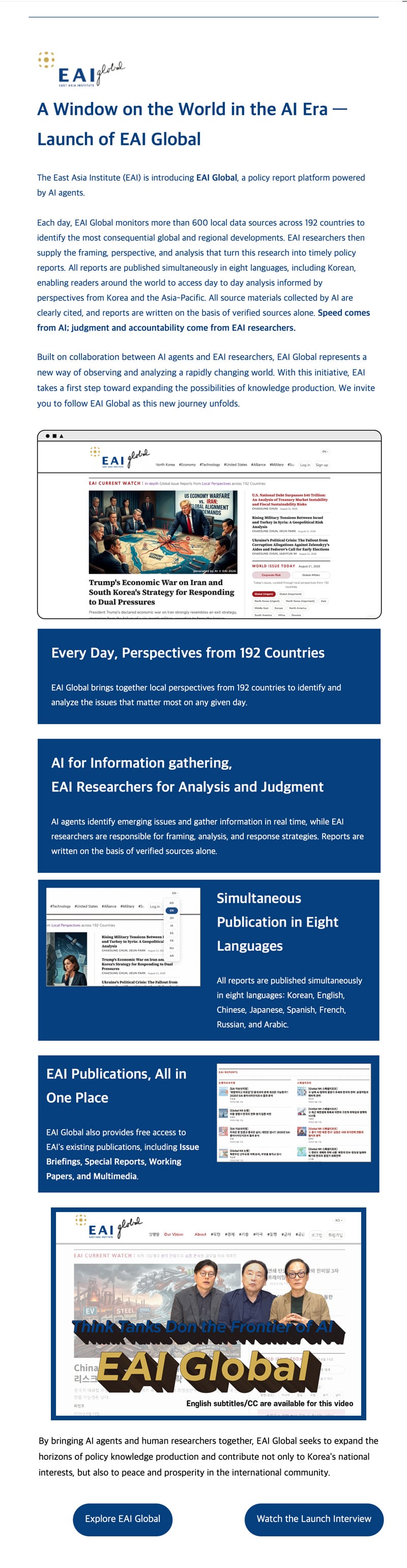
Devi Darmawan 2023-05-03Views : 42967
Working paper
[ADRN Working Paper] Horizontal Accountability in Pakistan

1. Background   Horizontal accountability refers to the ability of state institutions, including the legislative and judicial branches and other oversight agencies, to hold accountable the executive branch of the government. Horizontal accountability can be achieved when different institutions implement efficient checks and balances to prevent the abuse of power. For example, when the legislature oversees the executive branch or when a constitutional court reviews the laws adopted by the legislature, these are also called forms of accountability that run horizontally ‘among equals’ (O’Donnell 1998; Lindberg 2013).   In a political structure, horizontal accountability is commonly defined as the exercise of oversight by different institutions over one another. Institutions that exercise such oversight include legislative committees, which not only check the actions of the government but also have the power to hold them accountable. The legislature, specifically the National Assembly in the case of Pakistan, can also exercise accountability by initiating a vote of no-confidence. Therefore, the horizontal accountability mechanism emphasizes the separation of powers among state institutions, which prevents the abuse of power and allows other state institutions to ask for information, question officials, and possibly punish improper behavior (Rose-Ackerman 1996).   Most democratic countries stand on three pillars with well-defined functions. The legislature makes laws, scrutinizes the executive's performance, and provides a platform to express public sentiments through elected representatives; the judiciary settles disputes between people, groups, and governments; and the executive is responsible for carrying out laws and managing state affairs. In Pakistan, the line between the legislative and executive branches is blurry because the Prime Minister serves as the chief executive and leader of the majority party in the national assembly and, as such, simultaneously represents both pillars of the state. In an ideal systеm, these three state pillars would not interfere with each other’s affairs. In Pakistan, however, inter-institutional interference is such a severe issue that former Chief Justice of Pakistan, Justice Asif Saeed Khosa, proposed an inter-institutional dialogue among these three pillars including military and intelligence agencies to resolve this issue (Mehboob 2023).   Over the last two decades, ‘accountability’ has become Pakistan’s most famous political slogan (Mehboob 2022). Despite many reforms in the accountability systеm, Pakistan received the worst ranking in the Corruption Perception Index (CPI) released by Transparency International (TI) (TI 2023). Per CPI rankings, Pakistan’s score has been declining continuously since 2019.   Similarly, the Control of Corruption Index (CCI) that measures horizontal accountability also depicted poor performance by Pakistan. From 2013 to 2020, Pakistan’s score ranked less than 1.0, except for in 2014, when its score was 0.83. Institutions like the judiciary, legislature, and oversight agencies like the National Accountability Bureau (NAB) and Anti-Corruption Departments are responsible for executing horizontal accountability in Pakistan.   In Pakistan, it is widely believed that the existing institutions associated with ensuring accountability, especially the NAB, are responsible for political instability and the worst economic conditions in the country. Apart from its poor performance, the media, politicians, and even the judiciary have observed that the NAB is involved in selective accountability, political victimization, political engineering, and misuse of authority (Iqbal and Mustafa 2022).   The Parliament of Pakistan executes the public sector financial accountability function through the Public Accounts Committee (PAC) and parliamentary committees. Motions, resolutions, call attention notices, and points of public importance are raised in the House, and parliamentarians ask questions accordingly. In parliamentary democracies, the committees are considered the “eyes, ears, hands and even brain of the Parliament.” Another saying about the importance of the Committee is the “Congress in session is Congress in Exhibition, while Congress in its Committee Room is Congress at work” (Joseph P. Haris). In considering Pakistan, ‘Congress’ can be replaced by ‘Parliament’.   The purpose of this paper is to evaluate the current state of horizontal accountability in Pakistan by studying the strengths and weaknesses of its mechanisms, including laws and regulations. This paper will also help to develop a basic understanding of key issues of horizontal accountability structures in Pakistan by providing different perspectives on how horizontal accountability can contribute to the functioning of democracy.   2. Horizontal Accountability Mechanisms in Pakistan   Pakistan’s governmental structure is composed of three major institutions: the executive government, the parliament, and the judiciary, and all three are guaranteed separated and independent by the Constitution of the Islamic Republic of Pakistan. The executive branch includes the Prime Minister, who leads the cabinet. The legislative branch contains a bicameral parliament consisting of the Senate, the National Assembly and four Provincial Assemblies. Finally, the judicial branch consists of the Supreme Court, the High Courts, and the lower Courts. Additionally, there are oversight agencies meant to check the abuse of power by the executives. These agencies include the National Accountability Bureau (NAB), the Office of the Auditor General of Pakistan (AGP), federal and provincial ombudsmen, and anti-corruption establishments at the provincial levels.   Figure 1. Governmental Structure of Pakistan       2.1. The Legislature   The Parliament of Pakistan and provincial assemblies have three key functions: legislation, representation, and oversight, or to monitor the performance of the elected government through plenary and ministry-wise committees. The Rules of Procedure and Conduct of Business in the National Assembly, the Senate, and provincial assemblies contain special provisions that empower the standing committees to monitor the performance of the Ministries and their associated public bodies and forward their recommendation reports to the Ministry, which then submits its response to the Committee (National Assembly of Pakistan n.d.). The committees deal with a large part of the business of the House because many parliamentary tools that include legislation, motions, resolutions, call attention notices, question hours, and points of public importance are raised in the House but may eventually end up in the committees.   The role of the PAC includes the examination of the government’s annual financial accounts, the report of the AGP, and other matters that the Minister of Finance refers to it. Similar rules in the provincial assemblies regulate PAC working within them. The Controller General of Accounts compiles the annual accounts, which the AGP audits. Under Article 170 of the Constitution of Pakistan, the AGP then submits its annual audit reports to the President, who lays them before the Parliament. After this, the Parliament refers these yearly audit reports to PAC for scrutiny (Cheema 2020).   Performance   During the past four years, from 2018 to 2022, 38 standing committees of the National Assembly convened 806 meetings and presented 319 reports, while 37 Senate standing committees convened 801 meetings and presented 440 reports to the House between 2019 and 2022.   On the other hand, between December 18, 2018, and December 2022, PAC held 503 meetings, including meetings of sub-committees. PAC discussed 10,278 paras and referred 78, 31, and 3,821 paras to NAB, FIA, and DAC, respectively. Moreover, PAC settled 617 grants and 2,984 paras. However, 1,029 grants and 21,217 paras are still pending. During this period, 999,013.06 million rupees (Rs.) were recovered.   Table 1. Performance of 15th Public Accounts Committee (PAC)       The National Assembly can also constitute a special committee. For instance, a special committee on railways was established on April 22, 2008, by the National Assembly through a resolution on the issue of the allotment of Pakistan Railways land to the Royal Palm Golf and Country Club, Lahore, on nominal prices. The committee presented its report on August 26, 2010, and subsequently recommended the termination of the contract, the recovery of losses from the contractor, and legal proceedings against the involved officials (National Assembly of Pakistan 2010). The Supreme Court (SC) nullified the lease agreement and gave possession of the land back to Pakistan Railways (Sheikh 2019). In this way, the committees of the Parliament successfully responded to the unlawful encroachment of the executive officials.   2.2. The Judiciary   The judicial branch in Pakistan is constitutionally and legally independent to check and penalize executive wrongdoings. Article 184 (3) of the Constitution of Pakistan empowers the Supreme Court to take 'suo motu,’ meaning "on its own accord," notice on any question of public importance involving the enforcement of fundamental rights (Mehboob 2020). Similarly, Article 186A of the Constitution authorizes the SC to transfer any case, appeal, or other proceedings pending before any High Court. Furthermore, as per the Supreme Court Rules, 1980, the constitution of benches is also at the discretion of the Chief Justice of Pakistan.   The Constitution of Pakistan provides a method of appointing superior court judges in addition to the qualification criteria. As per Articles 175 & 175A of the Constitution, the Judicial Commission of Pakistan (JCP) fulfills the appointment of judges for the Supreme Court and the High Courts. Once JCP approves the name of a judge for the Supreme Court, it goes to the eight-member Parliamentary Committee, which then has two weeks to consider the nomination.   The Constitution also provides the procedure for removing judges from the superior courts through the Supreme Judicial Council (SJC). Thus, the Constitution ensures freedom, independence, and impartiality from the superior judiciary.   Performance   According to the SC press release dated February 25, 2023, 52,450 cases are pending with the SC. Comparably, as per the 2020 annual report of Judicial Statistics of Pakistan, Pakistan’s superior and lower judiciaries face a backlog of 2.15 million cases (Law and Justice Commission of Pakistan 2020). Moreover, Pakistan was ranked 129th out of 140 nations according to the 2022 Rule of Law Index formulated by the World Justice Project, while in 2021, Pakistan was ranked 130th out of 139 countries (World Justice Project 2022).   2.3. Other Oversight Agencies   National Accountability Bureau (NAB)   The National Accountability Bureau is a leading anti-corruption agency in Pakistan, charged with eliminating corruption. It follows the National Accountability Ordinance (NAO)-1999. In 2002, NAB launched the National Anti-Corruption Strategy (NACS), which allowed the NACS team to conduct surveys, study external models of international anti-corruption agencies, and involve local stakeholders (National Accountability Bureau n.d.).   Accountability courts are put into place to protect against all forms of abuse of power, and cases may be transferred between these courts. Under Section 22 of the NAO, the NAB chairman may investigate any suspected offense that appears credible under reasonable grounds and is either referred to him or discovered by himself. If deemed necessary, the chairman may collaborate with other agencies or people who can provide adequate assistance in the investigation. NAB refers the cases to accountability courts, which then decide the outcomes as per law.   The NAO has experienced many amendments since 1999. The amendments passed by Parliament in 2022 have addressed almost all of the issues which were criticized either by the courts or the victims of the NAO, including the appointment process for the chairman, exclusion of tax matters from the scope of NAO, reduction of the period of remand from 90 to 14 days, and the reduction of the terms of the NAB chairman and prosecutor general from four to three years. NAO has also been made inapplicable to cabinet ministers and several other officeholders who have made policy decisions in which no monetary gain is evident. The powers of arrest have also become rationalized (Mehboob 2022).   Performance   According to the 2021 annual report, NAB received 34,813 complaints. During 2021, NAB authorized 392 inquiries and 121 investigations and filed 93 References in Accountability Courts. Additionally, NAB recovered Rs.91.195 billion of the money looted from corrupt elements (directly and indirectly) during the year. As per the report, the success rate of NAB cases is 71.5%. A total of 11 cases of former Presidents of Pakistan, 19 cases of sitting/former Prime Ministers, 280 cases of sitting/former ministers or parliamentarians, and 354 cases of former/serving bureaucrats are either under process at NAB or under trial at accountability courts (National Accountability Bureau 2022). The perception of NAB is that it is performing well, but international reports on Pakistan depict a gloomy picture. Pakistan was ranked 129th out of 140 nations according to the 2022 Rule of Law Index formulated by the World Justice Project, while in 2021, Pakistan was ranked 130th out of 139 countries. Similarly, based on the annual reports of Transparency International, Pakistan’s Corruption Perception Index (CPI) score has shown a continuous decline since 2018.   Figure 2. Corruption Perception Index (CPI) score of Pakistan (2010-2022)       Auditor General of Pakistan   The Office of the AGP is a constitutional position and is considered one of the main pillars of Pakistan’s governance and accountability framework that ensures good use of public money. The term, appointment, removal, functions, and powers of the AGP are defined from Articles 168 to 171 of the Constitution. Article 168 of the Constitution of Pakistan appoints the AGP (Auditor General of Pakistan n.d.).   The functions of the AGP include, but are not limited to, the determination of principles and methods under which the accounts of the Federation and the provinces are kept; the certification of financial year accounts compiled by the Controller General of Accounts; the annual receipts and disbursements of the Federation, the provinces, and the districts; the submission of the certified accounts with recommendations; the preparation of reports on the accounts of the Federation and provinces; and the submission of these report to the President and governors, respectively, who then allow them to be presented to the National and Provincial Assemblies.   Performance   Per the 2020-2021 annual report of AGP, Federal Audit Operations (FAO), which work under the supervision of various audit wings of the AGP, carried out the audit of 6,848 formations of Federal and Provincial Governments during the 2020-2021 audit year. It audited an amount of Rs. 19,149.49 billion and recovered an amount of Rs.487.24 billion (Auditor General of Pakistan 2022).   3. Deficiencies in Horizontal Accountability Mechanisms   Unfortunately, parliamentary committees in Pakistan at both the national and provincial levels have not been very active or effective despite their powers. There is no constitutional, legal, or institutional limits of the legislative branch to check the executive branch sufficiently. For instance, the Finance Bill does not get referred to any of the standing committees of the National Assembly. Under Article 73 of the Constitution, it is mandatory that the Senate provide its recommendations on the Finance Bill, containing the Annual Budget Statement, within fourteen days after its referral by the National Assembly of Pakistan. The National Assembly can pass the Finance Bill with or without the recommendations of the Senate. Similarly, PAC has limited provisions as it only scrutinizes inputs and compliance audits. Moreover, dealing with the previous year's reports consumes most of the PAC's time. Its recommendatory nature is also not taken seriously by government officials. For example, on April 2, 2022, the Islamabad High Court (IHC) set aside its directives when it restored 68 previously dismissed employees from the Pakistan Agricultural Research Council (PARC). Additionally, the political nature of PAC membership also influences its ability to work, as the members of treasury benches are not keen to hold their government accountable to the legislature.   The immense backlog of cases in the courts is also a significant problem. Even the superior judiciary has not been able to deal with case pendency effectively. Besides this, the alleged encroachment by the judicial branch on the executive domain is criticized widely in the media. Some examples of these encroachments include the opening of shopping malls by the SC in 2020, which were previously closed down by the government due to the coronavirus; a penalty of $6 billion imposed by the International Centre for Settlement of Investment Disputes (ICSID) in 2019; and the removal of Prime Ministers Syed Yousuf Raza Gillani and Mian Muhammad Nawaz Sharif in 2012 and 2017, respectively (Bhatti and Iqbal 2023).   Political victimization is a primary issue of NAB. The courts and honorable justices have not only questioned the performance of NAB but have also criticized the NAO. Therefore, while hearing cases of the NAB, Parliament has been advised to make suitable amendments many times. Furthermore, the subject of accountability always remains controversial in Pakistan as it challenges the dominant sectors of society, which then respond with their full powers, resulting in immense controversy. The accountability systеm itself is also responsible for creating doubts and complaints about the credibility of the accountability process. In addition to political victimization, establishment interference is a major factor in civilian governments. The previous NAB Chairman, appointed on July 21, 2022, served for only seven months before resigning on February 21, 2023, citing “interference” and “pressure.”   4. Reforms to Improve the State of Horizontal Accountability   There is a dire need to reform the parliamentary budget process, and the Finance Bill should be referred to the committees for discussion and recommendations. The legislators should also be regulars in the House to answer questions and to showcase the Ministry’s performance. Moreover, the Prime Minister should personally answer questions in Parliament regularly. The PAC must expand its scope and discuss the results of budget allocations, the performance of the executive body, and compliance with rules and regulations. There is also a need to develop a mechanism to eliminate the backlog of audit reports. Finally, the PAC can create a Parliamentary Budget Office, analogous to industrialized countries, to ensure ex-ante control of the country's financial management process (Masood 2018).   There is a considerable need for inter-institutional dialogues among the state pillars to avoid overreaching in the domains of other institutions and to build trust among these institutions. Additionally, the performance of the judges should also be audited. Judges who fail to meet the prescribed standards may be provided additional training or terminated from the office. The judiciary must ensure the disposal of cases at the earliest possible time in order to provide speedy justice to the common man. Similarly, the discretion of constituting benches, the transfer of judges, the appointment of cases, and the power of suo motu by the CJP alone should be revised and accomplished through a committee.   There is a dire need for a constitutional, legal, and institutional framework that may enhance the neutrality of the accountability institutions to exercise oversight over the powers of the executives and prevent the abuse of power. The number of accountability courts needs to increase in order to cope with the workload. Moreover, the prosecution is under-resourced, as the prosecutors available to deal with the delay in cases are short in number. Other key issues, including interference by influential sectors, also need to be addressed to enhance the efficiency of accountability institutions.   5. Conclusion   As a democratic country possessing a parliamentary systеm, Pakistan has tested various accountability mechanisms since 1947 after its independence from Britain. Unfortunately, all these structures were manipulated either by the civilian governments or military dictators during their regimes. On the other hand, the interference of one constitutional institution in the affairs of other institutions is a common occurrence in Pakistan, which always leads to political chaos in the country. For instance, the judiciary has recently overreached into the executive and parliamentary domains. Recent developments show that the politicians drag the judiciary branch into political affairs in attempts to make matters controversial. Besides this, the pressure of military governments and the influence of political leaders and the powerful sectors of society further derail the process of horizontal accountability in Pakistan. Therefore, there is a significant need for inter-institutional dialogues among the three state pillars to reform the current accountability structure for the betterment of society. Otherwise, the situation would become worse. ■   References   Asad, Malik. 2022. “Court sets aside Public Accounts Committee’s direction of restoring 68 PARC employees.” Dawn, April 3. https://www.dawn.com/news/1683077   Auditor General of Pakistan. n.d. “National Role.” Accessed February 25, 2023. https://agp.gov.pk/Detail/OTEzNGJiYTctODAyNS00YWZjLTg5ZjItOTk2NmYxYjQ4ZGRj   ______. 2022. “Annual Report Year 2020-21.” https://agp.gov.pk/SiteImage/Policy/AGP%20Annual%20Report%202020-21.pdf   Bhatti, Haseeb, and Nasir Iqbal. 2023. “Elections in Punjab, KP to be held in 90 days, rules SC in 3-2 verdict.” Dawn, March 1. https://www.dawn.com/news/1739739   Cheema, Faisal Saeed. 2020. “ECOSAI Circular,” The Public Sector Financial Accountability: The role of Public Accounts Committee in Pakistan, 16. https://agp.gov.pk/SiteImage/Misc/files/8_ecosai-circular-spring-issue-2020-article-Faisal%20Saeed%20Cheema.pdf   Iqbal, Nasir, and Ghulam Mustafa. 2022. “A Review of Accountability systеms: Learning from Best Practices.” PIDE Knowledge Brief No. 82. https://www.pide.org.pk/wp-content/uploads/kb-082-a-review-of-accountability-systеms-learning-from-best-practices.pdf   Law and Justice Commission of Pakistan. 2020. “Judicial Statistics of Pakistan.” http://ljcp.gov.pk/nljcp/assets/dist/Publication/JSP2020.pdf   Masood, Talat. 2018. “Revitalizing the Public Accounts Committee.” The Express Tribune, October 3. https://tribune.com.pk/story/1816730/revitalising-public-accounts-committee   Mehboob, Ahmed Bilal. 2019. “Inter-institutional dialogue, but how?” Dawn, February 3. https://www.dawn.com/news/1461476/inter-institutional-dialogue-but-how   ______. 2020. “Questions of judicial overreach and governance in Pakistan.” Arab News, May 26. https://www.arabnews.pk/node/1680251   ______. 2022. “Accountability fails again.” Dawn, June 2. https://www.dawn.com/news/1692731/accountability-fails-again   ______. 2023. “The rocky road between Pakistan’s judiciary and parliament needs fixing.” Arab News, February 17. https://www.arabnews.pk/node/2253121   National Accountability Bureau. n.d. “About Us.” Accessed February 24, 2023. https://nab.gov.pk/home/introduction.asp   ______. 2022. “Annual Report 2021.” https://nab.gov.pk/Downloads/NAB_Annual_Report_2021.pdf   National Assembly of Pakistan. n.d. “Committee systеm.” Accessed February 20, 2023. https://na.gov.pk/en/content.php?id=63   ______. 2010. “Report of the Special Committee on Railways.” https://na.gov.pk/uploads/documents/1303527590_183.pdf   Senate of Pakistan. 2018. “The Constitution of the Islamic Republic of Pakistan.” Last amended May 31, 2018. https://senate.gov.pk/uploads/documents/Constitution%20of%20Pakistan%20(25th%20amendment%20incoporated).pdf   Sheikh, Wajih Ahmad. 2019. “SC cancels lease of Lahore’s elite club, gives it to railways.” Dawn, June 29. https://www.dawn.com/news/1491022   World Justice Project. 2022. “World Justice Project (WJP) Rule of Law Index 2022.” https://worldjusticeproject.org/sites/default/files/documents/Pakistan.pdf     ■ Muhammad Habib is serving as Projects Manager in Pakistan Institute of Legislative Development and Transparency-PILDAT. He has over 5 years of experience in coordination and implementation of different projects in the field of Political Parties Development, Strengthening Democratic Institutions, Electoral Process Monitoring and Reforms, Youth, elected Local Governments and Media. He has been involved in data research, analysis, evaluation and report writing. He also liaisons with media and oversees post-event media coverage in print, digital and broadcast media. He holds a Master’s degree in Library and Information Science with distinction from the University of Punjab. Earlier, he has served in education sector in different capacities.     ■ Typeset by Hansu Park, Research Associate     For inquiries: 02 2277 1683 (ext. 204) | [email protected]  

Muhammad Habib 2023-05-03Views : 13770
Working paper
[ADRN Working Paper] Promoting Democracy through Direct Public Engagement: The Sri Lankan Experience

1. Introduction   In the contemporary context, democracy is synonymous with a form of government that is reflective and representative of the general will of the people (Wallace 2021). Throughout history, democratic governance has mainly taken two forms: i) directly by the people; and ii) by representatives of the people. When democratic governance is direct, the people participate in the policy formulation and decision-making processes as individuals (Encyclopedia Britannica 2022). In contrast, when democratic governance is representative, policy formulation and decision making are undertaken by representatives who are elected by the people (Haxhiu and Alidemaj 2021). Due to the complexities involved in policy formulation in modern-day states, and the impracticalities involved in obtaining the views of an entire population, modern democracies are premised on representative democracy.   Nevertheless, direct democracy continues to be regarded as the purest form of democracy. As such, certain governance mechanisms that are premised on direct democracy continue to find their place in modern constitutions and legal frameworks. Traditionally, direct democracy has been concerned with formal instruments, such as referenda and recall elections. However, alternative instruments that allow citizens to be directly involved in governance, such as public petitions, have been formalized through law and practice and have come to be accepted as loosely falling within the scope of direct democracy. Thus, for the purpose of this research study, an expansive scope of direct democracy will be considered so as to include both traditional and alternative instruments of citizen engagement.   Sri Lanka has recognized and formalized traditional and alternative instruments that allow citizens to directly engage in policymaking and matters of governance. This research study explores these instruments, which include: i) the referendum; ii) private member bills; iii) public petitions; and iv) parliamentary questions, with a view to assessing the modalities within which they operate and analyzing their efficacy in promoting direct citizen engagement.   This research study is presented in three sections. The first section explores the instruments that enhance the ability of citizens to directly engage with and be involved in governance in Sri Lanka. The second section discusses inherent and structural challenges that undermine the meaningfulness and effectiveness of these instruments. The final section provides conclusions drawn from the preceding analysis and briefly discusses solutions to address the challenges.   2. The Formalized Instruments Recognized Under Sri Lanka’s Legal System   2.1. Introduction   The evolution of public participation in Sri Lanka’s democratic processes can be traced back to Sri Lanka’s colonial period, from which the country inherited its current democratic structure (Cooray 2005). In 1944, a Westminster parliamentary structure was introduced to Sri Lanka. The institutions established under this Westminster-style structure were governed by Commonwealth parliamentary traditions, in addition to the constitution that was in force at the time. Among these traditions was the ability for citizens to directly engage in government through instruments such as private member bills, public petitions, and parliamentary questions (Sixth Report of the Committee on Public Petitions 2016). In 1972, Sri Lanka adopted the First Republican Constitution, which continued the Westminster parliamentary structure of government (Wasanthakumar and Abeyratne 2015).   In 1978, Sri Lanka adopted the Second Republican Constitution, which introduced a semi-presidential system, that is, a combination of a presidential system and a parliamentary system, which was a departure from the previous Westminster parliamentary system. Article 3 of this Constitution recognizes that the sovereignty of the Republic of Sri Lanka is inalienably vested in the people of Sri Lanka. Article 4 formulates the structure of democratic governance in Sri Lanka, establishing that the executive power of the sovereign people shall be exercised by the executive president, the legislative power of the sovereign people shall be exercised by the parliament, and the judicial power of the sovereign people shall be exercised by the parliament through the system of courts (Ratnapala 2021). The sovereign people shall elect the executive president and the members of parliament as their representatives every five years. Governance in Sri Lanka is carried out through this structure of representative democracy.   However, the constitution and laws of Sri Lanka recognize a number of mechanisms and instruments by which the sovereign people can be directly involved in governance. These mechanisms and instruments are twofold: i) referendums; and ii) other formalized instruments of direct engagement.   2.2. The Referendum   The essence of a referendum is that it enables people to directly vote to approve or reject a law or proposal. Articles 85 and 86 of the Constitution empower the executive president to proclaim that any bill or other matter of national importance shall be to put to the people for their approval (Manthri.lk 2017). The procedure for carrying out a referendum is prescribed in the Referendum Act No. 7 of 1981. The need for a referendum can also arise in two other instances. The first of these is when a bill proposes the amendment, repeal, or replacement of any of the entrenched articles of the Constitution. The second is when the Supreme Court determines that a proposed bill is inconsistent with an entrenched article of the Constitution. [1]   There has been only one referendum in Sri Lanka. This referendum took place when the president at the time, J.R. Jayawardena, submitted a proposal to the people to extend the term of the existing parliament for a further six years without conducting a general election (Jayawickrama 2021). On December 22, 1982, the referendum was held and 54.6% of voters approved the proposal, while 45.3% of voters rejected the proposal, thereby effectively extending the term of the then-parliament for a further six years, i.e., to 1989 (Manthri.lk 2016).   However, there are two critical shortcomings in Sri Lanka’s framework on referenda that undermine its ability to be used as an instrument of direct democracy. The first is that a referendum can only be called by the president. There is no modality through which the people can mandate a referendum. As such, the calling of a referendum is purely at the discretion of the president. The second shortcoming is that referenda are limited to approving bills at the parliament level and matters of national importance. Accordingly, the referendum framework has no application to matters at the local government level, thereby preventing communities from directly participating in policymaking on matters that are likely to impact them on a day-to-day basis (William Horace Brown 1905). By contrast, in Switzerland, the people can request local government bodies (cantons) to initiate legislative processes and propose amendments to existing laws. Furthermore, citizens of Switzerland are empowered to call for administrative referendums, during which the people are entitled to vote on projects that will incur high levels of public expenditure (Electoral Knowledge Network 2004).   2.3. Other Formalized Instruments   Article 74 of the Constitution empowers parliament to formulate standing orders for the purposes of, among other things, regulating the procedures of parliament. The parliamentary standing orders that are presently in force formalize three instruments that are intended to increase citizen engagement and involvement in governance. These three instruments are: i) private members bills; ii) public petitions; and iii) parliamentary questions.   2.3.1. Private Members Bills   A private members bill is a formal instrument that has the potential to be used by citizens to directly impact legislation and policy formulation. [2] Standing Orders 52 and 53 state that a private member can present two types of bills to parliament. The first of these types is bills that are intended to affect or benefit a particular person, association, or corporate body. The second is bills that are intended to be in furtherance of the public interest.   Using private members bills is a two-step process. First, a citizen must advocate for and gain the support of a parliamentarian who is a “private member” for the purposes of introducing a bill to parliament. Secondly, said parliamentarian must sponsor the proposed bill in parliament. Once this process is completed, the bill will be deliberated upon in parliament according to generally accepted procedures; that is, the bill is referred to the Attorney General for their opinion, and if the Attorney General deems that the proposed bill is consistent with the Constitution, the bill is published in the Gazette. Members of the public are then given the opportunity to challenge the proposed bill before the Supreme Court for seven days after the publication of the bill in the Gazette (SL Const Article 121(3)). Thereafter, the bill will proceed for deliberation in parliament.   However, data collected by the Manthri.lk, an independent platform monitoring Sri Lanka’s parliament, suggests that private members bills are underutilized as an instrument of direct citizen engagement. The data revealed that between August 2015 and October 2021, a total of 209 private member bills were presented in parliament, yet only 12 of these bills concerned matters of public interest (see Table 1). Thus, it is evident that private member bills have been predominantly utilized as an instrument to regulate the affairs of incorporated bodies, rather than an instrument to address issues of public interest.   2.3.2. Public Petitions   Petitioning the parliament is a traditional democratic instrument that was inherited by Sri Lanka through the British Westminster system (Huzzey and Miller 2020). At present, the public petition mechanism enables a citizen “to bring to the notice of parliament the flaws in the administrative machinery of the government and seek redress for grievances suffered” (Wijesekera 2002).   An aggrieved citizen can submit a petition to any parliamentarian requesting that the matters contained in the petition be considered and resolved. The petition is required to be submitted in writing and endorsed by the aggrieved citizen. If the parliamentarian to whom the petition is addressed is satisfied that there is a valid grievance, the parliamentarian can endorse the petition and refer it to the Committee of Public Petitions (Manthri.lk 2018). The Committee of Public Petitions is currently comprised of 15 parliamentarians, representing all of the political parties in parliament. The Committee has the authority to entertain an unlimited number of petitions on an unrestricted range of topics (Parliamentary Standing Order 122). If the Committee on Public Petitions is of the view that a petition reveals an infringement of the citizen’s fundamental rights or an injustice caused to the citizen, the Committee may either conduct an inquiry by itself or refer the petition to the Parliamentary Commissioner for Administration (Ombudsman) for consideration and granting of due relief (Parliamentary Standing Order 122(3)).   Statistics published on Manthri.lk revealed that during the tenure of the Eighth Parliament of Sri Lanka (August 2015 to August 2020), a total of 2,401 public petitions were submitted to the Committee on Public Petitions by 181 parliamentarians out of the total of 225 members of the Parliament of Sri Lanka (see Tables 2 and 3). [3] As such, 42 parliamentarians did not submit any public petitions to the Committee on Public Petitions. Of the 2,401 petitions, a total of 1,115 petitions, that is, 46% of all petitions, were presented by only 10 parliamentarians (see Table 4). Similarly, during the tenure of the present Parliament of Sri Lanka (September 2020 to date), a total of 712 public petitions were submitted to the Committee on Public Petitions by 138 parliamentarians, indicating that 85 parliamentarians have not yet submitted any public petitions to the Committee (see Tables 5 and 6).   These statistics indicate that public petitions are neither extensively nor uniformly used by the citizenry of Sri Lanka as an instrument for directly engaging with the government and administration.   2.3.3. Parliamentary Questions   Parliamentary questions are another instrument that have the potential to enable citizens to directly engage with parliament and policy formulation. Parliamentary questions are, in essence, the posing of oral and written questions by a parliamentarian to the prime minister or any other minister on matters of public affairs (Policy.lk 2020).   In order to utilize this instrument, an individual or a group of individuals must advocate for and obtain the support of a parliamentarian for the purpose of posing questions on their behalf. The posing of parliamentary questions is governed by the parliamentary standing orders, which allow parliamentarians to direct any questions to any minister regarding matters of government policy that fall within the purview of the minister. While questions posed to parliament must generally be placed on the Order Book of Parliament, Standing Order 27(2) allows the leader of the opposition and any party leader to raise questions relating to matters of public importance without requiring the questions to be included in the Order Book of Parliament. Moreover, following the parliamentary tradition of the United Kingdom, from 2018 onwards, parliamentarians are entitled to direct up to four questions to the prime minister pertaining to governmental policies during the prime minister’s question time. Accordingly, citizens can urge their representatives to take advantage of the opportunity to ask parliamentary questions for the purpose of voicing the questions that the public has on matters of policy and administration.   Statistics compiled by Manthri.lk revealed that during the tenure of the Eighth Parliament of Sri Lanka, a total of 2,372 questions were raised by 105 parliamentarians (see Table 7). Of these 2,372 questions, a total of 1,324 questions (approximately 56%) were raised by only 10 parliamentarians (see Table 9). Similarly, during the tenure of the present parliament, 10 parliamentarians were responsible for raising 397 questions (approximately 64%) out of a total of 619 parliamentary questions (see Table 10).   Thus, as with private members bills and public petitions, the instrument of parliamentary questions also appears to be inadequately and ineffectively used for the purposes of direct engagement with matters of governance.   3. Challenges to the Use of Formalized Instruments Within the Context of Sri Lanka   Analysis of the frameworks within which the aforementioned formal instruments function reveals three critical challenges that undermine the ability of the people to directly engage in matters of governance: i) the absence of mechanisms to mandate the implementation of instruments of direct engagement; ii) the absence of mechanisms to improve parliamentary accountability; and iii) systematic and structural issues that inhibit access to instruments of direct engagement.   3.1. Absence of Mechanisms to Mandate the Implementation of Instruments of Direct Engagement   Although the parliamentary standing orders provide for the presenting of private members bills, public petitions, and parliamentary questions, the functionality of these instruments is premised solely on the discretion of parliamentarians. This is because a private members bill, public petition, or parliamentary question will be presented only if the parliamentarian who has been approached by a citizen agrees to submit the matter before parliament. None of the frameworks contain a mechanism by which a citizen or a group of citizens can trigger mandatory action by a parliamentarian. For instance, if a citizen wishes to submit a petition or ask a minister a particular question, the citizen can only do so if a parliamentarian agrees to submit such a petition or ask such a question. There is no way that the citizen can compel the parliamentarian to do so, regardless of the validity of the concerns raised by such a petition or question. This challenge also arises with regards to referendums, as the ability to call a referendum is vested solely in the president and cannot be triggered by the people with respect to matters of national or local importance.   3.2. Inadequacy of Mechanisms to Improve Parliamentary Accountability   Accountability can serve as a critical check against the tyranny of unbridled discretion. Thus, improving mechanisms that hold parliamentarians accountable can serve as a valuable method of ensuring that the discretion afforded to parliamentarians in terms of implementing instruments of direct engagement is exercised fairly and reasonably.   However, Sri Lanka lacks mechanisms that improve and ensure the accountability of parliament. For instance, there is no mechanism through which a petition submitted by a citizen can be tracked. Thus, an aggrieved citizen has no way to monitor the progress of their petition. Moreover, prior to the publication and compilation of statistics on the submission of public petitions and parliamentary questions by Manthri.lk, there were no mainstream platforms that published statistics on parliamentary attendance or how parliamentarians implemented and gave effect to these instruments. Further, Sri Lanka has yet to implement a mechanism requiring parliamentarians to report their progress as a public representative on a monthly or annual basis. These gaps in holding parliamentarians accountable enable them to exercise discretion without sufficient checks, thereby undermining the ability of citizens to fully instrumentalize the frameworks of private member bills, public petitions, and parliamentary questions. The lack of mechanisms to mandate the implementation of these instruments is thereby compounded by the lack of mechanisms to hold parliamentarians to account.   3.3. Systematic Issues Inhibiting Access to Instruments of Direct Engagement   Access to democratic institutions is essential to the meaningful utilization of instruments of direct engagement, but certain systemic issues in Sri Lanka have significantly inhibited access to such institutions and instruments. A few of these issues are explained as follows.   3.3.1. Limited Access to Parliamentary Proceedings   Parliamentary proceedings in Sri Lanka are physically and virtually accessible to the public, and parliamentary proceedings are telecast on national networks. However, this accessibility is limited to the proceedings of the main chamber of parliament. In contrast, the proceedings of the numerous committees and sub-committees of parliament, which also deliberate on matters of public interest, are not accessible to the public.   3.3.2. Gender Gap in Democratic Institutions   Per the 2021 Global Gender Gap Index, Sri Lanka is ranked 116th overall out of 150 countries and 90th in terms of political empowerment of women (Democracy Reporting International 2021). Sri Lanka’s rank is predominantly premised on the low presence and participation of women in political organizations, government institutions, and elected offices. Limited female participation in public life has been linked to several causes, including Sri Lanka’s patriarchal culture, violence against women, and the negative portrayal of female political candidates in the media and by political rivals. Although Sri Lanka introduced a quota for female politicians at the provincial and local government authority levels, women are still underrepresented in Sri Lanka’s representative bodies. This low level of participation in formal politics by women inhibits female citizens from exercising their democratic rights by effectively engaging with the country’s democratic institutions.   4. Conclusion and Areas for Improvement   4.1. Conclusion   Two findings can be derived from the above analysis. First, it is clear that Sri Lanka has mechanisms in place that enable citizens to directly engage in matters of governance, administration, and policymaking. In utilizing these mechanisms, ordinary citizens seek to achieve a higher level of involvement in matters that will affect their day-to-day lives. Second, there are challenges to accessing and being able to meaningfully use these mechanisms. These challenges stem from issues inherent to the mechanisms themselves, such as their dependence on the discretion of a representative of the people, as well as systemic issues in Sri Lanka’s governance framework, such as inadequate access to parliamentary proceedings.   Thus, in order for citizens to be able to participate more directly and meaningfully in democratic governance, these mechanisms need to be improved on a number of grounds, such as:   i. Expanding the scope of referendums   Although Sri Lanka’s Constitution recognizes referendums as a method of direct democracy, the executive president is the only individual with the authority to call for a referendum. Sri Lanka could resolve this problem by adopting a system similar to that of Switzerland, where the people can trigger legislative initiatives and referenda. Sri Lanka should also explore introducing referendums for resolving legislative and policy issues at the local governmental level by allowing citizens to trigger referenda through proposals once they receive endorsements/signatures from a sufficient portion of the constituency.   ii. Introducing mechanisms to increase accountability of public representatives   Although Sri Lanka recognizes private members bills, public petitions, and parliamentary questions as formalized instruments allowing citizens to directly engage with parliament, the successful implementation of these instruments is contingent on effective implementation and follow-up by parliamentarians. Thus, Sri Lanka should explore the possibility of introducing mechanisms to monitor the use of such instruments by citizens and parliamentarians, while also raising awareness of the utility of such mechanisms among the general public.   iii. Introducing mechanisms to mandate the implementation of formalized instruments   As discussed before, the formal mechanisms of direct engagement currently lack a threshold or trigger that mandates their implementation. Therefore, Sri Lanka should introduce procedures that trigger the automatic implementation of such formalized instruments in specific circumstances, such as when a petition or proposal has been endorsed/signed by a specific number of citizens. ■   References   Combaz E, Mcloughlin C, Accountability and responsiveness of the state and society, GSDRC Publications, August 2014, https://gsdrc.org > ... > Supplements, accessed February 27 2022 Cooray, L.J.M. “Constitutional Government in Sri Lanka 1796-1977.” Pannipitya (2005): Electoral Knowledge Network, Swiss direct democracy, https://aceproject.org > mobile_browsing > onePag, accessed March 3 2022 Haxhiu S and Alidemaj A, Representative Democracy – its Meaning and Basic Principles, Huzzey R and Miller H, Petitions, Parliament and Political Culture: Petitioning the House of Commons, 1780–1918* Past & Present, Volume 248, Issue 1, August 2020, Pages 123–164 Jon Wallace, Hans Kundnani, and Elizabeth Donnelly, The importance of democracy, APRIL 14 2021 Jayawickrama Nihal, ‘THE REFERENDUM – An illegitimate alien mechanism’ (The Island December 26 2021) http://island.lk > the-referendum-an-illegitimate-alien-m..., accessed February 22 2022 Kirinde Chandani, Poor attendance in Parliament a perennial problem, Sunday times January 13 2019) Matsusaka, John, G. 2005. "Direct Democracy Works." Journal of Economic Perspectives, 19 (2): 185-206 Rathnepala S, Sri Lanka’s sovereignty and Port City Commission Bill – an analysis, (Economy Next May 18 2021) Rosenberger S, Seisl B, Stadlmair J, Dalpra E, What Are Petitions Good for?, Parliamentary Affairs, Volume 75, Issue 1, January 2022, https://academic.oup.com > article, accessed February 27 2022 Wijesekera P, Parliamentary Practice in Sri Lanka, Parliamentary Secretariat 2002     [1] The entrenched articles of the Constitution are set out in Article 83 of the Constitution. They are Article 1 (the name of the state: Sri Lanka), Article 2 (the nature of the state: Unitary), Article 3 (recognizing the inalienable sovereignty of the people), Article 6 (design of the national flag), Article 7 (lyrics and melody of the national anthem), Article 8 (declaration of the national day), Article 9 (granting Buddhism the foremost place), Article 10 (freedom of thought, conscience, and religion), Article 11 (freedom from torture or cruel, inhumane, or degrading treatment or punishment), and Articles 30(2) and 62(2) (prescribing the terms of office of the executive president and members of parliament). [2] Standing Order 24(3) interprets the term “private member” to mean any parliamentarian who does not hold the office of the Speaker, Deputy Speaker, Deputy Chairperson of Committees, Prime Minister, Cabinet Minister, State Minister, Deputy Minister, Leader of the House of Parliament, Leader of the Opposition in Parliament, Chief Government Whip or Chief Opposition Whip. [3] The speaker and the deputy speaker are excluded as members of parliament for the purposes of this computation.     ■ Verité Research is a private think tank that provides strategic analysis for Asia. Its main research divisions are economics, politics, law and media. This think tank is a member of the Asia Democracy Research network (ADRN). The Legal Research Team at Verité Research prepared this working paper. Supun Jayawardena and Uween Jayasinghe were the principal researchers.     ■ Typeset by Jinkyung Baek Director of the Research Department∙Senior Researcher     For inquiries: 02 2277 1683 (ext. 209) | [email protected]  

Legal Research Team, Verite Research 2022-07-14Views : 15716