EAI launched the Asia Democracy Research Network (ADRN) in November 2013 to conduct research related to democratic governance and human rights promotion in Asia. EAI serves as a representative of domestic think tanks and leads the organization of regional think tanks in Asia. It is responsible for supporting and managing research related to democracy at associated research institutes. ADRN was established to analyze threats to democracy in Asia and to promote discussions and practical research projects that could contribute to the consolidation of democracy in the region. Aimed at presenting policies based on research, ADRN examines threats and challenges to democracy by identifying and studying practical agendas for developing regional democracy in Asia. The network includes 22 major think tanks from 14 Asian countries including Taiwan, Malaysia, Mongolia, Myanmar, Bangladesh, Sri Lanka, India, Indonesia, Japan, Thailand, Pakistan and the Philippines, as well as South Korea’s EAI. 

Commentary Issue Briefing
[ADRN Issue Briefing] Harnessing AI to Strengthen South Korean Democracy

Background: AI and the Crisis of Democracy in the Digital Age The field of Artificial Intelligence (AI) has evolved from a mere computational tool to a pervasive force that is profoundly impacting human daily life, public discourse, and political decision-making. The advent of generative AI and the accelerated transition toward agentic AI signify a pivotal moment for contemporary governance. For the Republic of Korea, a nation that boasts world-class digital infrastructure and a vibrant civil society, the dissemination of AI technologies has now surpassed the point of no return. The 2025 Seoul Survey of Seoul metropolitan residents capture a striking duality in public attitudes toward AI (Seoul Metropolitan Government 2025). A survey of the public's perception of potential threats to social safety revealed that deepfakes, AI-generated fake news, and personal data leaks were regarded as the most severe threats, while at the same time, there was an overwhelming expression of support for the implementation of AI-driven public services, including welfare blind-spot detection and customized policy platforms. Discussions within academic and policy circles concerning the nexus of artificial intelligence (AI) and democracy have historically been characterized by a techno-pessimistic, regulation-centric paradigm, with a predominant focus on the potential hazards associated with surveillance capitalism, algorithmic bias, and electoral manipulation. While these concerns are valid, an exclusive focus on risk mitigation is no longer sufficient. In order to ensure the continued vitality of democratic institutions, it is imperative to undergo a paradigm shift, moving away from a state of unconditional pessimism and toward the active institutional design that will harness the democratizing potential of artificial intelligence. This shift must be accompanied by the development of robust safeguards to mitigate the potential threats to democratic institutions posed by artificial intelligence. In order to analyze the impact of AI systematically, this briefing distinguishes between two layers of democratic governance. Procedural democracy is predicated on the institutional rules that govern the acquisition and transfer of power. Such rules encompass elections, the rule of law, and administrative fairness. Substantive democracy shifts the focus from procedural rules to outcomes, raising questions about whether citizens possess the conditions necessary for meaningful participation, autonomous judgment, ongoing deliberation, and socioeconomic equality. In the following discussion, the author will draw on the work of Jungherr (2023) to map these elements onto three analytical levels: the individual level (self-rule), the group level (equality), and the institutional level (elections). It should be noted that the system level (competition between political systems) has been left aside as it lies beyond the scope of analysis. Threats to Electoral Integrity: Procedural Democracy Under Siege The cornerstone of procedural democracy is the electoral system, which facilitates the acquisition and transfer of political power through a fair and transparent process. Generative AI poses a direct and escalating threat to this foundation. The advent of deepfake technology has ushered in a new era of automated, mass-scale production of hyper-realistic fabricated audio and video, with the potential to distort voters' perceptions, damage candidates' reputations, and erode public trust in electoral outcomes (Hong 2024). The magnitude of this menace is not merely speculative; it is a tangible reality. During the recent Jeonnam-Gwangju integrated regional primary elections, South Korean authorities unearthed 1,600 instances of illicit electioneering employing AI-generated deepfakes, thereby demonstrating the potential for generative AI to be utilized as a tool to expedite a cognitive crisis of truth (Hankookilbo 2026). A second threat to the integrity of the electoral system emerges through a different, albeit equally corrosive, channel: political finance. The electoral system's democratic legitimacy is predicated on the premise that all citizens participate on roughly equal terms and that the process of acquiring and transferring political power is governed by votes, not by wealth. The integrity of the electoral process is fundamentally undermined when substantial, untraceable capital from the technology industry flows into electoral campaigns. The result is a drift toward plutocracy, a condition in which financial resources rather than the aggregated preferences of citizens determine who wins office and whose interests govern (Jackson and Woolley 2025). In South Korea, the legal prohibition on corporate and organizational political donations is more stringent than in countries such as the United States, thereby mitigating the associated risk. However, it should be noted that the institutional firewall is not impenetrable. Corporations circumvent the law through "donation splitting" (jjogaegi huwon), a strategy that involves the distribution of funds across a network of small individual contributions, thereby evading detection. Policy Recommendations: Safeguarding Procedural Democracy The primary policy recommendation is the establishment of a "Public-Interest AI Defense Infrastructure." Recent advancements in technology have enabled South Korea to make a significant stride in the realm of electoral integrity. In anticipation of the recent local elections, the Ministry of the Interior and Safety (MOIS) and the National Forensic Service (NFS) have initiated the deployment of an advanced "AI Deepfake Detection Model." This innovative model integrates global flow analysis and local artifact detection, achieving a remarkable 97% accuracy rate, as reported by Yonhap News in 2026. Electoral management bodies should proactively adopt analogous technologies and mandate the implementation of digital watermarking and content provenance standards for all AI-generated political content. The National Election Commission of South Korea has instituted a comprehensive prohibition on the utilization of artificial intelligence (AI)-generated deepfake content for campaign purposes during the 90-day period preceding election day. This prohibition encompasses synthetic audio, images, and video indistinguishable from reality (National Election Commission 2025). The second recommendation pertains to the regulation of political finance. According to International IDEA (2026), electoral bodies around the world are beginning to adopt artificial intelligence (AI) auditing. For instance, the UK Electoral Commission is exploring optical character recognition (OCR) and natural language processing (NLP) to scan financial invoices and identify instances of non-compliance, while Mexico's National Electoral Institute has implemented near real-time expense monitoring. It is imperative that the South Korean National Election Commission (NEC) prioritize the implementation of these initiatives, particularly in light of South Korea's vulnerability to digital and algorithmically assisted election campaign content disseminated on YouTube. The oversight of hidden financial patterns through algorithmic analysis has the potential to mitigate indirect corporate influence and revitalize public confidence in electoral integrity. The third recommendation calls for the implementation of a dedicated "Electoral Integrity AI Model" to address the broader challenge of securing the electoral process as a whole. In the contemporary electoral context, there is an escalating prevalence of coordinated, cross-border threats that range from domestic fraud to disinformation orchestrated by foreign entities. These threats have the potential to render piecemeal defenses inadequate (Hong 2024). The model's functionality would be characterized by its ability to continuously monitor and analyze abnormal data patterns in real time. This capability would position the model as a comprehensive early-warning system, signifying a commitment to democratic resilience that extends beyond a mere technical upgrade. Substantive Democracy: The Individual and Group Levels 1. Current Status and Risks: Self-Rule and Equality While the establishment of procedural mechanisms is imperative, it is insufficient on its own. Substantive democracy posits the question of whether citizens genuinely possess the capacity to govern themselves and participate on equal terms. The potential dangers posed by artificial intelligence (AI) manifest in two distinct yet interconnected ways. On the individual level, AI has the capacity to diminish epistemic agency and autonomous judgment. On the group level, it serves to exacerbate existing structural inequalities in participation and representation. 1.1 Individual Level: Erosion of Self-Rule Substantive democracy is predicated on the principle of "self-rule," which posits that citizens possess the requisite information and independent judgment to make autonomous political decisions. The potential threat of artificial intelligence (AI) to self-rule is not through overt coercion, but rather through the more insidious erosion of the epistemic conditions that facilitate genuine self-rule. The initial mechanism pertains to the erosion of individual informational autonomy through algorithmic shaping. The advent of artificial intelligence has led to an unprecedented deluge of information, yet the design of recommendation algorithms is not oriented towards the promotion of truth. Instead, these algorithms are engineered to capture attention. The result is that algorithms direct individuals toward content with which they already agree, thereby creating filter bubbles that insulate citizens from disconfirming evidence. Moreover, these algorithms surface provocative content from political opponents to maximize engagement, thus reinforcing echo chambers. The crux of the issue lies not in the reception of biased information by citizens, a phenomenon that has persisted since the dawn of politics. The operation of algorithmic curation is characterized by its invisibility and extensive nature, leading to a gradual erosion of the shared factual reality that forms the foundation of democratic deliberation. The second mechanism is the gradual drift toward technocracy. Democracy is predicated on a deliberate act of trust, namely the belief that the distributed judgment of ordinary citizens is more legitimate than the concentrated authority of any expert. This phenomenon is particularly salient in the context of AI, where the inherent trust placed in the system can be a source of pressure. As AI systems exhibit remarkable aptitude in anticipating intricate trends, a substantial epistemological transformation is precipitated. The underlying question of whether to allow ordinary citizens to determine the timing of AI-driven optimization processes appears to be a valid one. Technocracy, however, does not emerge through coercion; rather, it is characterized by a seductive logic of efficiency. When politics is conceptualized as an optimization problem, civic deliberation appears irrational, and democratic self-rule gradually erodes as power shifts from the electorate to an unelected technocratic elite (König 2023). 1.2 Group Level: Deepening Inequality At the group level, the central value is substantive equality, which entails more than just the principle of "one person, one vote." It also involves equal access to political voice, representation, and public resources. The structural consequences of AI in this context are of particular significance, yet they are often unseen, as they serve to exacerbate existing social divisions rather than to generate new ones. The initial two mechanisms through which AI exacerbates inequality are rooted in a shared structural problem and must therefore be understood in conjunction. Machine learning models are trained on historical datasets, namely records of societies that formally and systematically engaged in discrimination. This bias manifests in a paradoxical pattern of the visibility imbalance, in which the same marginalized group can be simultaneously too absent from some datasets and too present in others. The underrepresentation of demographic groups in training data for public services is a significant issue that can lead to systemic exclusion from welfare, employment, and financial access. The algorithmic model is unable to recognize and serve these groups, resulting in systemic bias and marginalization. This invisibility can result in systemic exclusion from AI-driven public services or biased treatment in automated hiring processes. Conversely, historically marginalized groups are often overrepresented in certain datasets, such as crime records. This overrepresentation signifies that they are disproportionately subjected to the adverse consequences of AI-assisted predictive policing or sentencing. Moreover, they are susceptible to biased electoral redistricting, which can have a significant impact on their political representation and influence. The third mechanism operates through the economy. In contrast to the preceding two, this particular concern pertains to the manner in which artificial intelligence (AI) influences the material conditions of democratic participation. As corporations increasingly adopt AI-driven automation, this has led to the displacement of workers, a erosion of bargaining power among the workforce, and a contraction in income, thereby undermining the socioeconomic foundations that are crucial for the sustenance of substantive democracy. The current wave is characterized by its extensive reach, which distinguishes it from previous automation trends. While automation has historically impacted manual labor, generative AI now poses a threat to white-collar and knowledge-based professions as well. This phenomenon was exemplified during the 2023 Hollywood writers' strike, which highlighted the potential for generative AI to disrupt not only the workforce but also the creative sector. The concentration of artificial intelligence (AI)-generated prosperity among a select group of technological experts has the potential to exacerbate economic and political inequality by creating a mutually reinforcing cycle. Those who possess the necessary resources to influence the development of artificial intelligence (AI) tend to gain disproportionate political influence. In contrast, those who are displaced not only experience a loss of income but also the civic standing that economic security can facilitate. 2. Overcoming Risks and Harnessing AI for Substantive Democracy If left unaddressed, the current trajectory of AI will continue to reshape democratic societies in ways that concentrate informational power, narrow the scope of political judgment, and entrench existing inequalities. However, this trajectory is not inevitable. The technological capacity that renders AI a potential threat to substantive democracy can, under different institutional conditions, become a resource for strengthening democracy. In this case, AI would transition from an instrument of cognitive manipulation, technocratic domination, and structural inequality to a democratic infrastructure for empowerment, inclusion, and augmented deliberation. 2.1 Restoring Individual Self-Rule The initial step in this inquiry is to identify the conditions under which the distortion of epistemic agency by algorithmic processes goes unchecked. The recommendation algorithms that influence the content consumed by millions of citizens are opaque, operating in a manner that is not subject to public scrutiny or democratic oversight. To address these concerns, governments must enforce algorithmic transparency requirements and mandate regular, independent external audits of major digital platforms. However, transparency alone is not sufficient for fostering genuine deliberation; it merely identifies issues without establishing the necessary conditions for constructive dialogue. In this context, Civic Tech emerges as a pivotal entity. Rather than utilizing artificial intelligence (AI) to manipulate preferences, governments can repurpose it as an instrument of augmented deliberation. A particularly illuminating example is provided by Taiwan's vTaiwan initiative, which utilizes the Pol.is algorithm. This initiative maps the landscape of public argument, clusters myriad positions, identifies cross-partisan agreement, and surfaces "rough consensus" while marginalizing toxic exchanges (Yang 2026). In contrast to the maximalist approach of commercial algorithms, which prioritize emotional engagement, vTaiwan's architecture fosters reasoned exchange, thereby rebuilding the epistemic conditions necessary for self-rule. The initial step in this inquiry is to identify the conditions under which the distortion of epistemic agency by algorithmic processes goes unchecked. The recommendation algorithms that influence the content consumed by millions of citizens are opaque, operating in a manner that is not subject to public scrutiny or democratic oversight. To address these concerns, governments must enforce algorithmic transparency requirements and mandate regular, independent external audits of major digital platforms. However, transparency alone is not sufficient for fostering genuine deliberation; it merely identifies issues without establishing the necessary conditions for constructive dialogue. In this context, Civic Tech emerges as a pivotal entity. Rather than utilizing artificial intelligence (AI) to manipulate preferences, governments can repurpose it as an instrument of augmented deliberation. A particularly illuminating example is provided by Taiwan's vTaiwan initiative, which utilizes the Pol.is algorithm. This initiative maps the landscape of public argument, clusters myriad positions, identifies cross-partisan agreement, and surfaces "rough consensus" while marginalizing toxic exchanges (Yang 2026). In contrast to the maximalist approach of commercial algorithms, which prioritize emotional engagement, vTaiwan's architecture fosters reasoned exchange, thereby rebuilding the epistemic conditions necessary for self-rule. 2.2 Ensuring Group-Level Equality As artificial intelligence (AI) perpetuates structural inequality through accumulated architectural bias rather than any single act of discrimination, the first and second group-level policy responses must address both the timing and the direction of intervention simultaneously. With regard to the matter of timing, governments must transition from a post-hoc detection model to an ex-ante human rights audit model. These assessments are meticulously conducted prior to the deployment of any AI system in public services. They are designed to identify and rectify discriminatory patterns before they are mechanized on a large scale. Additionally, they seek to embed democratic values such as equality, non-discrimination, and transparency as engineering requirements from the initial design phase rather than as ethical aspirations addressed at the end. Explainable AI (XAI) enables civil society and independent audit bodies to scrutinize on an ongoing basis how demographic groups are classified and treated, thereby rendering algorithmic accountability a continuous democratic check rather than a retrospective exercise (Marque et al. 2024; Maeng 2024). The third group-level recommendation confronts the most politically contentious threat posed by AI: labor market restructuring that concentrates economic gains among a narrow elite while displacing the workers whose labor made that progress possible. It is evident that economic security serves as the foundational element for political participation. Consequently, individuals who have experienced a diminution in income and bargaining power concurrently undergo a material reduction in their capacity for self-rule. It is imperative that policy intervene at two distinct points in order to effectively address this issue. First, it is incumbent upon governments to incentivize corporations to design AI systems around the concept of human-AI complementarity. This entails the augmentation and reallocation of human tasks, rather than the wholesale displacement of human labor. Second, governments must allocate resources to the development of AI literacy and reskilling programs across all occupational sectors, ranging from blue-collar manufacturing to white-collar knowledge work. Concurrently, they should explore redistributive mechanisms, such as a "Risk Tax" on frontier AI development, which could be redirected toward the establishment of universal social safety nets (Elbaum and Mallaby 2026). The fundamental principle is evident: if the gains in productivity achieved by artificial intelligence are collectively derived, drawing upon public research, infrastructure, and the labor of citizens, then the wealth they generate must be democratically distributed. Conclusion This briefing has examined the escalating threats posed by artificial intelligence (AI) to both procedural and substantive democracy, and how these threats are unfolding in South Korea. At the procedural level, meaningful responses are underway: The implementation of AI-based deepfake detection technology in anticipation of the recent local elections signifies an escalating cognizance of the risks posed by artificial intelligence to the integrity of elections. However, when assessed in terms of substantive democracy, advances remain constrained. Policies addressing the erosion of epistemic agency, the drift toward technocracy, and the deepening of structural inequality remain largely at the stage of discussion. The existence of this discrepancy can be attributed to two structural factors. The development of AI in South Korea has been predominantly driven by industrial interests, which have given precedence to technological advancement over democratic governance. The rapid advancements in AI have outpaced society's ability to effectively regulate their implications, resulting in a discrepancy between the pace of technological evolution and societal oversight. The Republic of Korea AI Action Plan demonstrates a dual inclination, exhibiting strength in promoting the acceleration of AI development and adoption while exhibiting a relative weakness in addressing its democratic implications.  Nevertheless, there are grounds for cautious optimism. In March 2026, the Presidential Council on National Artificial Intelligence Strategy established a new AI Democracy Subcommittee, which was charged with the protection of democratic values and the promotion of inclusive AI. This is a significant development, but it is imperative to distinguish between the concepts of institutional creation and institutional effectiveness. It is incumbent upon the South Korean government to translate the Subcommittee's mandate into binding and enforceable obligations. Failure to do so will result in the well-documented failure mode of constructing sophisticated governance frameworks while permitting industry-driven AI development to proceed unencumbered. Among the democracies grappling with this challenge, South Korea is uniquely positioned to establish a pioneering model for democratic AI governance. The following three strengths support this assertion: first, the presence of world-class digital infrastructure; second, the existence of a citizenry that is digitally literate and civically engaged; and third, a demonstrated capacity for rapid institutional innovation. In order to develop a governance framework that is technologically sophisticated and democratically legitimate, South Korea should integrate deliberative platforms such as vTaiwan and design inclusive AI-driven public services. By doing so, South Korea will be able to position itself as a credible global leader in a region where leadership is urgently needed. The ramifications of this military engagement extend well beyond South Korea's territorial boundaries. Across Asia, the emergence of digital authoritarianism—a governance model characterized by the use of AI-powered surveillance, algorithmic social control, and centralized information management as instruments of political domination—suggests a new trend in governance that is increasingly exportable. However, this model currently lacks a democratic alternative that is comparable in scope. It is at this juncture that South Korea's opportunity transcends into a responsibility. Should South Korea successfully develop an "AI for Democracy" framework that is both human-centric and technologically sophisticated, it will demonstrate something of profound regional significance: that technological advancement and democratic values are not in tension, but mutually reinforcing. In a region where that proposition is increasingly contested, South Korea's capacity to embody that demonstration may prove to be its most consequential democratic export.■ References Elbaum, Sebastian and Sebastian Mallaby. 2026. "The AI Trilemma: How to Regulate a Revolutionary Technology." Foreign Affairs. February 13. https://www.foreignaffairs.com/united-states/ai-trilemma.  Hankookilbo. 2026. "1,600 Illegal Deepfake Campaign Violations Detected in Jeonnam-Gwangju (In Korean)." March 31. https://www.hankookilbo.com/news/article/amp/A2026033111070004376. Hong, Seokhan. 2024. "The Risks of Artificial Intelligence on Elections and Normative Responses (In Korean)." Public Law 53 (2): 185–213. International IDEA. 2026. Harnessing Artificial Intelligence to Enhance Political Finance Oversight. Stockholm: International IDEA. Jackson, Dean and Samuel Woolley. 2025. "AI's Real Dangers For Democracy." Journal of Democracy 36 (4): 139–150. Jungherr, Andreas. 2023. "Artificial Intelligence and Democracy: A Conceptual Framework." Social Media + Society 9 (3): 1–14. König, Pascal D. 2023. "Citizen Conceptions of Democracy and Support for Artificial Intelligence in Government and Politics." European Journal of Political Research 62 (4): 1280–1300. Marques, Marta Sofia, Maria Anastasiadou, and Vitor Santos. 2024. "Framework for the Application of Explainable Artificial Intelligence Techniques in the Service of Democracy." Transforming Government: People, Process and Policy 18 (4): 638–656. National Election Committee. 2026. "Key Contents of the Partial Amendment to Political Relations Laws (Passed by Plenary Session, December 20, 2023): Provisions on Deepfakes, Women's Candidate Recommendation Subsidies, and Related Matters (In Korean)." https://www.nec.go.kr/site/nec/ex/bbs/View.do?cbIdx=1130&bcIdx=196646.  Seoul Metropolitan Government. 2025. 2025 Seoul Survey. Seoul: Seoul Metropolitan Government. The Presidential Council on National Artificial Intelligence Strategy. 2026. Republic of Korea AI Action Plan (2026–2028). Seoul: The Presidential Council on National Artificial Intelligence Strategy. Yang, JiSoo. 2026. "AI-Driven Consensus Formation and High-Conflict Policy Governance: An Analysis of vTaiwan's Mechanisms (In Korean)." The Korean Journal of Political Science 34 (1): 1–25. Yonhap News. 2026. "Detecting Deepfakes in Local Elections: AI System Identifies Even Generative AI Manipulation (In Korean)." March 10. https://www.yna.co.kr/view/AKR20260310090151530.  Yun, Soo-Jeong. 2021. "Artificial Intelligence and Democracy (In Korean)." Journal of Constitutional Court Research 8 (2): 3–27.    ■ Sunghack Lim is a Professor at the University of Seoul.   ■ Edited by Jaehyun Im, Research Associate     For inquiries: 02 2277 0746 (ext. 209) | [email protected]  

Sunghack Lim 2026-04-15Views : 159
Commentary Issue Briefing
[ADRN Issue Briefing] Governance Capacity Building through Development Assistance: The Case of KALAHI-CIDSS

Introduction Infrastructure is a critical vehicle for achieving social and equity goals. In the wide spectrum of different ownership and operation of infrastructure between purely public supply and purely private one, government plays a central role in initiating, regulating, and managing the provision and the quality of infrastructure – particularly those that provide essential services including water, sanitation, electricity, and transportation – and the infrastructure networks possess natural monopoly attributes. What follows from this is the large informational asymmetries between the regulators and the regulated industry and users, and the top-down development and implementation cycle even in the case of Public-Private Partnership deals.  In the areas where the traditional approach cannot reach and thus the access and delivery of social service constrained, new infrastructure operations have been tested. The KALAHI-CIDSS in the Philippines is one of them. The Kapit-Bisig Laban sa Kahirapan [Linking Arms Against Poverty] Comprehensive and Integrate Delivery of Social Services (i.e. KALAHI-CIDSS) is a nationwide community-driven development program managed by the Department of Social Welfare and Development (DSWD) to improve service delivery, empower communities and strengthen local governance in rural areas. It began in 2002, with US$100 million World Bank finance, US$31.4 million national government budget, and US$51 million villagers and local governments contributions, by consolidating the lessons learned and strategies applied in two national scale programs that proved to be effective: the CIDSS (Comprehensive and Integrated Delivery of Social Services) Program in the Philippines and the KDP (Kecamatan Development Program) in Indonesia. In the Philippines, three-fourth of poor people live in rural areas in a condition where the availability of basic infrastructure is significantly deteriorated. The DSWD as the implementing agency, led an experiment by applying community-driven development (CDD) approach in small-scale public infrastructure projects, targeting the barangays (villages) where poverty incidence was greater than the national average. The CDD model was applied to empower the marginalized communities in those barangays to participate in local governance, allowing them to make their own decisions in identifying, developing, implementing, and monitoring the development initiatives based on their priorities. The CDD approach gives control over designing, planning decisions, and investment resources to community groups and local governments. This approach includes these features: i) community focused participatory planning and design, ii) community control over resources, iii) community involvement in implementation, and iv) community-based monitoring and evaluation. While there are a variety of different models of CDD depending on differences in geographic scope, time frame, funding sources, roles of secondary agents, and community decision-making processes, the premise is that members of the community are at the center of their own development. Then, how far can such development operations go in terms of renewing the social contract and improving public governance? Can a development program lead to stronger democracy, particularly in the contexts of developing countries? Fung and Wright (2003) put forward “Empowered Participatory Governance (EPG)” as a framework for rethinking democracy through inclusive and decentralized participation. Three anchors of the EPG are drawn out of innovative democratic practices: a focus on practical problems (e.g. providing public safety, caring for inhabitants, constructing sensible municipal budgets, etc.), bottom-up participation by those most affected by the problem at hand who are typically ordinary citizens and officials in the field, and deliberative solution generation wherein participants generate group choices after due consideration. If and when these can be found in CDD programs, we may reasonably expect the development operation to enhance democracy. This briefing is to analyze the KALAHI-CIDSS with a perspective to its role in local governance. Linking Arms Against Poverty: KALAHI-CIDSS, 2002 - 2013 and Beyond In July 2002, KALAHI-CIDSS pilot-tested the 16-step process of Community Empowerment Activity Cycle (CEAC), the platform for engaging and building capacity of communities through a community planning and action, in six barangays: Cabatang, Manggahan, Puttol, Pinagdanlayan, Bulakin 1, and Dagatan. Four community facilitators and one documenter were assigned as the field team over the six months of pilot period; the documented data were then incorporated into the first batch of municipalities that adopted the program. The parent program ended in 2010, covering 200 municipalities. During the same year, the government of Philippines provided a bridge financing to KALAHI-CIDSS for another three years (2010-2013) to prepare for a scale-up of its operations. The World Bank provided US$ 59.1 million additional financing through which 182 additional municipalities were covered; Millennium Challenge Corporation (MCC) joined by providing a $120 million grant, which expanded the operation in 164 municipalities including 102 new sites. In November 2013, Typhoon Haiyan (Yolanda) hit the country; the government of Philippines included disaster response activities in the program as it expands, responding to the needs of Yolanda survivors. In 2014, the government, with the support of the World Bank’s US$ 479 million loan and the Asia Development Bank (ADB)’s US$ 372 million loan and US$ 5 million grant, elevated the KALAHI-CIDSS into a national model of inclusive development – the KALAHI-CIDSS-National Community-Driven Development Program (KC-NCDDP) – including 477 poor rural municipalities affected by Yolanda for better access to social and economic infrastructure and services. The nationwide NCDDP incorporated environmental safeguards and gender indicators in project design and implementation, and included different methods of design and construction. Obviously, KALAHI-CIDSS exceeded the targets that were set by multiple donors, particularly in terms of the number of barangays that completed all stages of training and the number of small-scale infrastructures that were planned and constructed. All of the donors – World Bank, ADB, the U.S. government (MCC), and the Australian government – assessed the program to be satisfactory, successful, effective, and exceeding implementation targets. The KALAHI-CIDSS and NCDDP beneficiaries constitute the poorest of the poor in most barangays which ensured the need of the poorest be represented in the design of community projects and bottom-up budgeting. The primary beneficiaries expressed enthusiastic support for community management and implementation of projects; they highly noted the generation of employment opportunities and resulting sense of ownership on the infrastructure. The residents consider the KALAHI-CIDSS and the NCDDP process better than the conventional government process, especially for the reasons of better access to information. The relevant sectoral government agencies also prefer community management of funds with appropriate safeguards in place due to increased transparency in financial disbursement. Sectoral agencies favor this approach as more resources flow to the communities due to the reduced number of intermediaries. An outlier would be the municipal governments that need to subsidize expenses for cost overruns from delays in procurement or project completion. Community-driven approaches can be effective for economic development, but as international experiences indicate it requires significant upfront investment in the capacity building of communities and program staff. Can Development Operation Renew the Social Contract? There are a variety of CDD programs around the world implemented in different sectors in different country/history contexts. Since the first CDD model – a social fund – was introduced in Bolivia in 1987 to stabilize social services during a time of economic crisis and structural adjustment, countries experiencing crisis situations followed suit. The main typology of country contexts in which CDD interventions took place sums into three categories: i) financial and economic crisis situations, where CDD is seen as an emergency response to deliver services quickly to communities, ii) fragile and conflict situations where none of other options are available, and iii) middle-income countries that applies CDD approaches to tackle rural poverty while directly engaging communities to participate in development planning and management. Some of the notable programs in each context include i) the Social Investment Fund in Honduras, Emergency Social Investment Fund in Nicaragua, Social Recovery Project in Zambia, ii) Poverty Alleviation Fund in Nepal, GoBifo in Sierra Leone, and iii) Andhra Pradesh District Poverty Initiative Program in India, Social Action Fund Project in Tanzania, just to name a few, with their designs varying greatly.  Debates about CDD often lead to discussions around what their ultimate objectives are. Are they a transitional instrument for service delivery in fragile and conflict situations where governments are not delivering social services and thus a bottom-up intervention is required, or do they have a longer-term role in decentralized planning, strengthening local governance, and promoting civic participation? Pondering upon these questions requires more careful understanding into pathways of social reform and governance. Per the development impacts of CDD programs, in reviewing all the CDD projects conducted by the World Bank for instance, all programs – whether they be social service delivery or income-generating activities – show positive performance. Evidence across the CDD generally show strong records in regards to increased access to and use of public services, especially in education, health, and water sectors. Many CDD programs also have been found to have spillover effects on household income. With regard to the question of whether CDD programs reach poor and more vulnerable people, it needs to be reminded that most CDD programs invest in public goods in the format of infrastructure and services (e.g. roads, bridges, schools, health centers, etc.) that benefit the larger community that includes both the poor and non-poor. Poverty targeting here may need to be examined in a way whether CDD programs benefited more poor than non-poor households or individuals. Findings show a general positive trend that benefits were more concentrated to the poor with poorer households accounting for a greater share of beneficiaries except in a few cases.  Then how much of social capital and impact does CDD create that strengthen local governance, which in the end will increase government responsiveness and strengthen the social contract? The theory of change is that social interactions, networks, trust, and reciprocity, as elements of social capital, produce collective outcomes in local governance. And in CDD programs, improvement in local governance can refer to citizen’s participation in decision making and management, transparency of program, efficiency and effectiveness in service delivery, and government accountability. While there is a certain data gap in understanding CDD’s impact in local governance compared to those available in measuring economic and development impact, the existing data and evaluation results show mixed results in local governance. According to an evaluation that looks into the four years of MCC intervention (IPA 2018), the KALAHI-CIDSS does not appear to have changed citizen participation in local governance beyond the project domain. If this is to remain a key aspect of the community-driven development theory of change, the MCC recommends considering other project interventions that target local political leaders for capacity-building programs; however, in a longer time horizon, evaluations conducted by the World Bank finds the residents showing greater awareness of village and civic issues, higher village assembly attendance, and improved attitudes toward government. Beneath the Community Participation in Local Governance Under the KALAHI-CIDSS program, barangays within a select municipality can prepare proposals for small-scale infrastructure investment wherein those with most deserving proposals get to implement the investments. The project implementation cycle, which includes preparation and (if successful) funding, is repeated three times. Communities followed very detailed, clearly defined, and facilitated participatory process throughout the project, which is unique to the KALAHI-CIDSS since the rules within communities and with local authorities are not always clear in many CDD programs. Consistent with Putnam (2000), social capital is mostly a community-level aggregate. In the context of CDD, social capital can be defined as the ease with which community members act collectively, which takes place either within community networks (informal social capital) and in the context of citizens’ ties with the government/state (formal social capital). It can be expected that CDD would enhance the character of community social capital by promoting institutional change in how frequently, easily, or in what ways community members collaborate for common ends. One of important institutions of collective action in rural Philippines is the Bayanihan tradition, which refers to a communal effort to achieve a particular objective. Its origin traces back to the Filipino tradition wherein community members gather to help a family relocate their house, which now encompasses both communal labor and labor exchanges in agriculture. On top of it, the 1991 Local Government Code instituted village assemblies and delved power to them. They are to be held at least twice a year and can initiate legislative processes by recommending the adoption of measures for the welfare of the village. The Code also established the Village Council as the legislative body of each barangay, which is composed of elected leaders, as well as the Village Development Committee to assist the Council in setting the direction on economic and social development matters. The KALAHI-CIDSS program was designed and rolled out on these dense and varied social networks built on decades of local knowledge of participatory activities. Careful observations in the context of the Philippines (Labonne & Chase, 2009, 2011) show that in an aggregate term, the KALAHI-CIDSS project implementation triggers positive impact in formal social capital with some evidence of a positive impact in local governance. Going through one cycle of implementation increased the participation in village assemblies and the number of meetings held between villagers and officials. And this was associated with a qualitative change in how the assemblies are perceived: once regarded as avenues for reporting at best turned to be perceived as mechanisms for participation and transparency. These benefits, however, have yet to reach the broader community outside of the project. On the other hand, the project experience was found to create negative impact in collective action activities such as construction and maintenance of community infrastructure. The collective action problem may rise because the projects started providing the public good that used to be served by the community’s collective action, and the opportunity cost of participating in such “free” activities increases as the projects unfold. Going through one cycle of project implementation triggered a decrease in informal social capital; however, this finding requires a nuanced understanding. As the decisions that affect the barangay are increasingly made during village assemblies, residents become more reliant to the particular institutional setting rather than their informal social groups. Just like the CDD experiences in Indonesia, Vietnam, and Thailand, trust towards neighbors decreased in the Philippines after the first cycle. A likely and more accurate explanation for this would be that the KALAHI-CIDSS projects include new actors who were previously excluded (e.g. women, indigenous people, etc.) in a more participatory and transparent decision-making process that it generates conflicts with some of the members feeling threatened by the changes. This, however, as World Bank finds, changes over time that residents in the project barangays are more likely to trust both their fellow community members and strangers than they would have in the absence of the project. Trust towards strangers increases 50 percent from the baseline, which is a remarkable outcome. In project areas, individuals are provided with structured opportunities to interact with outsiders as well as other members of their community they did not know previously. These encounters are particularly important in building generalized trust. Looking into who makes the decisions in the proposal and funding, overall, community and local leader preferences tend to be equally represented. The prime movers in the community are not necessarily the educated individuals or public officials but those with local social capital that enables them to affect decisions. In case where the elected village leader’s preferences and the community preferences are not aligned, the poorer and more unequal the village is, the more likely the elected leader overrides the community preferences. While there is no evidence that local elites dominate process or the elected village leaders impose their preferences, a countrywide experiment in deliberative democracy in Sao Tome and Principe (Humphreys 2006) explains the community discussions are largely influenced by facilitators, who are relatively well-educated representative of a government agency coming from outside the village. Resources tend to reach the more politically active villages. If the funded project had a positive impact on social capital of the barangays, these communities tend to have higher ex-ante social capital, which may increase inequality in the level of social capital between communities and barangays. Conclusion Available evidence indicates that both the KALAHI-CIDSS project investment and the social facilitation process contributed to positive changes in social capital and local governance in rural Philippines. Improvements in barangay governance have been identified even in those communities that did not receive the project investment but only the facilitation support.  Leaving aside the on-going debates about the value and optimal design of CDD operations, it may be worth further researching to see which implementation modality between the traditional government-led approach and the CDD approach results in superior quality in public infrastructure. One can envision that a non-community-driven infrastructure development and management model with heavy citizen engagement and input at the outset of the project cycle could still generate projects and assets that meet the community needs while, at the same time, securing high quality in the assets and services. Having said that, unless strengthening civic participation and local governance is the key goals of the project in parallel with economic development, CDD approach may not be the best approach or necessary in infrastructure development, management, and service delivery in the middle-income country context. With regard to the KALAHI-CIDSS, besides the local context and history in the Philippines, what could have promoted such an approach? Globally, civil society organizations, or NGOs and INGOs, have grown exponentially[1]. As Kim (2006) notes, in contrast to the general image of civic movements and organizations as a societal force rising to challenge the state from below, the explosive growth of NGOs in the past several decades cannot be understood without taking into account the ways in which states, international organizations and other structures have actively stimulated and promoted them from above. Rather than simply emerging as the result of bottom-up sociological forces, in large part the civic space has also emerged and grown because of top-down processes of political globalization, i.e., the globalization of political structures, Western liberal democratic values, and institutions. The KALAHI-CIDSS can also be understood as an outcome of such global structure. Going back to the key question of whether development operation can renew the social contract and strengthen public governance in developing countries on the ground, partial evidence can be found.■ References Asian Development Bank. 2020. Philippines: KALAHI-CIDSS National Community-Driven Development Project Completion Report. Department of Social Welfare and Development, Republic of the Philippines. 2022. Gender Mainstreaming Guidelines in the Implementation of the KALAHI-CIDSS Projects. __________. N.d. "About KALAHI-CIDSS."https://kalahi.dswd.gov.ph/about/kalahi-cidss.(Accessed: January 29, 2026). Fung, Archon and Erik O. Wright. 2003. Deepening Democracy: Institutional Innovations in Empowering Participatory Governance. Verso. Humphreys, Macartan, William A. Masters, and Martin E. Sandbu. 2006. "The Role of Leaders in Democratic Deliberations: Results from a Field Experiment in Sao Tome and Principe." World Politics 58, 4: 583-622. Innovation for Poverty Action. 2018. Kalahi-CIDSS Impact Evaluation: Third Round Report. Labonne, Julien and Robert S. Chase. 2009. "Who is at the Wheel When Communities Drive Development? Evidence from the Philippines." World Development 37, 1: 219-231. __________. 2010. "A Road to Trust." Journal of Economic Behavior and Organization 74: 253-261. __________. 2011. "Do Community-Driven Development Projects Enhance Social Capital? Evidence from the Philippines." Journal of Development Economics 96: 348-358. Millennium Challenge Corporation. 2018. Closed Compact Report: The Kalahi-CIDSS Project. Putnam, Robert. 2000. Bowling Alone: The Collapse and Revival of American Community. Simon & Schuster. Reimann, Kim D. 2006. "A View from the Top: International Politics, Norms and the Worldwide Growth of NGOs." International Studies Quarterly 50: 45-67. World Bank. 2005. Qualitative Baseline Survey for the Impact Evaluation of the KALAHI-CIDSS. __________. 2013. Philippines: The KALAHI-CIDSS Impact Evaluation: A Revised Synthesis Report. __________. 2025. Implementation Completion and Results Report: Philippines National Community Driven Development Program.   [1]It is estimated that about 42,000 INGOs were active globally around 2025, which is a stunning increase in number from 985 in 1956, 14,000 in 1985, and 21,000 in 2003.    ■ Ji In Seol is a Lecturer at Yonsei University.   ■ Edited by Jaehyun Im, Research Associate     For inquiries: 02 2277 0746 (ext. 209) | [email protected]  

Ji In Seol 2026-04-07Views : 112
Commentary Issue Briefing
[ADRN Issue Briefing] South Korea’s Approach to AI Governance for Democracy

Introduction The disruptive impacts of AI on democracy range from deepfakes and cognitive outsourcing to electoral manipulation in democratic systems, as well as panopticon-like surveillance in authoritarian regimes. Ovadya argues that dystopias of autocratic centralization and ungovernable decentralization can be avoided through “democratic centralization and democratic decentralization,” enabled by four innovations: mini-public deliberation, AI-augmented decision-making, third-party participatory governance, and platform democracy.[1] While this approach—seeking to advance both AI innovation and democratic governance—is reasonable, much of the current debate on AI’s impact on democracy focuses primarily on procedural dimensions, often overlooking AI’s potential to link citizen demands to public services. Significant room remains for AI-assisted government innovation to improve service delivery. If implemented wisely, AI-assisted public governance could help narrow service gaps in an era of widening wealth inequality. This briefing examines how South Korea is responding to public demands for both substantive democracy and legitimate procedural democracy. South Korea’s Recent AI Policy Initiatives South Korea passed the Framework Act on the Development of Artificial Intelligence and the Establishment of Trust—commonly referred to as the AI Basic Law. The law was adopted by the National Assembly on December 26, 2024, formally promulgated on January 21, 2025, and entered into force on January 22, 2026. The AI Basic Law establishes a comprehensive regulatory framework that both promotes the development of the AI industry and strengthens safety, ethical standards, and user protections, particularly for high-impact AI systems. It provides for a Presidential Committee to serve as a national AI “control tower,” a dedicated AI Safety Institute, and requires the government to formulate an AI Master Plan every three years to enhance national competitiveness. Under the Act, AI-generated content must be clearly labeled—including through watermarks—and developers and operators of “high-impact” AI systems must implement appropriate safety measures, alongside industry development measures such as R&D funding, training data construction, and the designation of AI clusters. The law’s regulatory scope extends to foreign AI systems affecting users or markets within South Korea. Foreign AI companies without a domestic presence must designate a local agent if they meet certain thresholds—such as having more than one million average daily users in Korea or generating substantial domestic revenue. The Ministry of Science and ICT (MSIT) is empowered to investigate violations and may issue corrective orders or impose administrative fines of up to KRW 30 million (approximately USD 22,000). This marks a shift from voluntary guidelines to mandatory compliance with AI ethics. The previous “National Guidelines for Artificial Intelligence (AI) Ethics,” adopted in December 2020 by the Presidential Committee on the Fourth Industrial Revolution, rested on three basic principles: respect for human dignity, the common good of society, and the proper use of technology.[2] These guidelines relied on a safeguard and self-regulation mechanism, deliberately avoiding rigid legal norms deemed inadequate for a fast-changing technological environment. Concerns about excessive regulation hampering industrial growth were also a factor. With the AI Basic Law, however, South Korea became the first country to enforce binding regulations on high-impact AI, while the European Union’s AI Act continues to delay its full implementation. Since President Lee Jae-myung took office in May 2025, South Korea’s AI policy has pursued two goals: fostering an internationally competitive AI industry and promoting trust in an AI-based society. The Presidential Committee on AI National Strategy, launched on September 8, 2025 with eight divisions, holds formal decision-making and implementation authority—a significant upgrade from the advisory-only committee under the previous administration. In December 2025, it announced a preliminary ROK AI Action Plan comprising 12 strategic areas and 98 specific tasks, with a final version expected in 2026. While comprehensive and ambitious, the Action Plan gives comparatively less attention to democracy than to AI industry development and public-sector AI transformation (AX), yet it still reflects a distinctive social vision for AI. AI Basic Society South Korea’s approach to AI governance employs terms such as trust, transparency, accountability, and inclusiveness rather than “democracy” per se, reflecting a particular framing of AI governance values. How countries govern AI to protect or innovate democracy naturally varies. “AI Basic Society” (ABS) is President Lee’s overarching AI policy vision: an inclusive digital capacity society in which all citizens—regardless of age, occupation, region, or socioeconomic background—are able to understand and utilize AI. The Action Plan describes ABS as a new social compact, committing the government to build an “AI for All” platform that enables citizens to easily understand AI and AI-driven change, directly experience its applications, and naturally integrate AI into their daily lives. A Nationwide AI Capability Transformation Project is also proposed to provide standard models of basic AI competencies and ensure equitable access to AI learning opportunities.[3] Literally, a “Basic Society” is one where citizens’ basic livelihoods are guaranteed through rights to social services and strengthened social safety nets.[4] In this context, ABS is a concept emphasizing equitable access to AI-assisted social services. The Action Plan allocates 16 tasks across 24 government offices under this segment. A ‘Comprehensive Plan for an AI-Based Basic Society for All,’ to be finalized by the second quarter of 2026, “shall aim to enhance citizens’ quality of life and strengthen the social safety net, while integrally incorporating the principles of AI democracy, technological ethics, and social inclusion” across seven key sectors: labor, welfare, education, finance, culture, safety, and environment.[5] Implementation measures include: institutionalizing the legal status of public-interest data and AI; allocating 10–20% of public-sector AX budgets to public-interest AI; setting minimum private-sector participation levels for social innovation; linking government programs to AI social ventures; building public–private–academic data governance; and establishing ethical review procedures for public-interest data.[6] The MSIT will launch pilot projects for the AI-based basic society and identify necessary legal and institutional reforms by the fourth quarter of 2027, with nationwide services in AI democracy, inclusive finance, and climate risk management to be initiated by the first quarter of 2030. This process will also promote the securing and open access of public-interest data and the establishment of participatory governance mechanisms. AI-Assisted Public Sphere The South Korean government has also proposed creating an AI-assisted public sphere to strengthen representation and help legitimize procedural democracy in the AI era. Kreps and Kriner identify AI threats to democracy in three key areas: representation, accountability, and trust.[7] Altman highlights risks to direct democracy, arguing that AI-driven astroturfing can distort grassroots movements and undermine deliberation in public forums. Unlike traditional participatory mechanisms with high legal and logistical thresholds, AI-assisted forums can be created with minimal oversight, making it harder for citizens to trust the growing number of such spaces.[8] Government-led AI public forums designed with robust trustworthiness safeguards are therefore worthy of serious exploration. The Action Plan proposes creating AI public forums and experimental citizen labs. It writes: “The pan-governmental AI public forum shall function as a multi-stakeholder collaborative platform that collects data on the risks and opportunities arising from AI transformation and identifies key agenda items for discussion. At the same time, it shall enable experts, stakeholders, and government officials to deliberate together with citizens and develop these discussions into concrete policy measures.”[9] South Korea has a strong track record of digital participatory mechanisms—including opinion surveys, new policy initiatives, evaluations, citizen ombudsman systems, and petitions. Government-led AI forums could fundamentally transform this model of citizen engagement: they can be faster and more effective through access to public data and multi-stakeholder participation within a shared digital space. At the same time, they must be carefully designed to address potential representation gaps among participating citizens, particularly along partisan and generational lines. Designating non-partisan NGOs as the coordinating “control tower” of these public forums—supported by government infrastructure and public data—could be a viable approach. International Cooperation for AI Governance No global AI governance framework yet exists despite extensive discussions on AI’s benefits and harms. In September 2024, the UN High-Level Advisory Body on AI released its final report, Governing AI for Humanity, recommending seven items as an agile and flexible governing approach.[10] So far, little progress has been made. AI governance structures remain fragmented across different forums, lacking the coherence required to manage rapid AI development and deployment. Three dominant models currently shape the global landscape. The United States advances a market-driven model led by private innovation and corporate self-regulation, reflecting its broader market-oriented regulatory philosophy. The European Union has adopted a comprehensive regulatory approach grounded in human rights and democratic values, exemplified by the world’s first comprehensive AI Act introduced in 2024. China, by contrast, follows a government-led model rooted in techno-nationalism, prioritizing political stability and social control while regulating AI in targeted sectors and use cases. For many Asian democracies, none of these models offers a perfect fit. Unlike the US or China, they do not host dominant global AI firms or command the capital to independently build full AI ecosystems. At the same time, they are eager to develop domestic AI capabilities and secure access to advanced technologies, yet—similar to the EU—remain highly sensitive to the societal risks associated with AI deployment. This combination of technological aspiration and risk awareness places them in a structurally distinct position. The central challenge is therefore not to choose among the US, EU, or Chinese models, but to develop an alternative framework that reconciles technological access with robust safeguards. In the Indo-Pacific, this requires transforming existing guidelines into institutionalized cooperation, strengthening regional dialogue, and aligning with global governance processes. 1. AI Diplomacy As a leading semiconductor manufacturer and advanced digital society, South Korea has actively joined global AI cooperation. It hosted the AI Seoul Summit in May 2024, focused on safety, innovation, and inclusivity. The Summit’s Declaration recognized the importance of interoperability between AI governance frameworks and called for creating or expanding AI safety institutes, research programs, and supervisory bodies. It also called for protecting democratic values, the rule of law, human rights, and fundamental freedoms, and for bridging AI and digital divides between and within countries to advance the UN Sustainable Development Goals.[11] South Korea has also begun incorporating AI collaboration into its bilateral partnerships. During President Lee’s state visit to Singapore on March 2, 2026, both governments shared the ABS vision and expressed intent to pursue an “AI Cooperation Framework.” While AI cooperation has become a common element in international partnerships, South Korea needs to identify more focused areas for collaboration, as priorities will inevitably vary depending on partner countries’ levels of economic development and digital infrastructure. The India–Japan AI Initiative offers a useful model in this regard. Strengthened through the Japan–India AI Strategic Dialogue launched in January 2026, it focuses on creating a trustworthy AI ecosystem, advancing large language models (LLMs), and supporting startups to counter technology monopolies and promote safe and ethical AI use. At its core is the joint development of international standards for “Trustworthy AI,” based on principles such as personal data protection, algorithmic transparency, and the elimination of bias—distinct from the approaches taken by US Big Tech or China. The initiative also carries geopolitical significance as a potential “third AI bloc” amid intensifying technological competition.[12] As Japan advances AI ethics and democratic norms—as reflected in the Hiroshima Process, which established international guiding principles for AI-developing organizations—South Korea should enrich the ABS concept with a concrete operational framework that goes beyond broad vision. AI-related foreign assistance programs could serve as an important avenue for operationalizing this framework. South Korea also needs to step up AI cooperation with ASEAN. In 2025, ASEAN expanded its AI Governance and Ethics Guide to include nine recommendations addressing the risks of generative AI, positioning itself as a potential regional norm entrepreneur.[13] However, for this framework to become a viable governance model, it must be embedded in broader regional cooperation involving major AI players such as Korea, Japan, and Taiwan. With its strengths in AI infrastructure and hardware, South Korea is well positioned to help fill this gap. 2. AI Foreign Assistance The Action Plan envisions a Global Alliance for an AI Basic Society—an open collaborative platform bringing together government, industry, academia, and civil society—to link international standards on AI ethics, trustworthiness, and fairness; build inclusive data governance; expand public AI capabilities; and promote global joint projects. The Alliance “aims to contribute to Korea’s emergence as a global hub for the AI Basic Society model…a strategic diplomatic initiative to present a Korean model of ‘K-democracy and growth in the AI era’ to the international community by exploring an AI development strategy that is democratic, public-interest-oriented, and growth-driven.”[14] To translate this vision into concrete programs, KOICA concluded an MOU with the National Information Society Agency (NIA) in February 2026 to provide “AI for All” ODA. Building on prior cooperation—including the dispatch of IT volunteer corps, consulting on development cooperation projects, and expert advisory services—the revised agreement significantly expands the scope to include the AI field. The two institutions plan to cooperate in: promoting AI ethics in international development cooperation; providing expert advisory support on AI policies and regulatory frameworks for developing countries; sharing domestic and international networks and information; and promoting institutional publications.  To make these plans effective, South Korea’s global vision must translate into concrete democratic models that can adapt to diverse local contexts. Because democratic institutions in many developing countries do not function effectively, clear guardrails are needed to ensure that AI-focused ODA genuinely supports democratic governance. At the same time, the idea of “K-democracy in the AI era” remains underdefined. Treating AI merely as an extension of South Korea’s digitally active civic culture risks overlooking its more transformative—and potentially disruptive—impact in the Global South. Conclusion Shany’s proposed AI Bill of Rights outlines seven key rights: the right of access to AI systems; the right to privacy-related protections from harmful AI uses; the right to be free from algorithmic bias and unfairness; the right to algorithmic transparency and explainability; the right not to be subject to algorithmic manipulation; the right to human decision-making and human-to-human interaction; and the right to accountability for harms caused by the use of AI systems.[15] South Korea’s “AI for All” vision aligns closely with the right to access AI systems, though issues of algorithmic transparency and accountability remain less explored. The country’s strengths lie in reducing AI access gaps and enhancing public service effectiveness. Building on its relatively successful digital governance, which has already enabled citizen participation in policy processes, South Korea is now rapidly expanding AI-assisted services in citizens’ interactions with government. In a context of increasing political polarization, AI-assisted public forums could also produce negative effects by intensifying political confrontation. At the same time, AI platforms designed to broaden participation could help depolarize public discourse and contribute to solving social problems. Efforts to strengthen the deliberative capacity of citizens should therefore involve not only the government but also citizens themselves and other private-sector actors. South Korea’s international cooperation for responsible AI also deserves attention. While its multilateral initiatives are expanding, they could be complemented by more regionally focused cooperation. Collaboration with Japan, Singapore, and Taiwan could be particularly promising. When engaging with the Global South, South Korea’s AI-related ODA should also clarify how AI assistance can support democratic institutions—moving beyond technical cooperation and training exchanges.■   [1]Aviv Ovadya. 2023. "Reimagining Democracy for AI." Journal of Democracy 34 (4): pp. 162-170.  [2]AI Ethics Communication Channel. N.d. "The National Guidelines for AI Ethics." https://ai.kisdi.re.kr/eng/main/contents.do?menuNo=500011.  [3]Presidential Committee on National AI Strategy. 2025. "ROK AI Action Plan." December. p. 127.  [4]Lee, Jae-myung. 2025. "People Sovereignty Government, Basic Income or Basic Society." Le Monde Diplomatique Korean Edition. August 5. https://www.ilemonde.com/news/articleView.html?idxno=21018. (Accessed: February 10, 2026)  [5]Presidential Committee on National AI Strategy. 2025. "ROK AI Action Plan." December. p. 129.  [6]Presidential Committee on National AI Strategy. 2025. "ROK AI Action Plan." December. p. 130.  [7]Kreps, Sarah and Doug Kriner. 2023. "How AI Threatens Democracy." Journal of Democracy 34 (4). pp. 122-131.  [8]Altman, David. 2026. "The AI Democracy Dilemma." Journal of Democracy 37 (1). pp. 32-44.  [9]Presidential Committee on National AI Strategy. 2025. "ROK AI Action Plan." December. p. 132.  [10]Seven recommendations are: the establishment of an IPCC-like independent international scientific panel on AI to provide authoritative, science-based assessments; the launch of a twice-yearly intergovernmental and multi-stakeholder policy dialogue on AI governance to share best practices and promote common understanding on the implementation of AI governance; the creation of an AI standard exchange bringing together representatives form national and international standard-development organizations, tech companies, and representatives from civil society and the international science panel; the creation of an AI development network to align regional and global AI capacity efforts and build AI governance capacity of public officials; the creation of a global AI fund to put a floor under the AI divide; and the creation of a global AI date framework outlining data-related definitions and principles for global governance of AI training date; and the creation of AI office within the Secretariat. United Nations. N.d. "Governing AI for Humanity: Final Report." https://www.un.org/sites/un2.un.org/files/governing_ai_for_humanity_final_report_en.pdf.  [11]Ministry of Foreign Affairs, Republic of Korea. 2024. "Seoul Declaration for Safe, Innovative and Inclusive AI by Participants Attending the Leaders' Session of the AI Seoul Summit." May 21. https://www.mofa.go.kr/eng/brd/m_5674/view.do?seq=321007. The Summit also stated to strengthen international cooperation on Al governance through engagement with other international initiatives at the UN and its bodies, G7, G20, the Organization for Economic Co-operation and Development (OECD), the Council of Europe, and the Global Partnership on AI (GPAI). The Hiroshima AI Process Friends Group, the updated OECD AI principles, and the recently adopted UN General Assembly resolution “Seizing the opportunities of safe, secure and trustworthy artificial intelligence systems for sustainable development,” the Global Digital Compact in advance of the Summit of the Future in September 2024 were all acknowledged.  [12]Kurihara, Toshihiko and Sukirt Kaur. 2026. "Indo–Japanese Collaboration on Artificial Intelligence." Center for Social and Economic Progress, Executive Policy Brief. January. https://csep.org/wp-content/uploads/2026/01/INDO%E2%80%93JAPANESE-COLLABORATION-ON-ARTIFICIAL-INTELLIGENCE.pdf.  [13]ASEAN Secretariat. 2025. "Expanded Guide: AI Governance and Ethics – Generative AI." https://asean.org/wp-content/uploads/2025/01/Expanded-ASEAN-Guide-on-AI-Governance-and-Ethics-Generative-AI.pdf.  [14]Presidential Committee on National AI Strategy. 2025. "ROK AI Action Plan." December. p. 135.  [15]Shany, Yuval. 2025. "White Paper: The Need for and Feasibility of an International AI Bill of Human Rights." Institute for Ethics in AI, University of Oxford. November. https://afp.oxford-aiethics.ox.ac.uk/sitefiles/white-paper-professor-yuval-shany.pdf.    ■ Sook Jong Lee is a Distinguished Fellow at the East Asia Institute and a Distinguished Professor at Sungkyunkwan University.   ■ Edited by Jaehyun Im, Research Associate     For inquiries: 02 2277 0746 (ext. 209) | [email protected]  

Sook Jong Lee 2026-04-01Views : 354
Commentary Issue Briefing
[ADRN Issue Briefing] Democratic Backsliding in India: From Short Recovery to Authoritarian Resilience

Introduction Following a decade of continuous deterioration, India's democratic system demonstrated unmistakable indications of fortitude in 2024. The 2024 General Election yielded an unexpected outcome for the Bharatiya Janata Party (BJP), under the leadership of Prime Minister Narendra Modi. Despite the predictions of numerous prominent pollsters that indicated another landslide victory for the BJP, a right-wing political party in India, the party failed to secure a majority in the country's lower house in the 2024. It may be noted that the ruling party under Modi had won two previous elections in 2014 and 2019 with landslides. The ruling party secured a mere 240 seats in the 543-member lower house, a figure that necessitated the formation of a coalition government with two regional allies. The 2024 electoral results, which indicated a decline in Modi's electoral support, were met with analysis and commentary from political observers and analysts. These observers and analysts characterized the event as a manifestation of "resilience" and a "re-democratization of Indian democracy" (Mehta 2024; Jaffrelot 2024). Political analysts posit that a weakened Modi, whose aura of invincibility has been compromised, will revitalize the opposition, create the necessary space in parliament, and embolden independent institutions and civil society (Mehta 2024). However, this hope has been significantly diminished by the ruling party's resurgence, marked by its recent electoral success in a series of state elections (Bhattacharya 2024). Notably, the implementation of a coalition government has not hindered the centralizing tendencies and authoritarian influence of the state over democratic institutions and civil society. Notwithstanding the diminished presence of the ruling party in the lower house and the opposition's accrual of significant influence, the governing coalition under Modi has identified methods to circumvent the opposition and expeditiously enact pivotal legislation (Verma 2025). In summary, with the exception of a brief period of optimism in 2024, India has demonstrated a consistent resilience in its authoritarian tendencies. This phenomenon has been observed by numerous democracy scholars and experts. For instance, recent reports from the V-Dem Institute and Freedom House clearly indicate India's ongoing democratic regression on key parameters, even under the coalition regime (V-Dem 2025). In summary, India's democratic system is undergoing a gradual and systematic deterioration in its structural and procedural aspects across all critical parameters. What factors have contributed to India's democratic system reaching its current state? India is not an isolated case in terms of democratic erosion. The nation endured the most severe democratic regression during the 21-month-long National Emergency (1975–77), which was imposed by Prime Minister Indira Gandhi. The contemporary democratic erosion may be traced back to 2014, when Prime Minister Modi secured a resounding electoral victory. The period of emergency, which was characterized by the abrupt cessation of democratic processes and the imposition of restrictions on personal liberties and fundamental democratic institutions, contrasts with the administrations led by Modi. His tenures have been distinguished by a gradual erosion of democratic institutions and a concomitant shift towards autocratization through less formal means. Although the fundamental democratic institutions have remained in place in theory, the norms and practices that serve as the foundation for a democratic system have undergone significant deterioration over time. This deterioration is particularly evident in the aftermath of the party's second electoral landslide victory in 2019. The aforementioned authoritarian regressions, although legally permissible, have prompted analysts to designate them as an "undeclared emergency" (Narrain 2022; Ganguly 2023).  Dynamics of Democratic Backsliding  What factors have contributed to the emergence of the world's largest and most successful postcolonial democracy in its current state? The objective of this study is to examine the factors that have contributed to the reversal of the democratic gains made during the post-emergency period by the current right-wing regime. The following six factors have contributed to the accelerated erosion of India's democratic institutions under the current administration. These factors have contributed to the resilience of Modi's authoritarian regime in the face of concurrent democratic challenges. 1. Rise of ‘Super Executive’ and Weakening of Checks and Balances The most significant factor contributing to India's worrisome democratic deterioration is the remarkable consolidation of political authority in the hands of the executive branch. This phenomenon is accompanied by a distressing decline in horizontal institutions, particularly the parliament and the judiciary. Although the government has been able to pass significant bills with minimal debate due to the absence of robust opposition in the lower house, the key parliamentary committees, which serve as a crucial check on the executive, have largely been circumvented (Mukherji 2024). Despite the BJP's participation in a coalition government since 2024, there has been no discernible improvement in the situation.  Although the exercise of executive control over the legislature is a rational occurrence within a parliamentary system, the conspicuous failure of the judiciary to impose limitations on executive overreach is a matter of significant concern. The Indian Supreme Court, widely regarded as "the most powerful court in the world," has historically served as a significant restraint against executive overreach since the period following the imposition of the emergency provisions. However, with the return of "super executive" under Modi, the judiciary, despite significant constitutional freedom and power—given its final power over the appointment of judges to the higher judiciary through the collegium system—has succumbed to executive pressure tactics (Khaitan 2020). Numerous analysts contend that the formerly preeminent judicial system has morphed into an "executive court," thereby expediting India's autocratization through various means (Bhatia 2021). The Supreme Court has consistently demonstrated its support for state interests in its rulings on major political issues. This inclination is evident in cases such as the Babri Mosque demolition, the Habeas Corpus in Kashmir, and the Article 370 cases, as well as in its rulings on electoral bonds and the Prevention of Money Laundering Act (Vishwanath 2020; Tudor 2023). The failure of these institutions to serve as a critical check on executive power has emboldened the Modi government, leading it to expand the federal ambit into the state spheres. Apart from the utilization of a brute majority in Parliament to pass a series of legislations in recent years that have been interpreted as a diminution or abrogation of state powers (The Wire 2024), there have been multiple instances where constitutional offices, such as the office of the Governor (a central appointee who serves as the nominal executive head of the state), have been employed to interfere and derail state legislations in opposition-ruled states. Notwithstanding the Supreme Court's issuance of a pivotal ruling that sought to curtail the authority of the governor with respect to bills enacted by states, the BJP government has devised alternative methods to harass and pressure opposition governments (Mohanty 2025). 2. Backsliding through Clever Legal Interpretations  In a manner consistent with the actions of other authoritarian nations, the BJP government is employing legal mechanisms (through the ingenious interpretation or weakening of existing constitutional and legal provisions) to restrict freedom and opposition. For instance, the government has employed provisions of the sedition law and the Unlawful Activities (Prevention) Act (UAPA), two remnants of the colonial era (Economic and Political Weekly 2024), in a manner that suggests a strategicization of these legal instruments for political purposes. In 2019, the UAPA was amended, thereby significantly increasing the difficulty of obtaining bail. Law enforcement agencies have employed this legislation to target those who voice criticism or opposition to the government (Human Rights Watch 2023). It has been documented that several distinguished human rights defenders, including Stan Swamy (an 84-year-old Jesuit priest who passed away in prison in July 2021), were imprisoned under the provisions of this particularly severe legislation (Mukherji 2024).  In a similar vein, the government has utilized the Foreign Contributions Regulation Act (FCRA 1976) to regulate the activities of NGOs that voice criticism of its policies. The BJP government has enacted legislation that restricts the operations of progressive NGOs by denying them access to foreign funding. This policy has had a significant impact, as evidenced by the fact that approximately 20,000 NGOs have lost their licenses to access foreign funds between 2015 and 2024. As Chowdhury (2024) points out, numerous international NGOs and democracy watchdog organizations, including Amnesty International and Greenpeace, have also been subject to similar criticism.  Weaponization of State Agencies  The use of legal mechanisms to pursue political objectives has been further reinforced by the systematic utilization of state institutions, such as the Enforcement Directorate (ED), the Income Tax (IT) department, and the Central Bureau of Investigation (CBI), for the purpose of targeting political adversaries. Despite the fact that all political administrations in India, irrespective of whether at the provincial or federal level, engage in the targeting and delegitimization of opposition leaders, the present administration has demonstrated a significantly more pronounced tendency towards such actions (Mukherji 2024). The considerable number of raids initiated by central agencies against opposition leaders in recent years is indicative of a specific pattern. According to a media report, since 2014, the Enforcement Directorate (ED) has conducted 121 probe operations, resulting in the arrest, questioning, or raiding of 121 political leaders (Mehra 2023).  The efficacy of the ED as a governmental instrument is largely attributable to the Prevention of Money Laundering Act (PMLA), a legislative instrument that has been in effect since 2002. Nonetheless, in 2019, the BJP government amended the legislation to incorporate "politically exposed persons." This modification was implemented to empower state agencies, particularly the Enforcement Directorate (ED), to pursue political opponents (Venkataramai 2022). These instruments have been utilized extensively to marginalize opposition parties. Consequently, the aforementioned parties have been denied the opportunity to engage in the democratic process from a position of equity and fairness.  Decline of ‘Referee’ Institutions  The decline of institutions that serve as arbiters, such as the Election Commission of India (ECI), has significantly contributed to the erosion of public trust in democratic processes. The Election Commission of India (ECI) has accumulated extensive experience in the role of a neutral arbiter. However, the ruling dispensation has increasingly sought to politicize the ECI, with the objective of influencing the electoral outcome. The most evident indication of this phenomenon is the government's endeavors to exert control over the appointment process of the electoral body. In 2023, a Constitution Bench of the Supreme Court advocated for a new appointment process (Anoop Baranwal v. Union of India 2023) that would have the Chief Justice and the leader of the main opposition serve on the selection committee, in addition to the Prime Minister. However, the Modi government countered this proposal by hastily enacting legislation that granted primacy to the government (Bhatia 2023).  The most salient threats to the integrity of India's electoral system have emerged from the controversial role of the ECI in determining electoral rolls and its opaque conduct with regard to the organization of state-level elections in recent times. Accusations have been made against the ECI by members of the opposition and civil society, citing concerns of "turnout manipulation" and "voter registration manipulation." The Special Intensive Revision (SIR) drive, a contentious electoral reform initiative, has been met with criticism from various opposition parties. This drive, which was implemented during the recent Bihar elections and is currently being expanded to encompass all India, has been denounced as a measure aimed at disenfranchising electorates, particularly those belonging to minority communities and those who align with the opposition (Shastri and Yadav 2025). Consequently, the electoral process and the Election Commission, which had previously enjoyed public trust and global recognition, are now subject to a cloud of suspicion.  Clampdown on Media Freedom  The centralization of power in the executive branch, as observed under the prevailing political dispensation, has not only served to weaken the system of checks and balances but also to subvert the voices of opposition and civil society. Moreover, the executive branch has employed a variety of tactics to "manage" the Indian press, which, by and large, has remained both vigilant and vocal. Since attaining power in 2014, the current political administration has successfully coerced and subjugated prominent media entities, encompassing both print and broadcast outlets, through the strategic implementation of coercion and state incentives. The government has utilized existing legal frameworks pertaining to defamation, sedition, and threats to national security to impose more stringent penalties on individuals who adopt a constitutionally aligned secular position. A screening ban was imposed on a BBC documentary that had been critical of Prime Minister Modi, and the corporation's offices were raided due to allegations of tax evasion (Mukherjee 2024). In a similar vein, the social media accounts of The Wire and Caravan and The Wire, two critical media portals, have been suspended. Conversely, the government has utilized its substantial advertising expenditures and various incentives to exert influence over prominent media outlets, which critics have designated as "Godi Media" or "Lapdog Media," with the objective of disseminating government propaganda (Withnall 2019). The precarious position of the media under the current administration is evident from its global ranking. According to the World Press Freedom Index (2025), India occupies the 151st position out of 180 countries in terms of press freedom. The net outcome of a weak and biased media is that there is hardly any credible voice that can question the government, its acts of omission and commission, or impose a certain degree of check on state power.  Majoritarian Turn of the Republic In addition to the instrumental factors previously analyzed, the most significant challenge to India's democratic future is the unprecedented rise of majoritarianism and the rapid transformation of the republic. It is imperative to acknowledge that the ruling BJP is at the vanguard of a network comprising thirty Hindu nationalist organizations, with the Rashtriya Swayamsevak Sangh (RSS) at its core. This coalition has dedicated itself to a protracted endeavor spanning a century, with the objective of transforming India into a Hindu Rashtra (Hindu nation) and reestablishing the cultural and religious pride of Hindus (Jaffrelot 2021). The ideology under scrutiny is one that is founded on Hindutva, a doctrine that asserts the preeminence of Hindus over other religious groups, most notably Muslims. This assertion is largely rooted in the historical and political implications of the 1947 partition of the Indian subcontinent, which was predominantly driven by religious lines. The ideology in question explicitly promotes the notion of Hindus as the primary among equals. To this end, the Hindu Right has employed polarizing tactics to create a constant societal, religious, and political divide, leveraging street power to achieve its objectives. The rise in polarizing rhetoric and street power since the BJP assumed a full majority in 2014 has been precipitous. For over a decade, the Bharatiya Janata Party (BJP) and its affiliated cultural organizations have utilized state authority and a combination of assertive vigilante actions to target religious minorities, particularly Muslims. It has been observed that majoritarian mobs, with the complicity of active state actors, have been engaging in acts of violent street vigilantism and hate crimes with impunity. According to an authoritative account by IndiaSpend, 97 percent of cow vigilante violent attacks between 2010 and 2017 have occurred since the BJP government assumed power in May 2014. In 2017 alone, as many as 11 Muslims were killed in incidents of cow vigilantism across the country, the highest toll on record in recent years (IndiaSpend 2017). The influence of right-wing vigilante mobs and their leaders, with the complicity of state authorities, has grown significantly. These groups have become increasingly involved in determining what individuals can consume, wear, and drink (Sahoo 2023). To summarize, there is a pervasive securitization of minority groups, particularly Muslims, accompanied by an implicit endorsement of violence against them. The phenomenon of alarming vigilantism represents grave concern, as it is indicative of state-sponsored efforts to marginalize minority groups with regard to their constitutional rights and protection. For instance, in 2019, the BJP government passed the Citizenship Amendment Act, which has been widely criticized for its apparent discrimination against individuals of the Muslim faith (Vaishnav 2021).  A particularly salient concern pertains to the enactment of legislation aimed at regulating inter-religious marriages in a number of BJP-ruled states. This legislative initiative is often promulgated under the banner of "Love Jihad" (Vaishnav 2021). The phenomenon of "love jihad," which is predominantly directed towards Muslim men, has resulted in a notable escalation in arrests and harassment by state officials, thereby engendering a pervasive atmosphere of fear and intimidation among minority communities. Contrary to the expectation of accountability for extrajudicial violence, the ruling BJP politicians, including numerous high-ranking leaders, have instead offered felicitations and protection to the perpetrators of violence. A salient consequence of majoritarianism is the disconcerting political marginalization of minority groups, most notably Muslims. To illustrate, among the 800 members of Parliament who were elected on the BJP ticket in the previous three general elections, there is not a single Muslim representative. According to Guha (2026), Muslims have historically occupied prominent positions within various branches of the government, including the presidency, the vice presidency, key cabinet positions, and leadership roles in major government departments. They have also served as Supreme Court Justices and have led the Indian Air Force, among other notable positions. Additionally, prominent state institutions, including the judiciary and the police, have exhibited a conspicuous lack of determination in their efforts to forestall majoritarian violence. While the Supreme Court intervened in 2018 to address rising hate crimes and established guidelines for law enforcement, these measures have had negligible impact in practice (Singh 2022). Judicial and police enforcement have become increasingly challenging due to the rising number of judges, civil servants, senior police personnel, and, most recently, senior officers of the armed forces who are overtly normalizing or endorsing majoritarian Hindutva world views (Halarnkar 2026). The adoption of majoritarian Hindutva ideology by independent institutions represents a grave threat to India's secular and plural democratic tradition. In the long term, the political and ideological transformation experienced by India is likely to result in the emergence of an ethnic democracy. In summary, the erosion of democracy in India has not occurred through a military coup or a coordinated mass arrest of opponents, as was witnessed during the period of emergency. Instead, the authoritarian regime has mastered the art of democratic rhetoric while perpetuating autocratic practices. It has erected a legal facade of democracy, yet simultaneously engages in the harassment of opposition and the constricting of spaces for dissent and free expression.  Resisting Democratic Backsliding: Signs of Resilience Notwithstanding the disconcerting erosion of democracy and the accelerated autocratization occurring under a regime that overtly endorses majoritarianism and demonstrates animosity toward religious minorities, India's democratic system is endowed with intrinsic capacities and built-in correcting mechanisms that enable resistance and recuperation. According to scholars, India demonstrated a resilient recovery following the period of complete subversion of democracy by Prime Minister Indira Gandhi from 1975 to 1977. According to these scholars, the damage to institutions and norms was significantly more severe during the period under discussion than during the period of the Modi regime. Political opponents formed a coalition, the press began to reassert itself, and the judiciary responded with activist interpretations of statutes and constitutional principles. Indeed, Yogendra Yadav (2000) attributes the rise of regional and identity-based parties to two primary factors: Gandhi's emergency excesses and centralizing tendencies. These actions not only terminated the Congress party's hegemonic dominance but also precipitated a democratic upsurge.  There are at least three areas from which India's democratic recovery may be possible. The aforementioned elements comprise a resilient civil society, an expanding unification of opposition, and the principle of multi-party federalism. 1. Resilient Civil Society  The most significant opposition to the escalating authoritarianism has emanated from civil society groups, including farmers, students, and minorities, among others. Despite facing a range of repressive actions and organized state onslaughts, including the choking of foreign donations, vilification campaigns, arrests, and physical intimidation, among others, these groups have vociferously resisted the Modi government and its autocratic styles of governance. In 2020, a series of protests were initiated by farmers' organizations from the northern states. These protests were in opposition to the government's proposed farm legislation (Schmail 2021). The passage of the three contested farm laws by the Modi government during the midst of the pandemic, without adequate consultation with farmers, incited discontent among farmers' associations in Punjab, Haryana, and Uttar Pradesh. Despite the government's deployment of substantial police forces, the obstruction of their entry into the national capital, and the utilization of various coercive measures and vilification campaigns against them, the thousands of farmers who protested on the highway and in the midst of the pandemic for over a year compelled the Modi government, a government of considerable power, to repeal the farm laws (Conversation 2021). Another illustration of effective opposition to Modi's authoritarian tendencies was evident during the widespread protests against the Citizen Amendment Act (CAA) in 2019 (Salam 2021). 2. United Opposition A glimmer of hope in the face of the BJP-led autocratization movement is seen in the growing unity of the opposition. However, the BJP's actions have had a profound impact on the opposition, to the point where its very survival is now at stake. Consequently, a coalition of 26 opposition parties, inclusive of the Congress Party, has coalesced to establish a unified bloc (designated as INDIA) in opposition to the BJP in the 2024 polls (Munkhal 2023). Despite the ruling party's attempts to undermine the alliance, the united opposition demonstrated notable electoral success in the 2024 national elections, inflicting significant losses on the BJP in its traditional strongholds and preventing the party from achieving a third consecutive electoral victory. Moreover, opposition parties have persistently challenged the ruling party on significant issues, highlighting perceived discrepancies and advocating for more effective governance. The BJP's absence of a parliamentary majority and its reliance on coalition partners has contributed to the amplification of opposition voices within both the parliamentary chamber and the broader public sphere (Biswas 2024). 3. Multi-Party Federalism and Regional Resistance The most robust instruments in the face of the Modi government's authoritarian shift have emanated from the principles of federalism and regionalism, embodied by sub-national governments. The Modi government's policy of centralization, characterized by its aggressive approach and its undermining of federalism and states' rights, has encountered significant opposition from regional political parties in opposition-ruled states. The most prominent opposition to the government's initiatives to mandate the use of the Hindi language and promote uniformity has emanated from the affluent southern states. The southern states of India, including Tamil Nadu, Kerala, Karnataka, and Telangana, have a long-standing history of resisting the cultural homogeneity agenda promoted by the Hindu right, which is supported by the northern states. This resistance has been particularly strong in the face of the imposition of the Hindi language and culture. Despite the fact that the right-wing BJP has won successive national elections since 2014, it continues to face challenges at the state levels, particularly in the southern region (Madhav 2025). In a federal system that grants states considerable autonomy, this has served as a moderating force against the authoritarian project.  Conclusion In summary, the democratic regression experienced by India is largely consistent with global trends. In these instances, populist and authoritarian leaders have undermined democratic norms not through the use of military coups, martial law, or the suspension of the constitution, but rather through the strategic manipulation of legislation, the exploitation of democratic institutions, the subversion of independent media, and the manipulation of the electoral process to their advantage. The 2024 national elections signaled a recovery for the opposition, as the ruling BJP under Modi failed to secure a majority in the lower house. However, the party and the ruling coalition have since regained lost ground, demonstrating strong performances in a series of state elections. Moreover, despite the opposition's gains in the lower house and their consequent presence in parliamentary debates, the ruling government has found methods to pass legislation autonomously. Nevertheless, the opposition, particularly the regional parties, multi-party federalism, and a resilient civil society, continue to exhibit resistance to autocratization and democratic recovery. This opposition has been demonstrated previously, for example, in the successful farmers' protest of 2021. Nevertheless, the outcomes of the most recent elections indicate that authoritarian resilience remains robust.■ References Bhatia, Gautam. 2021. "Judicial Evasion and the Status quo." The Hindu. January 10. https://www.thehindu.com/opinion/lead/judicial-evasion-and-the-status-quo/article25953052.ece. Biswas, Sowtik. 2024. "Why India’s opposition is crying foul over 'biased' election (Title inferred)." BBC. https://www.bbc.com/news/articles/cn00xl6n8ldo. Chowdhury, Debashis Roy. 2024. "Narendra Modi’s War against Civil Society on the Cusp." Toda Peace Institute. https://toda.org/policy-briefs-and-resources/policy-briefs/report-191-full-text.html. Economic and Political Weekly. 2024. "Political Imprisonment under UAPA in India." https://www.epw.in/engage/article/dissent-democracy-political-imprisonment-under. Ganguly, Sumit. 2023. "India’s Undeclared Emergency." Journal of Democracy. https://www.journalofdemocracy.org/articles/modis-undeclared-emergency/. Guha, Ramchandra. 2026. "A Hindu Pakistan: the perils of majoritarianism for India." The Telegraph. February 6. https://www.telegraphindia.com/opinion/a-hindu-pakistan-the-perils-of-majoritarianism-for-india-prnt/cid/2146213#goog_rewarded. Harlankar, Samar. 2026. "India’s courts are echoing the intolerance of its ruling party." IndiaSpend. https://article-14.com/post/india-s-courts-are-echoing-the-intolerance-of-its-ruling-party-its-affiliates-state-they-are-remaking-in-their-image-69783e658954b. Human Rights Watch. 2023. "India: Stop Abusing Counterterrorism Regulations." November 3. https://www.hrw.org/news/2023/11/03/india-stop-abusing-counterterrorism-regulations. IndiaSpend. 2017. "26 Cases of Cow-Related Violence in 7 Months of 2017 Equalling 2016 as Worst Year." https://www.indiaspend.com/26-cases-of-cow-related-violence-in-7-months-of-2017-equalling-2016-as-worst-year-21119. Jaffrelot, Christophe. 2021. Modi’s India: Hindu Nationalism and the Rise of Ethnic Democracy. Princeton: Princeton University Press.  Jaffrelot, Christophe. 2024. "The Road to India’s Redemocratisation." The Hindu. June 10. https://www.thehindu.com/opinion/lead/the-roads-to-indias-redemocratisation-the-challenges/article68255386.ece. Khaitan, Tarunabh. 2020. "Killing a Constitution with Thousand Cuts." Law & Ethics of Human Rights. https://www.degruyter.com/document/doi/10.1515/lehr-2020-2009/html?lang=en. Madhav, Pramod. 2025. "Tamil Nadu first JAC meeting Chennai." India Today. March 22. https://www.indiatoday.in/india/story/tamil-nadu-first-jac-meeting-chennai-march-22-mk-stalin-udhayanidhi-kanimozhi-fair-delimitation-joint-action-group-2697278-2025-03-22. Mehta, Pratap Bhanu. 2024. "India Steps back from the Brink." Foreign Affairs. June 14. https://www.foreignaffairs.com/india/india-steps-back-brink. Mohanty, Suchitra Kalyan. 2025. "Supreme Court landmark ruling on Governor vs State." The New Indian Express. April 14. https://www.newindianexpress.com/nation/2025/Apr/14/explainer-supreme-court-landmark-ruling-on-governor-vs-state. Mukherji, Rahul. 2024. "Regression and Resilience in Today’s Indian Democracy." Global Asia. https://www.globalasia.org/v19no1/cover/regression-and-resilience-in-todays-indian-democracy_rahul-mukherji. Narrain, Arvind. 2022. India’s Undeclared Emergency: Constitutionalism and Politics of Resistance. Delhi: Westland Publications.  Sahoo, Niranjan. 2023. "Hindu Majoritarianism and the Unmaking of Idea of India." In Politics of Hate: Religious Majoritarianism in South Asia, ed. Farahnaz Ispahani. India: HarperCollins.  Schmail, Emily. 2021. "India's Modi Repeals Farm Laws." New York Times. October 20. https://www.nytimes.com/2021/11/20/world/asia/india-modi-farmer-protests.html. Shastri, Rahul and Yogendra Yadav. 2025. "The greater disenfranchisement." The Indian Express. December 17. https://indianexpress.com/article/opinion/columns/the-greater-disenfranchisement-sir-2-0-is-worse-than-bihar-10424061/. Singh, Rashmi. 2022. "The Supreme Court needs to step in to stop mob lynchings." India Forum. https://www.theindiaforum.in/article/supreme-court-needs-to-stop-mob-lynching. Bhattacharya, Snigdhendu. 2024. "Modi’s BJP bounces back through state election wins." The Diplomat. November. https://thediplomat.com/2024/11/modis-bjp-bounces-back-through-state-election-wins/. The Conversation. 2021. "1 Year and 700 Lives Lost, but Indian Protestors Have Succeeded in Repealing Anti-Farming Laws." https://theconversation.com/1-year-and-700-lives-lost-but-indian-protestors-have-succeeded-in-repealing-anti-farming-laws-172230. The Wire. 2024. "Cooperative Federalism has been a just slogan." April 24. https://thewire.in/politics/tenyearrecord-cooperative-federalism-has-just-been-a-slogan-continuously-undermined-after-2014. Verma, Mansi. 2025. "Parliament in 2025: The more things change, more they remain same." The Wire. June. https://thewire.in/government/parliament-in-2025-the-more-things-change-the-more-they-remain-the-same/. V-Dem Democracy Report. 2025. "Democracy Report 2025." https://www.v-dem.net/publications/democracy-reports/. Withnall, Adam. 2019. "India Modi government media ad spending." Independent. July. https://www.independent.co.uk/news/world/asia/india-modi-government-media-ad-spending-newspapers-press-freedom-a8990451.html. Vaishnav, Milan. 2021. "The Challenges of India’s Democratic Backsliding." Democracy Journal of Ideas. https://democracyjournal.org/magazine/62-special-issue/the-challenge-of-indias-democratic-backsliding/. Venkataramanan, K. 2022. "What has the Supreme Court said on the PMLA validity." The Hindu. https://www.thehindu.com/news/national/explained-what-has-the-supreme-court-said-on-pmlas-validity/article65703096.ece. Yadav, Yogendra. 2020. Making Sense of Indian Democracy. Haryana: Permanent Black/Ashoka University.  Salam, Zia us. 2021. "Shaheen Bagh to Farmers' Protests." Frontline. https://frontline.thehindu.com/the-nation/agriculture/shaheen-bagh-farmers-protests-modi-government-bjp-tactics-handling-crisis/article33763766.ece.  ■ Niranjan Sahoo is a Senior Fellow at the Observer Research Foundation.   ■ Edited by Jaehyun Im, Research Associate     For inquiries: 02 2277 0746 (ext. 209) | [email protected]  

Niranjan Sahoo 2026-02-27Views : 971
Commentary Issue Briefing
[ADRN Issue Briefing] Fragile Recovery of Philippine Democracy: Uneven Stabilization under the Marcos Jr. Administration

Abstract This paper examines the Philippines’ democratic backsliding under President Rodrigo Duterte (2016 - 2022) and evaluates early, uneven signs of stabilization under President Ferdinand Marcos Jr. (2022 - present). Utilizing the Varieties of Democracy (V-Dem) dataset and recent scholarship in the field, this study examines how Duterte-era autocratization, characterized by executive aggrandizement, violence, lawfare, and digital disinformation, has led to the Philippines’ classification as an electoral autocracy. Despite the Marcos Jr. administration’s achievements in mitigating media harassment and its series of rulings that appear to favor civil liberties, fundamental inadequacies in the rule of law, information integrity, and electoral quality remain unresolved. The Philippine democratic recovery is characterized by its fragility and partiality, which are contingent upon the interplay among institutional reform, societal mobilization, and political incentives. The study identifies potential pathways for meaningful democratic restoration and the risks that could trigger renewed autocratization. Introduction Since its democratic transition in 1986, the Philippines has maintained competitive elections but has encountered challenges in consolidating liberal democratic institutions. The presence of clientelism, the weakness of political parties, and repeated episodes of executive overreach created structural vulnerabilities that were subsequently exploited during the Duterte presidency. During the Duterte administration, a discernible pattern of gradual, legalistic autocratization emerged, marked by mounting pressure on independent media outlets, intimidation of civil society organizations, politicization of institutions, the dissemination of disinformation to incite polarization, and the manipulation of the electoral environment. V-Dem indicators demonstrate that by 2022, the Philippines had reached its nadir in terms of liberal democracy during the post-Marcos era, and it was designated as an electoral autocracy. During the period in which elections were being conducted, there was a conspicuous absence of measures implemented to ensure the safeguarding of human rights and the establishment of a level playing field. The election of Ferdinand Marcos Jr. in 2022 did not immediately reverse this democratic decline. Instead, it ushered in a period of tentative stabilization, but not a clear democratic turnaround. The present study analyzes this fragile recovery, emphasizing both the institutional and social dimensions of resilience and the remaining challenges that will shape the country’s democratic trajectory. Theoretical Lens: Backsliding, Polarization, and Democratic Resilience The paper aligns with V-Dem’s conceptualization of democratic backsliding as the gradual deterioration of liberal institutions, often initiated by elected executives employing legal or quasi-legal mechanisms. The phenomenon of backsliding manifests within the context of institutional and social dimensions. 1. Institutional Drivers of Backsliding The institutional forces that have contributed to the observed backsliding in the Philippines can be largely attributed to a series of expansive actions taken by the executive branch. These actions have included an augmentation of presidential authority, which has occurred in a manner that has effectively undermined the functions of institutions responsible for checks and balances. This has been achieved through the strategic co-option, pressure, or circumvention of these institutions, resulting in a weakening of accountability mechanisms and a concomitant erosion of protections for fundamental rights, regulatory independence, and institutional oversight.  This dynamic was further compounded by the strategic exploitation of the legal system, a practice often referred to as "lawfare," which aimed to dissuade journalists, activists, and political adversaries through the selective prosecution of certain individuals and the imposition of regulatory constraints, thereby creating a nebulous distinction between legitimate law enforcement and political repression. These dynamics operated in conjunction with electoral manipulation, encompassing the utilization of disinformation networks, clientelist mobilization, and coercive local strategies that distorted the electoral playing field. Coordinated disinformation campaigns, which escalated significantly in 2016, have been shown to reshape public perceptions, intensify polarization, and delegitimize watchdog institutions (Arugay and Mendoza 2025). Collectively, these mechanisms systematically diminished the intensity of political competition and consolidated the advantage held by the executive branch within institutions that were established to guarantee impartiality and justice. 2. Social Drivers of Backsliding The social factors that contribute to democratic regression in the Philippines are characterized by the escalation of polarization, which has led to the exacerbation of in-group/out-group divisions, the hardening of partisan identities, and a decline in tolerance for opposition. This has resulted in citizens becoming more inclined to rationalize abuses by favored leaders and to harbor distrust towards institutions associated with opposing camps. This antagonistic climate was reinforced by persistent information disorder, fueled by coordinated disinformation networks that distorted public debate, legitimized illiberal narratives, and undermined the credibility of watchdog institutions such as the press, civil society, and the courts. In the long term, these disruptions contributed to the erosion of norms, thereby weakening public commitment to pluralism, accountability, and the protection of rights. Furthermore, they led to a reduction in the political costs incurred by illiberal actors. Consequently, democratic regression became increasingly entrenched within the political structure. 3. Resilience The concept of democratic resilience, as it pertains to the Philippines, signifies the capacity of institutions, civic actors, and social norms to withstand or counter democratic erosion. This resilience is most evident in pockets of judicial independence, where courts have occasionally resisted executive overreach in high-stakes cases. These openings are reinforced by investigative media, supported by transnational press-freedom networks, which continue to expose abuses even as national checks weaken. The concept of resilience is evident in various societal entities, including civil society organizations engaged in rights advocacy, election monitoring, and anti-corruption efforts. Electoral competition, despite its inherent distortions, provides a platform for opposition and reform-oriented leaders to emerge, albeit within a constrained environment. Subnational reform coalitions, wherein local governments and civic partners engage in experimentation with participatory and transparent governance models, are another manifestation of resilience. The confluence of these factors engenders opportunities for democratic recovery that are meaningful, albeit uneven and contingent. Empirical Trends from V-Dem (2016 – 2024) V-Dem’s 2025 update encapsulates the depth and persistence of the decline that began during the Duterte administration and the subsequent partial stabilization under Marcos Jr. The Liberal Democracy Index for the Philippines indicates a precipitous decline from 2016 to 2021, reaching its nadir in 2022 at approximately 0.284 (see Figure 1). While there has been a slight uptick in 2023 to approximately 0.287, this movement reflects stagnation rather than a significant democratic rebound. The country’s current score is significantly below its early-2000s peak of approximately 0.44, thereby underscoring the extent of institutional deterioration and the limited scope of recent stabilization efforts. In this context, the Philippines remains categorized as an electoral autocracy in 2025, reflecting continued deficiencies in rights protections, judicial independence, and oversight. Figure 1. Liberal Democracy Index of the Philippines (2016 - 2024)Source: Varieties of Democracy Country Graph, 2025. Across a range of dimensions, V-Dem indicators demonstrate a consistent pattern of institutional and rights-based deterioration during the Duterte years. As illustrated in Figure 2, there was a precipitous decline in freedom of expression between 2016 and 2020. This period coincided with a proliferation of media harassment, online trolling, and legal intimidation directed at journalists (Magno and Teehankee 2022). Figure 2. Freedom of Expression and Alternative Sources of Information Index of the Philippines (2016 - 2024)Source: Varieties of Democracy Country Graph, 2025 Concurrently, constraints on the executive branch from the judicial and legislative branches were seen as weakening, as Congress and oversight bodies came under political pressure (see Figure 3). Duterte's allies in Congress blocked ABS-CBN's franchise renewal and threatened the abolition of the Commission on Human Rights, episodes demonstrative of the diminishing space for independent institutions (Magno 2021). Concurrently, there was a marked erosion of civil liberties, driven by the violence and impunity associated with the drug war. This dynamic engendered a pervasive climate of fear and effectively normalized coercive governance. Electoral integrity was also compromised. The Clean Elections Index underwent a persistent decline from 2022 to 2024, reflecting entrenched vote-buying, political violence, and the growing influence of digital manipulation. These trends are consistent with the Philippines' classification as an electoral autocracy, where constitutional checks are effectively nullified and legal mechanisms are systematically employed to skew the electoral landscape and muzzle dissenting voices (Dressel and Bonoan 2019). When considered collectively, these developments exemplify a well-established autocratization trajectory: initially weakening the information environment, subsequently neutralizing watchdog institutions, then consolidating executive power, and finally distorting elections to entrench authority. Figure 3. Judicial and Legislative Constraints on the Executive Index of the Philippines (2016 - 2024)Source: Varieties of Democracy Country Graph, 2025 The Marcos Jr. Administration: Plateau, Partial Recovery, and Persistent Vulnerabilities The Marcos Jr. administration can be characterized as a period of fragile stabilization, neither maintaining the intensity of Duterte's previous actions nor reversing them decisively. Although overt repression has been mitigated, the institutional environment remains fragile, marked by compromised oversight mechanisms, an overabundance of information, and disparate constraints on executive actors. Preliminary indications from the Marcos Jr. administration indicate a limited relaxation of the authoritarian atmosphere that prevailed during the final years of the Duterte administration. The prevalence of anti-media rhetoric has decreased, and there has been a decline in the number of recorded killings of journalists. These developments have contributed to a slightly less hostile environment for the press (Hutt 2025). This shift is evidenced by the cessation of the Liberal Democracy Index's downward trend and a modest positive shift in 2023. At the event level, court rulings that demonstrate support for press freedom, most notably the acquittals of Maria Ressa, suggest the presence of pockets of judicial independence and a degree of institutional resistance to past patterns of lawfare. While media practitioners acknowledge some improvements, they also emphasize that the fundamental causes of repression remain largely unaddressed and that substantial reforms are still required in the broader information ecosystem. These changes are reflected in V-Dem's slight uptick in judicial and legislative constraints on the executive branch, suggesting a limited recalibration of horizontal accountability. Nevertheless, these advancements, while noteworthy, do not signify a comprehensive systemic transformation. Instead, these phenomena signify a transition in the political discourse and the emergence of discrete countervailing actions within state institutions. The overall situation can be characterized as one of fragile stabilization, indicating a shift away from rapid autocratization towards a state of tenuous stasis or early-stage liberalization. However, this shift does not entail the deep institutional changes necessary to reverse the trajectory of democratic decline. Despite modest improvements since 2022, the Philippines remains classified by V-Dem as an electoral autocracy. This classification reflects persistent deficiencies in rights protections, institutional constraints, and electoral integrity. Disinformation infrastructures, many of which played a crucial role in shaping the 2022 electoral landscape, continue to distort public debate and reinforce illiberal narratives, weakening citizens' ability to hold power to account. This dynamic perpetuates the vulnerability of the information ecosystem, as evidenced by the persistence of organized networks of digital manipulation and commercialized disinformation production. A 2025 national survey revealed that 67% of Filipinos expressed concern over online disinformation (Barreiro Jr. 2025). This concern is particularly salient in the context of the ongoing discord between the two highest-ranking officials of the land. The period of heightened conflict and controversy culminated during Vice President Sara Duterte's impeachment proceedings, which occurred a month subsequent to the arrest of her father, former President Rodrigo Duterte. As the political crisis intensified, there was a proliferation of information disorder, with online platforms being inundated with false and misleading narratives targeting rival factions, activists, and journalists. (Reuters Institute for the Study of Journalism 2025). In the context of these conditions, the political crisis surrounding Sara Duterte's impeachment over allegations of graft, misuse of public funds, and high crimes, followed by the decision of the Supreme Court to void the complaint on constitutional and due-process grounds (Al Jazeera 2025; Flores 2025), revealed the contention for both the fragility and resilience of democratic institutions. On the one hand, the high court's decision highlighted the significance of constitutional safeguards and the rule of law in preventing political persecution. This judicial intervention can be interpreted as a manifestation of resilience. Conversely, popular skepticism was reinforced by the belief that institutional mechanisms can deliver substantive accountability in cases involving powerful figures. The arrest of former President Rodrigo Duterte, as ordered by the International Criminal Court (ICC) for alleged crimes against humanity during his war on drugs (International Criminal Court 2025), signifies the emergence of external mechanisms to ensure accountability for grave violations of international law. This development offers a potential avenue for achieving justice when domestic accountability mechanisms are ineffective or unavailable. Furthermore, the Marcos Jr. administration has not demonstrated any significant progress in addressing the issue of corruption. The intensification of governance pressures following the exposure of a large-scale corruption scandal involving flood-control infrastructure was evidenced by audits and investigative reports that revealed thousands of anomalous, substandard, and ghost projects (Gomez 2025). The aftermath of the incident included resignations at the cabinet level, shifts in congressional leadership, inquiries into the incident, sustained protest mobilizations, public demands for accountability, and even discreet murmurs of a possible coup. The persistent challenges related to corruption can be attributed to the inherent deficiencies in the horizontal accountability framework. The legislature, which is dominated by pro-administration coalitions, offers limited oversight of executive actions. Collectively, these persistent vulnerabilities exemplify the discrepancy between the marginal enhancements in political discourse and the comprehensive institutional reforms necessary for democratic reestablishment. The development accentuates a fundamental tension within the Philippine democratic framework, wherein the discourse oscillates between procedural-legalism and the pursuit of institutional integrity, juxtaposed against the imperative for genuine accountability. This discourse is further exacerbated by the pervasive influence of disinformation, the intricacies of elite politics, and the absence of robust internal constraints. The result is a political landscape that has stabilized but not democratized, with core illiberal features still firmly embedded. The persistent challenges related to corruption can be attributed to the inherent deficiencies in the horizontal accountability framework. The legislature, which is dominated by pro-administration coalitions, offers limited oversight of executive actions. Collectively, these persistent vulnerabilities exemplify the discrepancy between the marginal enhancements in political discourse and the comprehensive institutional reforms necessary for democratic reestablishment. The development accentuates a fundamental tension within the Philippine democratic framework, wherein the discourse oscillates between procedural-legalism and the pursuit of institutional integrity, juxtaposed against the imperative for genuine accountability. This discourse is further exacerbated by the pervasive influence of disinformation, the intricacies of elite politics, and the absence of robust internal constraints. The result is a political landscape that has stabilized but not democratized, with core illiberal features still firmly embedded. The depth of backsliding under Duterte, and the fragility of recovery under Marcos Jr., reflect long-standing structural weaknesses in the Philippine political system. Institutionally, personality-driven political parties engender limited programmatic accountability, while historically weak mechanisms of checks and balances create opportunities for executive dominance. These vulnerabilities are further exacerbated by the phenomenon of penal populism, whereby the public's heightened demand for order, intensified by the pervasiveness of crime narratives, has engendered a widespread acceptance of coercive governance. This phenomenon has been associated with democratic erosion in comparative studies (Iglesias 2025). Concurrently, the proliferation of digital information has precipitated a decline in public trust in institutions and has engendered a pernicious distortion of electoral incentives through the implementation of persistent disinformation campaigns. These dynamics contribute to social polarization and the erosion of norms, with declining public commitment to democratic principles reducing the political cost of illiberal actions. The severity of backsliding and the precariousness of the current stabilization can be explained by a combination of structural, informational, and societal factors. The depth of backsliding under Duterte, and the fragility of recovery under Marcos Jr., reflect long-standing structural weaknesses in the Philippine political system. Institutionally, personality-driven political parties engender limited programmatic accountability, while historically weak mechanisms of checks and balances create opportunities for executive dominance. These vulnerabilities are further exacerbated by the phenomenon of penal populism, whereby the public's heightened demand for order, intensified by the pervasiveness of crime narratives, has engendered a widespread acceptance of coercive governance. This phenomenon has been associated with democratic erosion in comparative studies (Iglesias 2025). Concurrently, the proliferation of digital information has precipitated a decline in public trust in institutions and has engendered a pernicious distortion of electoral incentives through the implementation of persistent disinformation campaigns. These dynamics contribute to social polarization and the erosion of norms, with declining public commitment to democratic principles reducing the political cost of illiberal actions. The severity of backsliding and the precariousness of the current stabilization can be explained by a combination of structural, informational, and societal factors. Pathways to Democratic Recovery Meaningful recovery requires coordinated action across institutions and societal actors. First is as follows. This necessitates a multifaceted approach that enhances both the integrity and accessibility of the legal system. This includes the promotion of rights-oriented strategic litigation, aimed at challenging abuses of power and reinforcing constitutional protections. Additionally, it encompasses the assurance of transparency and merit-based judicial appointments, with the objective of safeguarding the judicial bench from political influence. Concurrently, the augmentation of legal aid services and the modernization of court administration through enhanced case management, digitalization, and optimized resources can mitigate vulnerabilities to interference and guarantee that justice is expeditious, credible, and universally accessible. Second is safeguarding the information ecosystem. The enhancement of the information environment necessitates the implementation of comprehensive reforms that address both structural vulnerabilities and public engagement. This includes the implementation of enhanced regulatory frameworks for political platforms, ensuring transparency in political advertising, and the mitigation of coordinated inauthentic behavior that distorts public discourse. Concurrently, the implementation of media freedom reforms is imperative to ensure the protection of journalists and to safeguard the autonomy of reporting against potential legal or political persecution. These measures should be complemented by sustained support for fact-checking initiatives and media literacy programs, enabling citizens to better recognize disinformation and participate in a healthier, more informed public sphere. Third is revitalizing electoral integrity. The revitalization of electoral integrity necessitates the fortification of oversight mechanisms and technological safeguards in electoral processes. This objective entails the enhancement of campaign finance transparency, encompassing real-time disclosures that curtail the covert influence of financial capital in political processes. Additionally, it necessitates the establishment of a more autonomous and adequately resourced Commission on Elections (COMELEC), endowed with the capacity to enforce electoral regulations impartially and manage the increasingly intricate operations of election administration. Moreover, the effective regulation of deepfakes and AI-enabled manipulation is imperative to safeguard voters against emergent forms of digital deception that jeopardize the fairness and credibility of the electoral process. Fourth is empowering civil society and subnational governance. To that end, the present study proposes a framework for fostering broad issue coalitions that link rights advocacy, transparency initiatives, and improvements in service delivery. This framework enables civic actors to mobilize wider constituencies for democratic reform. Concurrently, local governance innovations—ranging from participatory budgeting to open contracting and rights-based policing—can function as pragmatic exemplars for national-level transformation, thereby illustrating how accountability and citizen engagement can thrive even within a constrained democratic environment. Fifth is forming effective narrative of change. The reconstruction of public demand for democracy necessitates the establishment of a nexus between abstract democratic principles and the quotidian concerns of citizens, such as security, economic opportunity, and fair treatment. It is imperative to illustrate that rights and accountability are inextricable from daily life and indispensable for attaining safety, prosperity, and justice for all. Sixth is enforcing anti-corruption measures. The Marcos Jr. administration's capacity to translate rhetoric into genuine institutional reform may be assessed by examining its enforcement of anti-corruption measures in public works and infrastructure. The flood-control scandal necessitates three immediate institutional requirements for change. The first component of the proposed system is the transparency and public accessibility of project inventories. The second component is the swiftness and impartiality of criminal and administrative investigations targeting middlemen, contractors, legislators, and even individuals in positions of authority. The third component is systemic reform in procurement and contracting, stronger independence, and mechanisms for audit and citizen monitoring. These reforms will make anti-corruption measures appear less performative but more credible and trustworthy. The swift resolution of recent public works scandals is an essential component of effective anti-corruption efforts, as it demonstrates that abuses of power will not be tolerated. In addition, strong institutional deterrence, which is achieved through the certainty of consistent punishment of offenders, is crucial. The implementation of these measures can contribute to the restoration of public trust, the reinforcement of accountability norms, and the demonstration that integrity in governance is an essential foundation for democratic recovery. Conclusion The presidency of Duterte has illustrated the rapid dissolution of democratic institutions when confronted with a coordinated strategy of coercion, legal warfare, and disinformation. The normalization of extrajudicial violence, the politicization of legal and regulatory tools, and the industrial-scale manipulation of the information environment collectively precipitated a prolonged episode of autocratization in the Philippines. While the Marcos Jr. administration has moderated the most aggressive forms of repression, as evidenced by reduced anti-media rhetoric, selective judicial pushback, and a halt in the Liberal Democracy Index's steep decline, these shifts represent stabilization rather than democratic renewal. Key illiberal structures remain intact, and the country continues to exhibit the defining traits of an electoral autocracy, with limited checks on executive power and persistent distortions in the public sphere and electoral arena. Consequently, the Philippines finds itself at a critical juncture in its history. The present moment of tentative equilibrium has the potential to evolve into a more entrenched authoritarian drift if institutional weaknesses remain unaddressed and if disinformation networks, clientelist politics, and inadequate accountability persist in shaping political incentives. Conversely, it could serve as a foundation for a gradual democratic recovery, but only if state institutions, civil society, media, reformist local governments, and international partners act in coordinated and mutually reinforcing ways. This necessitates not only the active resistance of novel forms of coercion and manipulation but also the proactive reconstruction of public trust. This reconstruction can be achieved through the implementation of credible investigations and the assurance of public restitution, thereby reinforcing the capacities of oversight bodies. Absent deliberate reform, the inertia of the prevailing system may perpetuate illiberalism rather than establish a reversible causal pathway. The potential of the present stabilization to serve as a foundation for democratic restoration, or its mere function as a respite preceding an escalation in autocratization, hinges on the navigation of the ensuing years, particularly with regard to anti-corruption measures. The Philippines has demonstrated authentic, albeit disparate, democratic resilience, as evidenced by independent court rulings, the prevalence of vibrant civil society networks, and the emergence of local innovation. However, these assets must be activated, protected, and institutionalized to wield substantial influence. The opportunity for democratic renewal remains, albeit with limited scope, necessitating the sustained commitment of political actors, active societal engagement, and institutional dedication. The trajectory of the region in the coming years will be contingent on the successful scaling and alignment of these sources of resilience, which are essential in counteracting the entrenched forces of autocratization. This study makes a significant contribution to the academic discourse on democratic backsliding and fragile recovery in the Philippines. By synthesizing V-Dem data with event-level evidence, it offers a comprehensive illustration of how institutional erosion and societal dynamics converged under the administration of President Duterte. Additionally, it sheds light on how selective pockets of resilience have shaped the tentative stabilization witnessed during the Marcos Jr. administration. The study underscores the multidimensional nature of autocratization, encompassing coercive governance, lawfare, disinformation, and weakened checks and balances. It also identifies the judicial, media, civil society, and subnational actors that have persisted in providing opportunities for democratic renewal. However, the analysis is subject to several limitations. First, V-Dem's annual temporal granularity may obscure short-term shifts. Second, challenges arise in isolating causal effects amid overlapping political developments. Third, a need exists for deeper subnational analysis to capture variation across local governments, security environments, and civil society ecosystems. These constraints underscore the value of future work that integrates more granular datasets, qualitative field research, and comparative subnational perspectives.■ References Al Jazeera. 2025. "Impeachment probe of Philippine VP Sara Duterte voided by Supreme Court." July 25. https://www.aljazeera.com/news/2025/7/25/impeachment-probe-of-philippine-vp-sara-duterte-voided-by-supreme-court. Arugay, A. and Maria Elize H. Mendoza. 2025. "Digital Autocratization and Disinformation in Philippine Elections." In Oxford Intersections: Social Media in Society and Culture, ed. Laeeq Khan. https://doi.org/10.1093/9780198945253.003.0048. (Accessed: September 25, 2025)  Barreiro Jr., V. 2025. "Filipinos now more concerned with online disinformation than ever before – report." Rappler. June 17. https://www.rappler.com/philippines/reuters-institute-digital-news-report-2025-results/.  Dressel, B. and C. R. Bonoan. 2019. "Southeast Asia's troubling elections: Duterte versus the rule of law." Journal of Democracy, 30 (4): 134-148.  Flores, M. 2025. "Philippines top court throws out impeachment complaint against VP Duterte." Reuters. July 25. https://www.reuters.com/world/asia-pacific/philippines-top-court-throws-out-impeachment-complaint-against-vp-duterte-2025-07-25/.  Gomez, J. 2025. "Philippine flood-control projects made substandard to cover up corruption, inquiry told." AP News. September 23. https://apnews.com/article/philippines-flood-control-corruption-inquiry-6ec985cb21d1c14ba617a57b9f223974.  Hutt, D. 2025. "Philippines: Marcos Jr. touts press freedom despite threats." Deutsche Welle. September 24. https://www.dw.com/en/philippines-marcos-jr-touts-press-freedom-despite-threats/a-74119075.  Iglesias, Sol. 2025. "Populist Appeal or Fearful Support? Examining the War on Drugs in the Philippines under Duterte." Pacific Affairs, 98 (2): 217-244.  International Criminal Court. 2025. "Situation in the Philippines: Rodrigo Roa Duterte in ICC custody." March 12. https://www.icc-cpi.int/news/situation-philippines-rodrigo-roa-duterte-icc-custody.  Magno, F. 2021. "Contemporary populism and democratic challenges in the Philippines." In Populism in Asian democracies: Features, structures and impacts, 61-79. Leiden: Brill.  Magno, F. A. and J. C. Teehankee. 2022. "Pandemic politics in the Philippines: an introduction from the special issue editors." Philippine Political Science Journal, 43 (2): 107-122.  Reuters Institute for the Study of Journalism. 2025. "Digital News Report 2025." June 17. https://reutersinstitute.politics.ox.ac.uk/digital-news-report/2025.  Teehankee, J. C. 2016. "Weak state, strong presidents: Situating the Duterte presidency in Philippine political time." Journal of Developing Societies, 32 (3): 293-321.    ■ Francisco A. Magno is a Professor in the Department of Political Science and Development Studies at De La Salle University.  ■ John Arzil E. Manabat is a Program and Research Associate at the Jesse M. Robredo Institute of Governance at De La Salle University.   ■ Edited by Jaehyun Im, Research Associate     For inquiries: 02 2277 0746 (ext. 209) | [email protected]  

Francisco A. Magno 2026-02-12Views : 1285
Commentary Issue Briefing
[ADRN Issue Briefing] Taiwan’s Democratic Backsliding and Resilience: Institutional Backsliding and Sources of Renewal

Introduction Taiwan has long been regarded as a democratic exemplar within the East Asia. Its early transition was relatively smooth, and it passed Huntington’s “two-turnover test,” having experienced multiple peaceful transfers of power between different parties. Furthermore, it has exhibited resilience in the face of contentious cross-Strait tensions and the economic challenges posed by deeper regional and global trade integration. Nevertheless, the same political system that has garnered Taiwan a reputation as a beacon of democracy has, in recent years, become a site of democratic strain. In recent years, institutional brinkmanship, growing stress on oversight and accountability mechanisms, allegations of media capture, and a more polarized public opinion landscape have come to dominate public discourse. These patterns mirror those observed in other cases around the world of potential democratic erosion. These developments have been exacerbated by persistent disinformation campaigns that have widened social cleavages and undermined public trust. In summary, Taiwan’s democracy is situated at a precarious nexus of intense domestic contention and an exceptionally heightened security environment. This scenario renders Taiwan a pivotal case for comprehending democratic resilience. Rather than depicting Taiwan’s democracy in a dichotomous, black-and-white manner, this essay proposes an alternative approach. It posits that Taiwan’s contested democracy is currently exhibiting signs of both democratic resilience and potential backsliding. This non-dichotomous perspective offers a more nuanced interpretation on the current state of Taiwan’s democratic landscape. On the one hand, several developments point to democratic backsliding in Taiwanese politics. These include heightened institutional stress, the politicization of accountability, and a more contentious information ecosystem. Conversely, Taiwan maintains notable resilience, evidenced by its high levels of political participation, a vibrant civil society, and a competitive media environment. In summary, Taiwan’s democracy is at a crucial juncture, with its future course contingent on the resilience of democratic institutions in the face of mounting pressures from social and political polarization, strategic partisan behavior, and escalating external threats in the context of profound global geopolitical shifts. Internal Drivers of Democratic Backsliding 1. Institutional Stress The Democratic foundations of Taiwan, the relative strength of these foundations, and the functionality of government institutions have all been subjected to a stress test since the Democratic Progressive Party (DPP) candidate William Lai won the presidency in 2024. The genesis of institutional stress can be traced to a series of reforms that were proposed by the Chinese Nationalist Party (KMT) and the Taiwan People’s Party (TPP). The formation of an alliance between the two parties resulted in a majority of 60 legislators in opposition to the DPP’s 52. This alliance advocated for modifications to augment the Legislative Yuan’s (LY) authority and curtail the power of the DPP President (Nachman and Yen 2025). The aforementioned reforms would serve to expand the investigative powers of legislators beyond the scope of document review, which currently constitutes the limit of their authority. Secondly, legislators would be empowered to conduct investigations, hold hearings, and approve official appointments. In conclusion, the implementation of these reforms would necessitate the president to present a report and address the Legislative Yuan on national affairs. During this address, legislators would be permitted to pose inquiries to the president, and the president would be compelled to provide a response.  The process by which the bill was enacted was also mired in controversy. The KMT/TPP alliance, which held a majority in the LY, effectively prevented the DPP from proposing an alternative measure by using procedural maneuvers to block any attempts to do so. The KMT/TPP coalition also rejected the DPP’s request for additional public hearings and did not incorporate the DPP’s counter-proposals into the review process. In response to the DPP’s call for a comprehensive review of each article, the KMT/TPP alliance proposed that the review be conducted through cross-party negotiations. Nevertheless, deliberations concerning the legislative reform bills were conspicuously absent from the proceedings of the cross-party negotiations. Finally, the long-established practice of recorded voting, which had been in place since Taiwan’s democratization, was modified to anonymous voting, thereby preventing accountability by those who voted for or against. These controversies climaxed in a physical altercation that broke out in Taiwan’s LY. While instances of physical altercations in Taiwan’s Legislative Yuan are not a novel occurrence, the breakdown in democratic procedural order that precipitated these confrontations garnered significant domestic and international attention. The controversial bills were passed by the legislature. However, the Democratic Progressive Party (DPP) requested that the reforms be evaluated by Taiwan’s Constitutional Court, Taiwan’s highest and most important court. The Constitutional Court has the authority to deem laws passed by the Legislative Yuan (LY) unconstitutional. Subsequently, the court deemed the new reforms to be unconstitutional on October 25, 2024, and the changes to the LY and Presidential reforms were halted. Despite the fact that the culmination of this nascent phase appears to align with the functionality of Taiwan’s democratic institutions as intended, the constitutional court, which was regarded as a DPP-controlled institution, effectively impeded the KMT/TPP majority in the LY. This development has led to the court facing heightened scrutiny and potential criticism.  Following the judicial obstruction of the legislative reforms, seven of the 15 justices opted to resign, citing the expiration of their designated tenures. In Taiwan, the president nominates new judges, who are then subject to questioning and approval by the Legislative Yuan. It is important to note that all nominations originate from the president. President Lai submitted a list of seven candidates for consideration; however, the KMT-TPP controlled LY rejected all of them. Consequently, the Constitutional Court was left with only 8 of its 15 seats occupied. Subsequently, the KMT/TPP alliance enacted legislation that stipulated the Constitutional Court’s authority to formally evaluate laws was contingent upon the presence of a majority of 10/15 judges on the court. The recent legislation enacted by the KMT/TPP, in conjunction with their refusal to appoint any of William Lai’s nominations to the Constitutional Court, has led to the stagnation of one of Taiwan’s most important democratic institutions, thereby impeding its capacity to function effectively.  This phenomenon can be interpreted as a reflection of an inherent institutional design flaw within the framework of Taiwan’s Constitutional Court. Nominees are limited to eight-year terms, and due to the exclusive nomination process by the president, it is highly probable that the court will comprise predominantly former president’ appointees following an eight-year term. This stacked court scenario was evident during the administration of both KMT president Ma Ying-jeou and DPP president Tsai Ing-wen. Contrary to the administrations of the previous two presidents, William Lai does not wield control over the LY. In the context of a divided government, where Lai lacks authority over the majority of the LY, his appointees face a lack of approval, and the recent legislation enacted by the KMT/TPP has led to the court’s impasse, the efficacy of his nominees is called into question. 2. Politicization of Oversight The constitutional court’s recent freeze on political activities has raised concerns regarding Taiwan’s democratic resilience. The court has historically functioned not only as a pivotal voice that has contributed to preserving a balance of power in Taiwan’s democratic system, but has also done so during period of intense partisan division. As Kharis Templeman, a leading proponent of the constitutional court’s political autonomy for Taiwan’s democratic institutions, has observed, for Taiwan’s democratic health. noted, the court has played a pivotal role in resolving numerous instances of highly partisan controversies. For instance, during the corruption scandal that embroiled former President Chen Shui-bian, the court obstructed the president’s attempt to claim immunity and impeded the investigation into his alleged misuse of funds. Secondly, in 2020, it upheld the laws that established the “Ill-Gotten Party Assets Committee”, which was tasked with investigating the KMT’s acquisition of properties during Taiwan’s authoritarian era. Nevertheless, the courts are no longer able to function as intended (Templeman 2022). Notwithstanding three rounds of seven nominees, the KMT/TPP alliance has not yet approved any of the now 21 nominees proposed by William Lai. Given the court’s legal incapacitation, the KMT/TPP effectively enacted legislation without the court’s capacity to function as an oversight mechanism. The DPP found itself unable to petition the court for rulings on laws that it deemed to be particularly problematic. Despite the fact that a significant portion of the legislation enacted unilaterally by the KMT/TPP is met with disapproval by the DPP, there was one particular piece of legislation that particularly incensed the DPP: the new tax redistribution law. The proposed legislation would grant local governments new access to Taiwan’s total tax revenue. This would impose a limitation on the total budget of the DPP central government while concurrently allocating augmented financial resources to local governments. Beyond the tax issue, the timing of this debate coincided with Taiwan’s budget discussion in which the central government has endeavored to expand the budget, particularly defense spending, while the KMT/TPP opposition has sought to impose limitations on budget growth.  In a more conventional setting, the constitutional court would be tasked with determining the constitutional validity of this recent tax redistribution bill. However, in the absence of a constitutional court, the DPP took a radical action: premier Cho Jung-tai refused to sign the bill, a decision that President Lai endorsed. This refusal stands in direct opposition to the constitutional laws of Taiwan, which mandate that the premier must sign into law any legislation that has been passed by the legislature in accordance with the established legal procedures. The DPP’s refusal to endorse the KMT/TPP’s reforms by signing them into law was promptly characterized as a constitutional crisis. The DPP’s position on the alleged crisis within their ranks is that the constitutional crisis originated with the freezing of the constitutional courts. In a strategic maneuver akin to a game of democratic chicken, both the DPP and KMT/TPP are undertaking actions that circumvent democratic institutions, albeit with the ostensible objective of promoting democracy.  In a belated effort to challenge the tax redistribution law from a legal standpoint, the current constitutional court judges have asserted that the law passed by the KMT/TPP, which stipulates the appointment of 10 sitting judges for the court to rule, was originally unconstitutional. This assertion follows nearly a year after the initial court blockade. The court’s decision is purportedly designed to unfreeze the court and enable the remaining 8 judges to fulfill their duties as intended, even in the event of KMT/TPP’s refusal to fill the remaining seats. The legality and longevity of such a move are yet to be determined. In essence, the crux of the matter pertains to the realization that the ongoing partisan debates within the context of democratic institutions are not predominantly concerned with the substance of policy. Instead, these debates are primarily driven by the questions of who wields the capacity to disregard or curtail specific aspects of Taiwan’s democratic institutions and procedures. External Pressure and Its Effects on Domestic Democratic Quality The intricate democratic processes in Taiwan are situated within the context of its distinctive geopolitical environment. As a contested state, Taiwan’s key feature in global order is that the People’s Republic of China (PRC) claims it as its own, and regularly makes its desires and intentions to unify Taiwan’s democracy with its authoritarian system well known. Concurrently, Taiwan grapples with the erosion of its democratic system, while the PRC employs a range of strategies to undermine Taiwanese democracy. A primary method employed by the PRC to dissuade Taiwanese voters from embracing democratic principles involves the use of military threats. Since the visit of former Speaker of the House Nancy Pelosi to Taiwan, the nature of military threats that the PRC makes towards Taiwan has undergone a shift in both quality and quantity. Prior to Pelosi's visit, PRC fighter jets exhibited a marked reluctance to cross the “median line”, which marks the halfway point between the PRC and Taiwanese mainland. However, following her travels, aircrafts and vessels have been observed to traverse the median line with greater frequency and at higher volumes than previously documented. These military threats are regarded as a means through which the PRC endeavors to instill a sense of fear into Taiwanese voters. However, military threats are often met with a certain degree of indifference when it comes to domestic political reactions. On the majority of days classified as significant military threat days, Taiwanese voters do not exhibit signs of panic or irrationality. It is imperative to note that military threats seldom result in significant political mobilization. Despite the recent escalation in military tensions, Taiwanese voters have not demonstrated alarm regarding the military threats.  The severity of PRC threats is not uniform. In instance where Taiwanese voters perceive the PRC to be a significant threat to the democratic integrity of Taiwan, whether through legislative measures or informal processes that erode Taiwanese democracy, social movement mobilization is frequently observed as a response. For instance, the 2014 Sunflower Movement was mobilized in response to what Lev Nachman refers to as a “domestic cooptation threat.” (Nachman 2025). In 2024, a bipartisan protest was held by both blue and green-leaning voters, driven by concerns regarding the PRC’s efforts to influence Taiwan and its democratic institutions.  In addition to conventional threats, the PRC’ employs disinformation and information warfare as a means to undermine Taiwanese democracy. While research conducted by think tanks and NGOs in Taiwan and America has demonstrated a substantial array of disinformation tactics employed by the PRC, only a limited number of social science research papers have examined whether these efforts result in tangible alterations in voting behavior. For instance, research has demonstrated that only a subset of voters is influenced by disinformation tactics when it comes to the matter of whether or not PRC disinformation impacts voting behavior. Specifically, uninformed voters, non-partisans, and politically uninterested voters are the most likely to be influenced by disinformation tactics (Bauer and Wilson 2022).  The prevailing concerns of the PRC and its strategic outlook toward Taiwan have the potential to present significant challenges to the democratic system in Taiwan. Conversely, it can also function as a catalyst for the mobilization of democratic resilience. Despite the ongoing discord in Taiwan regarding the identity and future of the nation, a consensus emerges among the majority (95%) of Taiwanese individuals, who express an aversion to unification with the PRC (NCCU, 2025). This fundamental value, which has been consistently demonstrated by scholars in the field of public opinion, has emerged as the primary point of consensus among the Taiwanese populace. In relation to this topic, public opinion research has also demonstrated that the majority of individuals express a desire for Taiwan to maintain a status-quo in which it acknowledges its contested status and continues to exist as a free and fair democracy. This strong desire for maintaining the status quo of Taiwan’s political system, coupled with the rejection of unification with the PRC as a point of consensus among voters, to a certain extent contributes to the preservation of Taiwan’s democratic resilience. Sources and Mechanisms of Democratic Resilience Despite the potential for fissures within Taiwan’s formal institutions, civil society exhibits robustness, responsiveness, and engagement with political developments. A notable illustration of this phenomenon can be observed in the 2025 Great Recall Movement in Taiwan. In response to the KMT lawmakers who have championed the initial legislative reforms, green voters and the DPP initiated a mobilization to recall KMT legislators. The objective of the KMT was to recall a sufficient number of members of the KMT’s majority within the LY, hold by-elections, and then regain a DPP majority with the LY. While this objective may have been ambitious, it nonetheless furnished a significant platform for civil society to articulate its discontent and indignation regarding Taiwan’s political status.  Furthermore, Taiwan’s electoral governance is distinguished by a notable degree of transparency and responsiveness. The Central Election Commission (CEC) has been instrumental in promoting transparency through the maintenance of open-data portals, the publication of meeting records, and the institutionalization of traceable consultation processes. These measures have been effective in increasing the reputational and political costs associated with opacity. Furthermore, the government has developed digital platforms that enable citizens to voice their concerns at an early stage. This helps to address issues before they escalate into anti-system cynicism or broader legitimacy deficits. Taiwan’s civil society has also developed significant capabilities to address disinformation and misinformation through a bottom-up approach. Rather than relying primarily on state censorship, a dense ecosystem of fact-checking organizations, journalist collaborations, and volunteer communities works to verify claims, contextualize narratives, and circulate corrections rapidly. The experience of Taiwan during the pandemic offers a case in point, as it demonstrates the efficacy of a collaborative approach between civic tech communities and public agencies. This collaboration enabled officials to respond promptly to emerging rumors and disseminate timely, evidence-based rebuttals. Collectively, these practices serve as an additional defensive mechanism for Taiwan’s democracy against information warfare, while ensuring the preservation of an open public sphere. Additionally, Taiwan’s digital democratic infrastructure fortifies resilience by augmenting the capacity for self-correction without compromising openness. As established in the extant literature on political communication, transparency is a crucial element in the credibility of government policies. The experience of Taiwan during the course of pandemic offers a compelling illustration of this broader principle. Democratic defense is most effective when strengthened through the principles of speed, evidence, and transparency, rather than through state restriction. These internal tools are complemented by international linkages that provide additional normative anchors. While external scrutiny is not a substitute for domestic constraints, it amplifies them by increasing the reputational penalties for power abuses and providing vital channels for democratic learning and reform. Finally, Taiwan’s international linkages function as normative anchors that reinforce democratic commitments at home (Levitsky and Way 2005; Chin and Rector 2025). Across Taiwan’s major political parties, the security and political backing it receives from the United States and other like-minded democracies shapes its global standing, partnerships, and diplomatic support. These benefits are closely tied to Taiwan’s credibility as a democratic polity. This linkage establishes an added incentive for political leaders, particularly those vying for the presidency or other offices of national importance, to regard democratic performance as a strategic asset rather than a matter of domestic politicking in isolation. In practice, safeguarding civil liberties, maintaining competitive elections, and upholding accountable governance are not only normatively desirable but also strategically important for sustaining international legitimacy and facilitating coalition-building in an era of geopolitical turbulence. Concurrently, Taiwan has made substantial investments in transnational networks, encompassing NGO partnerships, academic exchanges, diaspora connections, and sustained global media engagement. These long-term ties serve to raise the audience costs of overt democratic backsliding by increasing the visibility of abuses and widening the set of actors able to monitor and publicize them. Given the profound integration of Taiwan’s civil society organizations and civic institutions within regional and global democratic communities, deviations from democratic norms are more likely to elicit reputational consequences abroad while concurrently galvanizing domestic watchdog entities domestically. The combined effect of international scrutiny and domestic oversight is twofold: it increases the political costs of democratic slippage and reinforces incentives to maintain Taiwan’s democratic trajectory. Concluding Remarks The essay posts that Taiwan’s democratic experience underscores a broader lesson: resilience is a dynamic equilibrium, not a settled state, and backsliding is rarely a linear path. While democratic legitimacy remains a widely defended concept, institutions are increasingly being tested by polarization, “procedural hardball,” and an intense security environment. The fundamental strength of Taiwan’s democratic system is rooted in the nation’s capacity for self-governance, as evidenced by the recurrent ability of its citizens, media outlets, and institutions to contest governmental overreach and to reaffirm the boundaries of democracy before the system deteriorates to an irreversible state. Domestically, the post-2024 period of divided government demonstrates the rapid escalation of institutional stress. Controversial legislative reforms have exposed a mounting incentive to perceive procedural rules as partisan instruments rather than as a shared infrastructure. Furthermore, while judicial review initially functioned as a constraint, subsequent confrontations over nominations and court operations have exposed a deeper vulnerability: the degradation of constitutional 'referees' into partisan targets. These internal strains are inextricably linked to external pressures. The ongoing coercion and “gray-zone” activities perpetrated by the PRC have led to an escalation in perceived threats, prompting elites to interpret routine institutional disagreements as tests of national survival. This environment is further exploited by information warfare that leverages Taiwan’s media openness to amplify social distrust, intensify identity conflicts, and foster cynicism regarding democratic efficacy. In essence, Taiwan’s contested status naturally poses significant challenges to the sustenance of democracy.  Notwithstanding the aforementioned challenges, the essay concludes with an optimistic perspective, asserting that Taiwan’s democratic resilience is sustained by a complex network of democratic defense, with civil society serving as its fundamental foundation. Recent mobilizations by civil society, including the Sunflower Movement and contemporary protests and recall initiatives, underscore the value that citizens ascribe to democratic procedures and institutional integrity, and demonstrate their readiness to engage in collective action to uphold these principles. This capacity to surmount collective action dilemmas elevates the political cost of democratic overreach, thereby ensuring that high-stakes disputes remain transparent rather than insulated from scrutiny. However, a robust civil society must also navigate the polarization trap. When opponents are depicted as existential enemies—through accusations of treason, impurity, or authoritarian intent—political competition transforms into a form of moral warfare. This shift has the potential to undermine mutual tolerance, thereby fostering an 'at-any-cost' mentality that poses a threat to democratic stability. The Taiwanese context, therefore, is one in which the resilience of civil society is contingent not only on the vitality of that society but also on the extent to which civic contestation is anchored in norms of restraint, compromise, and respect for legitimate opposition. While the recall movement was indicative of democratic resilience and robust civil society, it also reflected a broader, growing phenomenon in Taiwan: increasing affective polarization. A similar trend is observable in Taiwan, where the political landscape is becoming increasingly polarized, mirroring the global shift towards multiparty democracy. Instead of engaging in discourse surrounding the merits of specific policy issues, citizens are perceiving their political opponents as unyielding adversaries. This phenomenon of affective polarization messaging is frequently initiated and amplified by formal political officials. For instance, Eric Chu, who was the KMT party chair during the recall movement, drew parallels between William Lai to Adolph Hitler. William Lai employed rhetoric that cast KMT and TPP politicians as “impurities” who should be removed from office. The dissemination of political messaging from both civil society and elected officials is a matter of concern. Rather than engaging in a substantive discussion regarding the policies that genuinely contribute to the enhancement of Taiwanese democracy, those who hold extreme political views tend to prioritize personal attacks and ad hominem remarks. While Taiwan’s civil society continues to function, it is susceptible to the same polarizing dynamics that have dominated the political landscape of the United States and South Korea. The overall implication is cautiously optimistic but conditional. The primary threat to Taiwan’s democratic system is not a sudden shift towards authoritarianism but rather a gradual erosion of institutional strength. This phenomenon encompasses the incremental deterioration of constitutional review mechanism, established oversight norms, and informational trust, a process that while preserving the structural integrity of electoral systems, effectively erodes the substance of democratic governance. The countervailing force remains Taiwan’s continuing capacity for self-correction, fueled by competitive elections, investigative journalism, civic mobilization, digital transparency, and international reputational constraints. The eventual course of action, whether it leads Taiwan toward enhanced resilience or sustained erosion, is contingent upon the fulfillment of three pivotal conditions. The primary condition is Taiwan’s institutional integrity. The question of whether political parties treat democratic institutions as common property rather than partisan instruments is also salient. Furthermore, the role of the media and opposition in this context, and whether they remain protected as legitimate democratic actors, is of particular concern. Secondly, it is imperative to assess whether external threats are addressed with transparency and proportionality, or if there is a tendency to resort to “normalized exceptionalism,” which circumvents established checks and balances. Thirdly, the efficacy of these measures is contingent upon the ability to allocate sufficient resources to civic education and digital resilience, in order to counteract the escalating sophistication of disinformation campaigns.  In this sense, Taiwan’s democratic future will be determined by its ability to maintain intense political conflict while ensuring governability. This will require the protection of the rules of fair competition, even in situations where the stakes appear existential.■ References Bauer, F. and K. L. Wilson. 2022. "Reactions to China-linked fake news: Experimental evidence from Taiwan." The China Quarterly, 249: 21-46.  Chin, John J. and Staten Rector. 2025. "Taiwan: democratic David in 21st century east Asia." Frontiers in Political Science, 7: 1631545.  Levitsky, Steven and Lucan A. Way. 2005. "International Linkage and Democratization." Journal of Democracy, 16 (3): 20–34.  Nachman, L. 2025. Contested Taiwan: Sovereignty, social movements, and party formation. Seattle: University of Washington Press.  Nachman, L. and Wei-Ting Yen. 2025. "Taiwan’s Democracy is in Trouble." Foreign Affairs. August 1. https://www.foreignaffairs.com/taiwan/taiwans-democracy-trouble. Templeman, K. 2022. "How democratic is Taiwan? Evaluating twenty years of political change." Taiwan Journal of Democracy, 18 (2): 1-24.    ■ Hans H. Tung is a Professor in the Department of Political Science and a Fellow at the Center for East Asia Democratic Studies at National Taiwan University.  ■ Lev Nachman is an Associate Professor in the Graduate Institute of National Development at National Taiwan University.   ■ Edited by Jaehyun Im, Research Associate     For inquiries: 02 2277 0746 (ext. 209) | [email protected]  
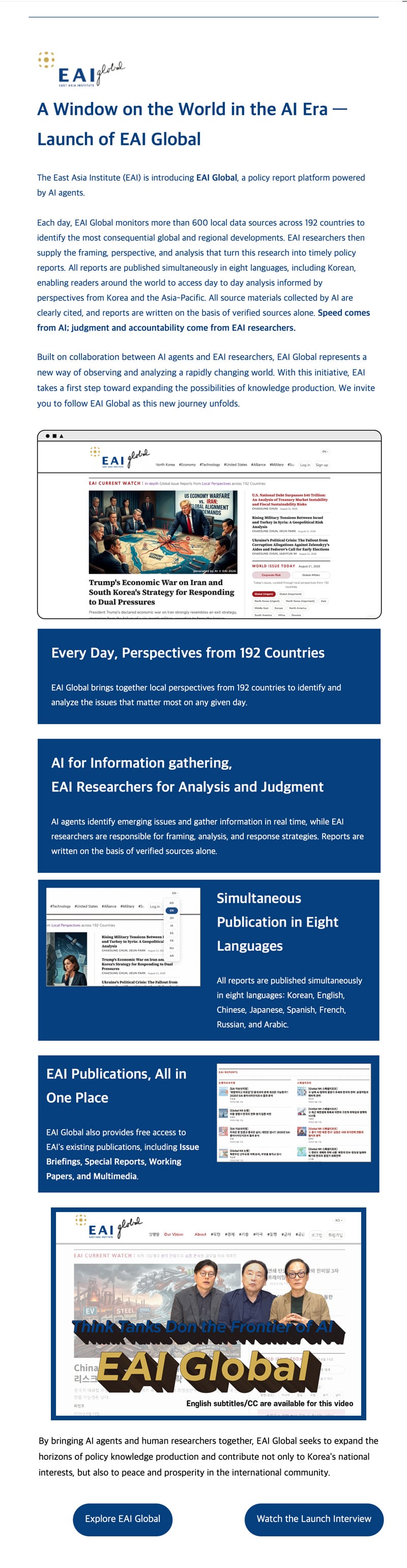
Hans H. Tung 2026-02-04Views : 1171
Commentary Issue Briefing
[ADRN Issue Briefing] Post-2023 Thailand: Democratic Backsliding from Authoritarian Resilience and Elite Compromise

Introduction Despite the electoral success of political parties that opposed military influence in Thailand’s 2023 general elections, there has been minimal progress towards establishing a more democratic political system. The prevailing popular demand for democratization was significant in its aspiration to dismantle the legacy of military rule that had dominated the country’s political landscape for nearly a decade following the May 2014 coup. Nevertheless, that demand failed to translate into change. First, the Thai electorate’s mandate was overturned through interventions by the junta-appointed Senate, the Constitutional Court, and other oversight bodies, which acted collectively to prevent the Move Forward Party (MFP) from coming to power despite its victory in the 2023 general election. Second, a series of elite compromises and power-sharing arrangements among political parties representing diametrically opposed ideological orientations have crowded out the possibility of meaningful structural reform and undermined the principles of accountability that are fundamental to the functioning of a democratic system. The most visible legacy of military rule—the junta-drafted 2017 Constitution—remains firmly in place and continues to shape political outcomes, not least by empowering unelected bodies to undermine elected representatives through sweeping, and at times arbitrary, interpretations and enforcement of the ethical standards required of office holders. Consequently, in the span of approximately three years following the 2023 general election, Thailand has experienced a succession of three prime ministers, two of whom were dismissed from office due to ethical infractions. The prevailing civil-military relations continue to reflect an asymmetric power structure that has its origins in a history marked by recurrent military interventions in political affairs. In fact, in the context of the resurgence of border tension between Thailand and Cambodia, the military has become more assertive in guiding the government’s security agenda and in establishing its autonomy from civilian oversight, particularly in matters pertaining to promotions, appointments, and arms acquisitions. Thailand’s civilian leadership has shown little willingness to reassert effective civilian control. The most recent episodes should not be interpreted as a democratic backsliding, at least not in the strict sense of a democracy sliding backward through the erosion of institutions that once sustained it (Bermeo 2016). In contrast to contexts in which promissory coups or executive aggrandizement subvert institutions such as free and fair elections, the rule of law, and civil liberties, Thailand’s current predicament is best characterized by the chronic weakness—rather than the weakening—of those institutions within a system that remains dominated by unelected forces. Apart from the revocation of emergency powers and the reestablishment of elections in 2019, Thailand’s democratic institutions have not adequately recuperated from the most recent phase of democratic regression that commenced with the 2014 coup—or, as some contend, even predates it to the 2006 coup. In essence, Thailand has yet to regain a reasonably democratic baseline that would make “backsliding” in a traditional sense the central dynamic at play. Instead, the prevailing trajectory indicates an ongoing consolidation of authoritarian resilience, characterized by the entrenchment of rules, norms, and institutional arrangements that cede significant power to unelected actors at the expense of elected ones.  The subsequent discussion will proceed as follows. First, it illuminates the institutional legacies of military rule that persist in exerting a dominant influence on the political landscape, more than a decade and two electoral cycles subsequent to the 2014 coup. Secondly, it analyzes the emergence of elite compromises that now dictate government formation irrespective of electoral mandates and outcomes. The conclusion of the study discusses the implications of these developments as Thailand moves toward another election that is scheduled to take place in February 2026. Enduring Authoritarian Legacies Since the end of direct military rule in 2019, pro-establishment forces in Thailand have continued to override electoral mandates, suppress dissent, and leverage judicial mechanism to target political opponents and undermine elected governments. In the two post-coup elections, the parties that won the most seats—Pheu Thai in 2019 and Move Forward in 2023—were impeded from forming a government by the junta-appointed 250-member Senate, which was authorized to vote for the prime minister alongside the 500-member House.  In the political landscape of Thailand, various parties that delineated themselves as diametrically opposed to the prevailing conservative status quo were routinely subject to dissolution. This phenomenon was exemplified by the dissolution of the Thai Raksa Chart Party in 2019, the Future Forward Party in 2020, and most recently, the Move Forward Party in 2024. Two prime ministers, Srettha Thavisin and Paetongtarn Shinawatra, were disqualified by the Constitutional Court on charges of grave ethical misconduct. A significant number of other elected politicians continue to face legal action, including 44 MPs affiliated with Move Forward for supporting a motion to introduce a draft bill to amend the controversial lèse-majesté law. Upon assuming power, elected governments invariably find themselves operating within circumscribed limits. This is due to the fact that unelected bodies reserve the prerogative to scrutinize ministerial appointments on ethical grounds, exercise the veto over major policy initiatives, and enforce adherence to frameworks inherited from military rule, specifically the 20-Year National Strategy. The termination of the junta-appointed Senate’s term in 2024, which coincided with the conclusion of its function in selecting the prime minister in conjunction with the House, initially generated a modicum of optimism. The prospect of a newly formed Senate was widely viewed as an opportunity to reduce the influence of unelected actors, given the Senate’s role in overseeing appointments to independent institutions that have been instrumental in the various assaults on democracy. These institutions include the Election Commission, the National Anti-Corruption Commission, the Constitutional Court, and other nominally independent appointed bodies. Many of these actors have become pivotal in shaping political outcomes in Thailand since 2006, often in ways that advance conservative interests. However, the method by which the new Senate was selected, and the resulting composition of the chamber, indicated that these expectations were erroneous. The recently constituted Senate comprises 200 members selected through a complex, multi-stage process in which candidates vote for one another both within and across designated occupational categories. Despite the fact that this Senate no longer plays a role in the selection of the prime minister, it continues to wield significant influence. This influence is evident not only in the appointment process for independent bodies but also in the ability to petition these entities for political intervention. In the 2024 Senate race, candidates associated with Bhumjaithai became the largest bloc in the chamber, despite allegations of widespread vote rigging. This development led to the emergence of the term “blue senators,” which refers to the candidates associated with Bhumjaithai. This configuration has enabled Bhumjaithai to wield disproportionate influence over the institutional levers that were previously exclusive to conservative establishment forces. The influence of the group in question was demonstrated when 36 of its senators petitioned the Constitutional Court to rule on the ethical qualifications of then-Prime Minister Paetongtarn Shinawatra following the leaked phone call between her and Cambodian Senate President Hun Sen. This led first to the Prime Minister’s suspension on July 1 of 2025 and then to her removal from office by the Constitutional Court on August 29 based on ethical violation charges. This outcome may be regarded as a judicial overthrow against the Pheu Thai-led government, thereby paving the way for the formation of a new government under Bhumjaithai leader Anutin Charnvirakul as prime minister. Despite the fact that the Senate is no longer directly appointed by the junta, it paradoxically continues to reproduce the legacies of military rule by inviting unelected bodies to assert themselves over elected governments. These worrisome patterns persist, at least in part, due to the fact that a significant number of the oversight bodies referenced above maintain substantial powers under the 2017 Constitution. As long as the situation persists, competing political factions will continue to compete for control over these bodies, particularly through the Senate, which wields an effective veto power over appointments to these entities. Ironically, a fragmented, multiparty coalition environment such as the one that emerged after the 2023 general election only intensifies the race to capture oversight bodies. In such a context, political actors within the government are engaged in intense struggles for cabinet posts, budgetary influence, and policy direction. In many cases, these parties find it more effective to build leverage over their rivals—who are simultaneously their coalition partners—by amassing influence over powerful unelected bodies with substantial veto or oversight authority, rather than relying solely on the number of MP seats they hold. Consequently, these institutions have become enmeshed in partisan conflict, their mandates distorted by the strategic imperatives of competing elites. In the course of these developments, state agencies have become embroiled in partisan disputes. The investigation led by the Department of Special Investigation (DSI) and the Election Commission into allegations of vote-rigging in the 2024 Senate election, for instance, had evolved into a proxy battlefield in the struggle between Pheu Thai and Bhumjaithai for dominance over control of the Ministry of Interior portfolio and the upper house. The upper house, as previously mentioned, retains the authority to endorse appointments to bodies such as the Constitutional Court, the National Anti-Corruption Commission, and the Election Commission itself. In response to the perceived actions of Pheu Thai, which may observers viewed as the catalyst for the DSI’s establishment, Bhumjaithai-affiliated senators petitioned the Constitutional Court to intervene. The petitioners sought to ascertain whether Deputy Prime Minister Phumtham Wechayachai and Justice Minister Tawee Sodsong had transgressed ethical boundaries by initiating politically motivated investigations. In a similar vein, the protracted Khao Kradong land dispute in Buriram and the Alpine land case in Pathum Thani became politicized by the feud between Pheu Thai and Bhumjaithai, with each side endeavoring to align agencies such as the Land Department, the Ministry of Interior, and the National Anti-Corruption Commission to substantiate their respective claims and discredit their rivals. These dynamics have contributed to highly abusive patterns of politicizing state agencies and drawing supposedly independent oversight bodies into partisan conflict, with the effect of making them even more central players in Thailand’s political landscape. These developments reflect a political environment in which the power of appointed bodies to influence—and at times supersede—elected ones in shaping political outcomes have become increasingly normalized. The durability of this institutional configuration is, of course, attributable to the design of the junta-drafted 2017 Constitution, which has proven exceptionally difficult to amend due to its stringent requirement of a parliamentary majority alongside the support of at least one-third of the Senate. However, the impact of this phenomenon, which involves the entrenchment of a status quo in which unelected institutions preside over elected ones is clearly mediated by the political actors of the day. These actors benefit from and actively reproduce these arrangements. On several occasions, it has been members of parliament themselves who have petitioned the Constitutional Court to rule on the number of referendums are required for a complete constitutional rewrite. This effectively granted the Court the authority to set the pace and scope of constitutional reform, as demonstrated by a recent ruling that explicitly prohibits the establishment of a directly elected constitution-drafting assembly. The institutional legacies of military rule endure, therefore, not only because of the constitutional architecture that enshrines them, but also because elected actors have repeatedly reinforced and legitimized the very constraints that limit their own power. The transition away from military rule, in other words, has not been accompanied by a transition to democracy. A similar paradox can be observed in the behavior of political parties and the party system. This will be discussed in the next section. Although military-aligned parties were defeated at the polls, key military figures continue to wield significant political influence through elite bargains that safeguard their interests and constrain the reformist potential of electoral outcomes. Elite Compromises In the context of a parliamentary democracy, such as Thailand, there is a certain degree of anticipation for the emergence of collusive behavior and post-electoral bargaining among political parties. However, the coalitions that materialized in the aftermath of the 2023 general elections have been characterized by “promiscuous power-sharing” arrangements (Slater and Simmons 2013) and “toxic alliances” (McCargo and Wadipalapa 2024). It is evident that the post-2023 elite compromises have clearly contributed to the dysfunction of Thai democracy through several mechanisms. First, Thai political elites are foregoing democratic reform as the price of sustaining their alliances. Secondly, these alliances of political conveniences have blurred out meaningful differences between parties that voters rely on as heuristics when casting their ballots. Finally, they have undermined accountability—in the sense of depriving voters of the ability to keep parties they oppose out of government and eliminating clear lines of opposition that provide essential checks and balances on those in power (Jatusripitak and Lohatepanont 2025). The initial compromise may have emerged even before the 2023 elections, in response to the pronounced power imbalances between elected and unelected forces in Thailand. Pheu Thai’s de facto leader, former Prime Minister Thaksin Shinawatra, sought to establish a conciliatory relationship with Thailand’s conservative establishment to ensure his return after 15 years of self-imposed exile. As part of a deal that was the subject of much speculation and reportedly negotiated in Langkawi, Thaksin is believed to have offered his Pheu Thai Party as a political pawn to block the progressive MFP from power. In exchange for this offer, it is thought that Thaksin would receive leniency in legal proceedings related to cases filed against him while abroad and support from the junta-appointed Senate for Pheu Thai’s prime ministerial candidate (McCargo 2024). The arrangement was regarded as a potential avenue for Thaksin to rehabilitate himself in the eyes of the establishment, which had historically sought to dismantle his influence through a series of actions including military coups, dissolution of political parties, judicial interventions, and constitutional engineering. This entailed providing his political party as a vehicle for safeguarding conservative interests from the reformist aspirations that had emerged within the pro-democracy movements of 2020-2021 and were subsequently advanced by the MFP, which had committed to revising the lèse-majesté law in the run up to the 2023 general elections. After a period of political maneuvering aimed at neutralizing the MFP’s victory and preventing its prime ministerial candidate, Pita Limjaroenrat, from assuming office, the agreement was finalized on August 22, 2023, when Thaksin returned to Thailand as Srettha Thavisin, representing Pheu Thai, was elected prime minister with the support of military-affiliated parties and senators. Pheu Thai formed a coalition that excluded the MFP but incorporated parties aligned with the general who had orchestrated the 2014 coup against Thaksin’s sister, Yingluck, despite the pledges made by its leaders to the contrary. Subsequently, Thaksin was granted a royal commutation, which reduced his original eight-year prison sentence to a mere one year. Notably, he served six months of this sentence in a VIP room at the police hospital before being granted early release on parole. This significant compromise endured the subsequent removal of Srettha and his replacement by Thaksin’s daughter Paetongtarn in 2024. However, the coalition collapsed in the face of a series of events, including a leaked conversation between Paetongtarn and Cambodian Senate President Hun Sen. This conversation incited widespread nationalist outrage against the Pheu Thai-led government, ultimately leading to Bhumjaithai’s withdrawal from the coalition and Paetongtarn’s subsequent dismissal by the Constitutional Court. Nevertheless, this aforementioned crisis resulted in the establishment of an even more striking power-sharing arrangement: a minority government agreement between the Bhumjaithai Party and the progressive-leaning People’s Party (the successor to Move Forward), despite the pronounced ideological differences between the two parties.  The People’s Party’s decision to support Anutin as prime minister in September 2025 was justified by its leaders as a strategy to avert a deadlock in the selection of a prime minister—a deadlock stemming from the constitutional design—that could have led to the appointment of an external candidate or even the return of former junta leader, General Prayut Chan-o-cha, as prime minister. Nevertheless, its support for Anutin, conditional on his government dissolving the House within four months of delivering a policy statement to parliament and committing to constitutional reform, effectively amounted to a vote for a candidate who might as well have been openly endorsed by Thailand’s establishment. Evidence of this includes the Privy Council’s dismissal of Pheu Thai’s proposal to dissolve the House, which cleared the way for a prime ministerial selection, as well as the swift dropping of several cases against Anutin and his party in the Constitutional Court, widely seen as acting in the interests of the establishment. This arrangement deprived Thailand of a credible opposition, as the main opposition party, the People’s Party, was compromised in its role as an effective check on the Anutin-led government due to its objective of extracting concessions from that government, as outlined in the Memorandum of Agreement, signed between the two-party leaders. As of the present moment, this agreement has also collapsed. During the second reading of the draft constitutional amendment in December 2025, members of parliament (MPs) and senators affiliated with Bhumjaithai voted to impose a requirement that at least one-third of the Senate—which the party currently exerts effective control over—must approve any new constitution. In response, the People’s Party declared its intent to initiate a no-confidence motion against Anutin. However, this initiative was subsequently thwarted by Anutin’s dissolution of the House later that same day. In essence, Thai politics makes for strange bedfellows: a vote for Pheu Thai brought its former adversary into government; a vote for a conservative party delivered Thaksin’s proxies as prime ministers; and a vote for the progressive party produced a conservative premiership. In every instance, Thai voters ended up with the opposite of what they thought they were choosing. The democratic spirit that animated the 2023 general election has effectively been blunted and sidelined by the compromises required to establish governing coalitions and maintain elite cohesion. While the long-term implications of these elite arrangements are not yet fully elucidated, they have already reshaped the party system by diluting partisan differences and hollowing out party identities, along with the core ideological distinctions that once structured electoral choices. This includes the divides between pro- and anti-Thaksin and pro- and anti-military camps, which have collapsed into elite consensus and left voters stranded without parties that clearly reflect their convictions (Jatusripitak and Lohatepanont 2025). This dynamic has the potential to adversely impact the foundations of democracy, fostering distrust in political parties and eroding public confidence in the efficacy of electoral representation. Of greater significance is the fact that the compromises made in exchange for maintaining these alliances have effectively rendered the prospects of implementing critical reforms unfeasible. Constitutional reform is of the utmost importance, yet it has faced repeated delays due to disagreements among coalition partners over referendum requirements, restrictions on amendments to sections concerning the form of government and the monarchy, and the composition and selection of a constitution-drafting assembly. Alongside constitutional reform, other critical reforms have stalled. Notably, lèse-majesté reform has become politically untenable following a ruling by the Constitutional Court that the Move Forward Party’s proposed amendment constituted an effort to subvert the constitutional monarchy. Furthermore, military reform has been effectively abandoned, as civilian governments persist in accommodating the interests of parties with ties to military figures and the entrenched prerogatives of Thailand’s security forces. This dynamic is particularly salient in the context of the ongoing border conflict between Thailand and Cambodia. This conflict has decimated what little remained of civilian leaders’ control over Thailand’s security apparatus and has emboldened the Thai military to act with greater autonomy, now that it enjoys renewed popularity and legitimacy, especially in shaping defense policy and operational decisions related to the border conflict. This has led to a further escalation of the conflict, despite the establishment of a ceasefire agreed in October 2025. The civilian-led government is currently unable to take significant action, as it is largely dependent on the actions of the military, which is widely regarded as acting legitimately in defense of national sovereignty and operating within its purview over border security. Conclusion In the aftermath of 2023, Thailand has witnessed the emergence of a system that has adapted to electoral competition, albeit with the aim of blunting its democratic potential. This adaptation has been achieved through the imposition of institutional constraints and the cultivation of elite consensus, thereby ensuring the perpetuation of unelected powerholders’ dominance within Thai society. If this phenomenon is to be characterized as democratic backsliding, it should be understood as backsliding driven by authoritarian resilience rather than through the more familiar pathways through which democratic institutions are undermined. The aforementioned authoritarian resilience manifests in three conspicuous ways. First, elections have been effectively decoupled from government formation. Interventions by unelected institutions, together with the emergence of ideologically contradictory coalitions that betray voter mandates, have severed the link between electoral outcomes and the composition of government. Ballots no longer determine who governs; instead, elite bargaining and endorsement from the conservative royalist-military establishment ultimately shape government formation and, in turn, the policy choices that follow. Second, political parties and elected leaders face chronic insecurity in an institutional environment that continues to empower unelected bodies to exercise broad discretion over questions of ethics and legality, which can lead to party dissolution or removal of political office holders at any time. Third, the normalization of punitive actions against elected representatives and the precedents established by court rulings have tightly constrained the scope of reform and agenda-setting, with clear red lines placing key issues beyond democratic contestation and civilian authority. These patterns suggest that Thailand’s democratic dysfunction today is not the result of institutional decay, but rather of an institutional design deliberately crafted to blunt democratization and prevent democracy from consolidating and functioning effectively in the first place. For Thai democracy, the road ahead necessitates a comprehensive examination of the institutional legacies of military rule and the elite compromises that perpetuate these legacies. However, at this juncture, neither constitutional reform nor another election appears to be a probable catalyst for such a transformation. The initiative to establish a directly elected constitution-drafting assembly has been rejected, and the draft constitutional amendment that would facilitate a constitutional rewrite did not pass before the House was dissolved. This dissolution has triggered a new election conducted under the same institutional constraints as before, but in a climate marked by heightened nationalism over the Thailand-Cambodia border conflict and a deepening distrust of political parties and their ideological commitments. In essence, Thailand may be approaching yet another electoral process in which Thai voters once again find themselves constrained within a system where their choices hold far less influence than the machinations of elites and unelected entities, and where the assurance of democratic representation is continuously postponed. In this sense, Thailand is not confronting the erosion of an established democracy; rather, it is grappling with the persistent failure of democracy to emerge in the first place.■ References Bermeo, Nancy. 2016. "On Democratic Backsliding." Journal of Democracy, 27, 1: 5-19. Jatusripitak, Napon and Mathis Lohatepanont. 2025a. "After the Grand Compromise: Voter Profiles in Thai Politics." ISEAS Perspective, 2025, 25. https://www.iseas.edu.sg/articles-commentaries/iseas-perspective/2025-25-after-the-grand-compromise-voter-profiles-in-thai-politics-by-napon-jatusripitak-and-mathis-lohatepanont/. (Accessed: January 22, 2026)  Jatusripitak, Napon and Mathis Lohatepanont. 2025b. "Grand Compromise or Grand Damage to Thailand’s Party System?" FULCRUM. October 27. https://fulcrum.sg/grand-compromise-or-grand-damage-to-thailands-party-system/. (Accessed: January 22, 2026)  McCargo, Duncan. 2024. "The Real Deal: Results versus Outcomes of the 2023 Thai General Election." Pacific Affairs, 97, 1: 79-98. https://doi.org/10.5509/2024971-art4. McCargo, Duncan and Rendy Wadipalapa. 2024. "Southeast Asia’s Toxic Alliances." Journal of Democracy, 35, 3: 115-130. Slater, Dan and Erica Simmons. 2013. "Coping by Colluding: Political Uncertainty and Promiscuous Powersharing in Indonesia and Bolivia." Comparative Political Studies, 46, 11: 1366-1393. https://doi.org/10.1177/0010414012453447.  [1]This concept is an adaptation of Schmitter’s idea that democratization, on the one hand, triggers a universal set of norms, events, processes, and symbols, while, on the other hand, it constitutes a much more particularistic process of ‘realistic’ adaptation to the structural and historical conditions of individual countries (Schmitter and Sika 2016).   ■ Napon Jatusripitak is the Visiting Fellow and Coordinator of the Thailand Studies Programme at the ISEAS-Yusof Ishak Institute, Singapore.    ■ Edited by Jaehyun Im, Research Associate     For inquiries: 02 2277 0746 (ext. 209) | [email protected]  

Napon Jatusripitak 2026-01-23Views : 1205
Commentary Issue Briefing
[ADRN Issue Briefing] From Streets to Courtrooms: Youth Activism and Democratic Resilience in Indonesia

Introduction   Recent scholarship on Indonesian politics has been dominated by diagnoses of democratic regression. While the erosion of democratic institutions is well documented, this emphasis fails to acknowledge an equally significant counter-dynamic: the presence of democratic resilience. In recent years, youth activists have assumed a pivotal role in this process, expanding their activities from episodic street mobilization to the consolidation of protest networks and the pursuit of policy change through judicial review at the Constitutional Court (Mahkamah Konstitusi/MK). The effectiveness of these actors is facilitated by intensive use of social media and strategic linkages with established civil society organizations. Together, these factors enhance coordination, legal capacity, and agenda-setting power. These dynamics illustrate how societal actors can partially compensate for institutional weakening by generating bottom-up accountability. However, youth-led democratic resistance in Indonesia is frequently constrained by inconsistent modes of movement and sustained regime pressure, which limits its capacity to convert episodic contention into durable institutional change and long-term democratic resilience.   Youth Protests as a Mechanism of Democratic Resilience   In the context of Indonesian democracy, scholarly debates have predominantly centered on democratic regression, thereby overlooking the examination of democratic resilience. However, it is precisely during this period of decline that civil society has assumed an increasingly significant role, emerging as a central societal force capable of countering democratic erosion and generating alternative sources of accountability. In the context of a deteriorating system of formal checks and balances, precipitated by an intensification of authoritarian consolidation at the nexus of the presidency and parliament, civil society has emerged as a pivotal domain for the preservation of democratic norms and the safeguarding of public interests. In this context, the phenomenon of youth activism has emerged as a critical mechanism of democratic resilience. Democratic resilience is defined as the capacity of youth actors within civil society to adapt to institutional weakening by consolidating collective action and translating social mobilization into institutional challenges that sustain democratic accountability through both contentious and formal channels.[1]   A salient contribution of contemporary youth activism in Indonesia is its capacity to consolidate protest movements. Student Executive Boards (Badan EksekutifMahasiswa/BEM) have historically functioned as pivotal mobilizing entities in contentious politics. This role has been evident in various contexts, including the student-led protests that contributed to the collapse of Suharto’s authoritarian regime in 1998. It has also been observed in recurrent mass actions throughout the reform era, such as the “Cicak versus Buaya” anti-corruption protests in 2009, the opposition to revisions of the Corruption Eradication Commission (KPK) Law and the Criminal Code (KUHP) in 2019, resistance to the Job Creation Law in 2020, and protests against parliamentary allowance increases in 2025.[2] However, over the past two years, there has been a shift in the dynamics of protest movements. Large-scale mobilization is no longer driven primarily by students, but rather, it is increasingly involving a broader constellation of young actors embedded in civil society organizations and digital networks. This shift indicates a transition toward more networked and connective forms of collective action, which facilitate the aggregation of grievances across sectors and enhance coordination among dispersed actors.   This transformation is evident in the Indonesian Emergency Commemoration protests of August 2024 and the demonstrations that followed a year later. In both episodes, significant numbers of young people mobilized beyond formal student organizations and Non-Government Organizations (NGOs), to include influencers, artists, and subcultural communities. These actors formed horizontally networked coalitions that enabled rapid coordination among diverse actors and strengthened the capacity of protest to exert pressure on the state. Furthermore, the mobilization of youth actors was also reinforced by the principle of symbolic continuity. In 2024, a viral social-media narrative centered on the Blue Garuda—Pancasila rendered in blue with the slogan “Indonesia Emergency”-framed elite actions as a democratic crisis. In 2025, young activists consolidated dispersed grievances into the “17+8” platform, visually articulated through the colors blue, pink, and green. Blue explicitly referenced the earlier emergency narrative.[3] Consequently, the expansion of youth networks and the persistence of shared symbols transformed episodic protest into more cohesive and sustained collective action, thereby reinforcing societal oversight of state power.   New Youth Activism in Pressing Legal Change for Democratic Resilience   Beyond street-level protest, young Indonesians have increasingly engaged in institutional channels of policy change through judicial review at the Constitutional Court (MK). Constitution and Law No. 24 of 2003 authorizes citizens with legal standing—defined as parties directly harmed by the statutory provision under review—to submit both formal reviews, which assess legislative procedures, and material reviews, which examine the substantive constitutionality of laws. These mechanisms are not subject to age restrictions and are therefore accessible to young Indonesians. Judicial review constitutes a structured and rights-based mechanism for contesting laws deemed unconstitutional. All admissible petitions are formally examined by the Constitutional Court Judges. The Court’s open and publicly accessible proceedings, including live broadcasts, serve to further enhance transparency and accountability in the adjudication process. These features establish judicial review as a strategic institutional pathway through which youth activism can advance beyond contention to reinforce democratic resilience by correcting legal deficits within the constitutional order.   Since 2023, at least five Constitutional Court decisions have amended laws that conflicted with democratic principles and public interests, thereby responding to demands that has been raised but previously ignored during legislative processes (see Table 1). A significant portion of these judicial reviews were initiated by young people from millennial and Gen Z cohorts, including both NGO activists and students. It is noteworthy that NGO-affiliated activists such as Fatiah Maulidiyanty (Commission for the Disappeared and Victims of Violence (KontraS)) effectively challenged provisions of the Criminal Code and the Electronic Information and Transactions (ITE) Law. This led to the annulment of “false news” articles and a narrower interpretation of defamation. In a similar vein, Khoirunnisa Nur Agustyati and Irmalidarti (both representing the Association for Elections and Democracy (Perkumpulan untuk pemilu dan Demokrasi/Perludem)) have advanced reforms to parliamentary legislation, resulting in a MK ruling mandating a minimum of 30 percent women’s representation in parliamentary supporting bodies and conditional unconstitutionality of the State Civil Apparatus Commission (KASN). Concurrently, students spearheaded the successful judicial review of the Election Law (Law No. 7 of 2017), which abolished the presidential threshold. These cases illustrates that youth activism in Indonesia is evolving beyond mobilization at street level to encompass institutionalized legal strategies that reinforce democratic accountability and resilience within the state. Table 1. Major Judicial Reviews Supporting Democratic Principle and People's Interest in Indonesia from 2023 to 2025. No. Law Challenged Issue Challenged Petitioners (coalitions/actor) MK Decision/ Status 1 UU 1/1946, KUHP, UU ITE (False news & defamation) Criminalisation of expression; “kabar bohong” and defamation articles enabling criminalisation of criticism Coalition of digital-rights, legal-aid, & civil-liberty CSOs; petition included Haris Azhar & Fatia Partially granted — Articles on “false news” annulled; defamation interpreted narrowly (Putusan 78/PUU-XXI/2023) 2 UU 1/2024 (Revised ITE Law) Overbroad defamation provisions enabling lawsuits by institutions CSO coalition on digital rights; petition formally by Daniel Tangkilisan Partially granted — “Orang lain (another person)” interpreted only as individuals, excluding state institutions (Putusan 105/PUU-XXII/2024) 3 UU 17/2014 & UU 2/2018 (MD3 Law) Lack of women’s representation in parliamentary leadership bodies (AKD) Coalition of gender & democracy CSOs (KPI, Perludem, Kalyanamitra, etc.) Granted — Minimum 30% women’s representation in AKD mandated (Putusan 169/PUU-XXII/2024) 4 UU 20/2023 (ASN Law) Abolition of KASN & weakening civil-service neutrality and meritocracy “Koalisi untuk Netralitas ASN” (Perludem, KPPOD, ICW, etc.) Partially granted — Abolition of KASN conditionally unconstitutional; state must create independent oversight (Putusan 121/PUU-XXII/2024) 5 UU 7/2017 (Pemilu Law) — Presidential Threshold (Article 222) Requirement of 20% DPR seats / 25% vote share to nominate presidential candidates Students Granted — Presidential threshold abolished as unconstitutional (Putusan 62/PUU-XXII/2024) Source: Data compiled from various media reports, Constitutional Court website, and CSO websites.   To illustrate how judicial review has been strategically employed by young people to effect legal change, the examination of the Constitutional Court’s abolition of the presidential threshold (PT) on January 2, 2025, provides a clear example. The legal proceedings were initiated by four students from the Faculty of Sharia and Law at Sunan Kalijaga State Islamic University. These students challenged the provisions of Law No. 7 of 2017 on Elections. The students were granted legal standing as voters whose electoral choices were directly constrained by the PT.[4] The court issued a ruling that declared the PT to be unconstitutional. This decision was based on the assertion that the PT violated the principle of popular sovereignty and infringed upon constitutionally guaranteed political rights.[5] Despite the fact that civil society actors and election scholars had previously denounced the PT for its long efforts to consolidate party dominance, curtail electoral competition, and subvert voters’ rights—particularly within the context of a simultaneous election system—these concerns had been persistently disregarded by the government and parliament.[6] Consequently, the ruling constituted a substantial institutional intervention, effectively rendering the PT inapplicable for the 2029 election and obliging policymakers to comply. The decision was made in the context of the Court’s efforts to regain its institutional credibility following the 2024 controversy surrounding presidential age limits. This controversy stemmed from a ruling issued under then–Chief Justice Anwar Usman, the brother-in-law of President Joko Widodo. The ruling enabled the President’s son to qualify as a presidential candidate. However, the policy shift would not have occurred without the judicial review initiated by the students. This review underscores the importance of judicial review as a strategic pathway through which youth activism can directly reinforce democratic resilience.[7]   Constraints, Pressures, and the Future of Youth-Led Democratic Resilience   By consolidating mass protest through expanded networks and sustained symbolic repertoires, while simultaneously engaging institutional arenas through judicial review, young Indonesians have played an increasingly significant role in sustaining democratic accountability amid broader trends of democratic weakening. The implementation of these dual strategies has contributed to the enhancement of civil society’s capacity to address the diminution of formal oversight mechanisms in Indonesian politics, thereby facilitating the alignment of state policy with democratic principles. In this sense, youth actors should be understood as a central component of Indonesia’s contemporary democratic resilience, with important implications for the future trajectory of the country’s democracy.   Notwithstanding this accomplishment, the phenomenon of youth-led democratic resistance in Indonesia continues to be characterized by inconsistencies in its modes of movement and a pervasive environment of pressure from the regime. Networked and digitally mediated action often generates fragmented movements, fluctuating participation, and weak mechanisms for long-term coordination. For instance, the “17+8” protests, despite achieving viral visibility and extensive media coverage, failed to sustain the large-scale mobilization observed in earlier protest episodes in August 2025. Consequently, youth-led mobilization frequently operates in a reactive manner, responding to immediate political challenges rather than proactively shaping a comprehensive and enduring reform agenda.   The lack of uniformity among youth movements is further demonstrated by their divergent approaches to judicial review at the Constitutional Court. Filing a judicial review is an inherently arduous process, involving complex and time-consuming procedures, meticulous legal analysis, and a profound understanding of constitutional adjudication. These requirements pose substantial barriers for many youth groups, limiting their capacity to pursue judicial review consistently. Compared to their counterparts, youth activists affiliated with established NGOs are comparatively better positioned to navigate this process due to their access to legal expertise and institutional resources. However, these advantages are not uniformly distributed across the broader youth movement. Consequently, the utilization of judicial review by youth actors is found to be uneven, contingent upon their access to legal knowledge, resources, and institutional support.   Beyond the constraints imposed by internal limitations, the phenomenon of youth activism in Indonesia is subject to ongoing pressure from the regime, a factor that further restricts its capacity for transformative impact. The state has increasingly employed legal, administrative, and discursive instruments to manage dissent, including selective law enforcement, surveillance, and the instrumental use of regulations such as the ITE Law. For instance, a number of young protesters involved in the demonstration that took place in August of 2025—including Delpedro Marhaen of the Lokataru Foundation and Khariq Anhar, a student at the University of Riau—were arrested and prosecuted under the ITE Law and the Criminal Code on charges of disseminating false information and incitement.[8] Such actions function not only as direct repression that generates broader chilling effects on youth-led political criticism and discourages sustained activism, but also as a form of social control.   The potential contributions of youth activism to democratic resilience in Indonesia are contingent upon its capacity to surmount the aforementioned constraints. This can be achieved through the institutionalization of coordination, the diversification of action repertoires, and the cultivation of cross-generational alliances within civil society. The hypothesis is that the strengthening of links between protest networks, legal advocacy, and long-term civic organizing may enhance the durability of democratic resistance under adverse conditions is supported by the available evidence.■   [1]Marc Hooghe and Sofie Marien. 2013. A comparative analysis of the relation between political trust and forms of political participation in Europe. European Societies 15(1): 131–152; Helix Lo. 2025. Fostering or Restricting Youth Political Participation? A Longitudinal Analysis of High School Civics Textbooks in Japan. International Journal of Educational Research 134.   [2]Edward Aspinall. 2005. Opposing Suharto: Compromise, Resistance, and Regime Change in Indonesia. Stanford University Press; Indonesia Corruption Watch (ICW). 2009.11.3. "Elemen Mahasiswa dan Beberapa Tokoh Ungkapkan Dukungan ke KPK." https://www.antikorupsi.org/id/article/elemen-mahasiswa-dan-beberapa-tokoh-ungkapkan-dukungan-ke-kpk; Aryo Putranto Saptohutomo. 2022.6.21. "Saat RKUHP Picu Demo Besar Mahasiswa pada 2019." Kompas. https://nasional.kompas.com/read/2022/06/21/17233991/saat-rkuhp-picu-demo-besar-mahasiswa-pada-2019?page=all; BBC Indonesia. 2020.10.20. "Demo 20 Oktober, Mahasiswa dan Buruh Kembali 'Tolak Omnibus Law', Mahfud MD Minta Aparat 'Jangan Bawa Peluru Tajam'." https://www.bbc.com/indonesia/indonesia-54611952   [3]Anindya Milagsita. 2025.9.2. "Arti Warna Resistance Blue, Brave Pink, dan Hero Green yang Viral di Medsos." Detik.com.https://www.detik.com/jateng/berita/d-8092753/arti-warna-resistance-blue-brave-pink-dan-hero-green-yang-viral-di-medsos   [4]Mahkamah Konstitusi Republik Indonesia. 2025.1.2. "Putusan No. 62/PUU-XXII/2024." chrome-extension://efaidnbmnnnibpcajpcglclefindmkaj/https://www.mkri.id/public/content/persidangan/putusan/putusan_mkri_11344_1735807848.pdf   [5]Mahkamah Konstitusi Republik Indonesia. 2025.1.2. "Putusan No. 62/PUU-XXII/2024." chrome-extension://efaidnbmnnnibpcajpcglclefindmkaj/https://www.mkri.id/public/content/persidangan/putusan/putusan_mkri_11344_1735807848.pdf; BBC Indonesia. 2025.1.2. "MK Hapus Ambang Batas Pencalonan Presiden, 'Smua Parpol Berhak Mengajukan Calon'-Apa Alasannya?" https://www.bbc.com/indonesia/articles/c1el19dy1gjo   [6]Ferry Hidayat. 2013.9.13. "LIPI: Sistem Presidential Threshold Harus Dihapus." Kontan. https://nasional.kontan.co.id/news/lipi-sistem-presidential-threshold-harus-dihapus; Perludem. 2017.6.14. "Perludem Tegaskan Presidential Threshold Bertentangan dengan Konstitusi."https://perludem.org/2017/06/14/perludem-tegaskan-presidential-threshold-bertentangan-dengan-konstitusi/; Fadel Prayoga. 2017.7.12. "Tidak Berdasar, Presidential Threshold Dinilai Sudah Tak Relevan." Okezone News. https://news.okezone.com/read/2017/07/12/337/1734212/tidak-berdasar-presidential-threshold-dinilai-sudah-tak-relevan   [7]Tempo.co. 2025.12.13. "Anwar Usman Meredup, Mahkamah Konstitusi Berbenah Lagi." https://www.youtube.com/watch?v=wtjMBb4cKJg   [8]BBC Indonesia. 2025.12.16 "Deldepro dkk Menolak Dakwaan 'Menghasut' dalam Demo Agustus - 'Kami Menyampaikan Pendapat Bukan Menghasut'." https://www.bbc.com/indonesia/articles/c62vdr45r70o     ■ Aisah Putri Budiatri is a political researcher at National Research and Innovation Agency (BRIN).     ■ Edited by Jaehyun Im, Research Associate     For inquiries: 02 2277 0746 (ext. 209) | [email protected]  

Aisah Putri Budiatri 2026-01-06Views : 795