[Working Paper] Clean at Home, Dirty Abroad: China’s Role in Southeast Asia’s Subcritical Coal Expantion
2019-05-24
Knowledge-Net for a Better World
May 2019
EAI Working Paper Clean at Home, Dirty Abroad:
China’s Role in Southeast Asia’s Subcritical Coal Expansion
Melanie Hart, Center for American Progress
"China is Still a Long Way Off from Being a Green Leader"
China’s rapid economic growth since its reform and opening up has propelled it to the status of a global power. If China’s economy continues to grow and subsequently approaches the level of the US GDP at some point in the future, what will the world be like? To explore possible answers to this question, EAI has launched a multi-year research project titled “Rising China and New Civilization in the Asia-Pacific” that aims to identify major global challenges posed by China`s continuous growth over the coming decades. For the first year of this research, EAI focused on analyzing current issues and trends relating to China`s economy, energy and the environment, technology, and security, and projecting how these will influence China and the surrounding region over the next ten years. In doing so, this research has produced a series of working papers. The following is the fifth series covering energy issues.
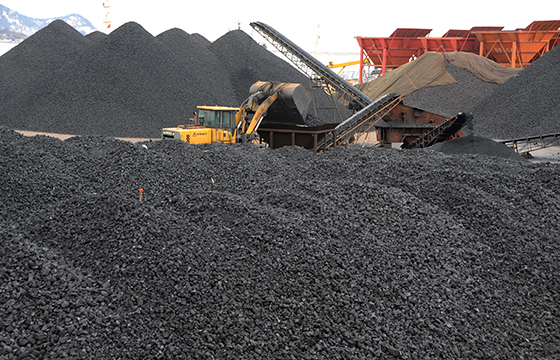
China is the world’s biggest producer and consumer of coals as well as the largest greenhouse gas emitter. Surprisingly, China is also the global leader in clean energy development. Unfortunately, however, this embrace of green energy has not extended to China’s overseas energy infrastructure development projects. Instead, China continues to push forward with building inefficient subcritical coal plants in the less-developed regions rather than helping those nations move toward a low-carbon economy. Melanie Hart uses the Indonesian case to illustrate why China must reconsider its current approach before it becomes a less attractive development partner in the long term.